
Red and White Village Cooperatives Could Boost Village Income by Rp 1.4 Billion Per Year
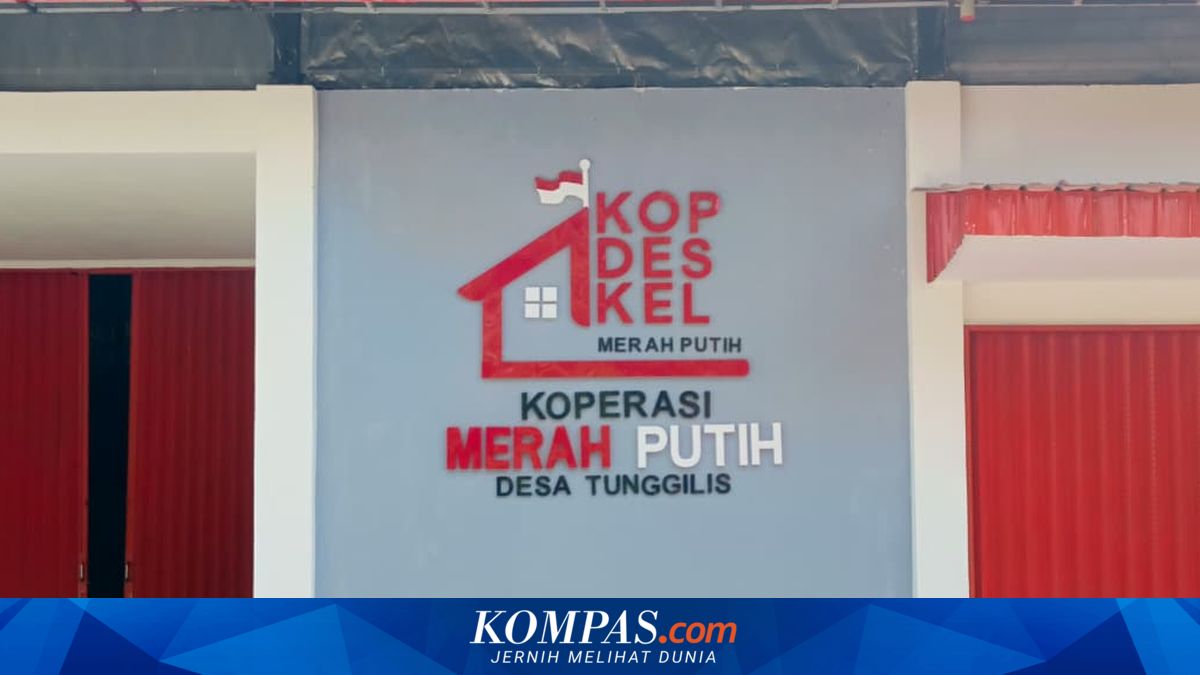
The presence of the Red and White Village/Urban Ward Cooperatives (KDKMP) is projected to provide an average net additional village income of Rp 1.4 billion per year. Cooperative observer and Chairman of the Association of Strategic Socio-Economic Cadres (AKSES), Suroto, stated that overall, the Red and White Village Cooperatives have the potential to record a total national turnover of Rp 1,093 trillion in the first full year of operations. From that figure, with a net profit margin of 8% after deducting operational costs and the state-owned enterprise operator’s share, the cooperatives will book profits of around Rp 87.44 trillion per year. “If that profit is distributed to 60,000 KDKMP units, then each village has the potential to receive an average additional net income of Rp 1.4 billion per year. This is a very significant economic leap for villages,” he said in an official statement on Tuesday (21/4/2026). He added that since the president declared the birth of the Red and White Village/Urban Ward Cooperatives (KDKMP) about a year ago, the development of this programme has shown significant acceleration. Suroto conveyed that based on the achievement trends, by mid-year, the number of completed outlets is estimated to reach around 40,000 units. “In fact, by November 2026, the number is projected to exceed around 60,000 outlets. This is not just a number, but a strong indication that KDKMP is moving towards a massive national scale,” he revealed. From an asset perspective, if 60,000 outlets are operational, fixed assets originating from the state worth around Rp 3 billion per village will be formed. This means that, in aggregate, Indonesians will directly own and manage cooperative assets worth approximately Rp 180 trillion. “This is an economic ownership redistribution on a scale that has never happened before,” said Suroto. Beyond the subsidised goods sector, retail activities will also make a significant contribution. Assuming each community member generates transactions of Rp 900,000 per year, the total additional turnover could reach Rp 243 trillion. Furthermore, if the government consistently hands over the absorption of agricultural products, especially rice and corn, to KDKMP, with a conservative assumption of Rp 150 trillion per year, there will be a very significant increase in turnover in this sector. It does not stop there; strengthening the Savings and Loan Units (USP) of KDKMP also opens up great opportunities. “When the distribution of subsidised government programmes like KUR, which have previously been channelled through banks, is redirected and optimised through USP KDKMP, the potential outstanding credit could reach Rp 450 trillion per year,” he stated.