
Red and White Village Cooperatives: A Pillar of Food Sovereignty and Self-Sufficiency
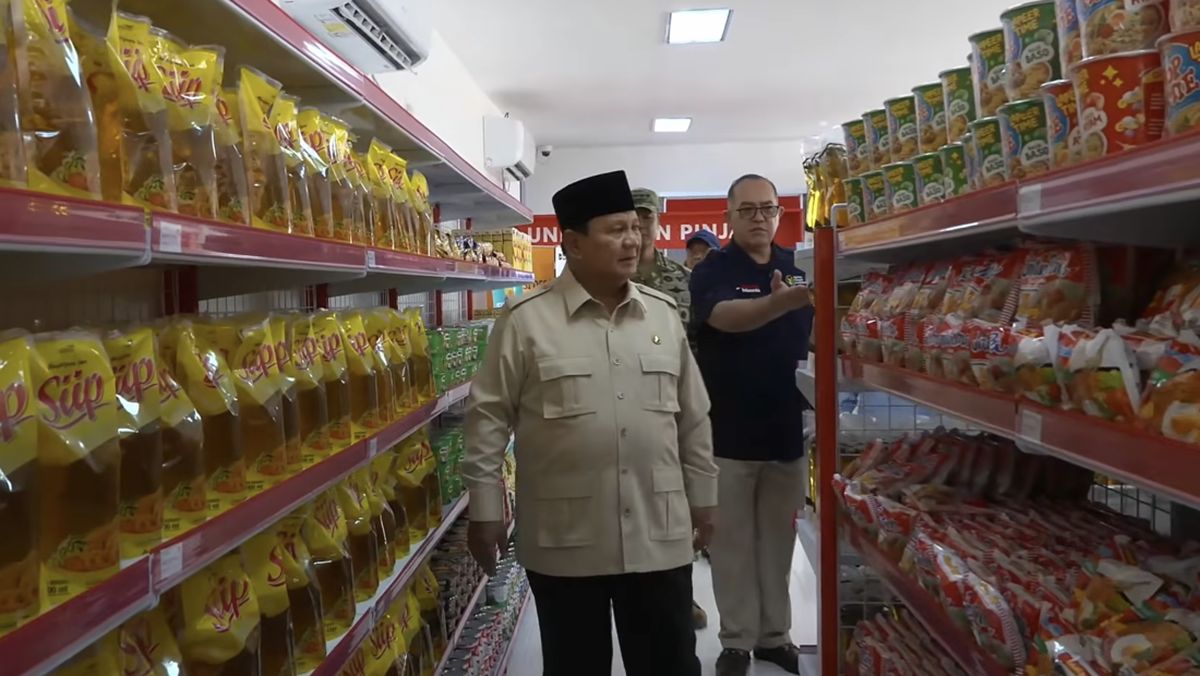
The government appears serious about achieving food independence, or self-sufficiency. Food self-sufficiency is first on President Prabowo Subianto’s list of 17 priority programmes.
Under Presidential Regulation No. 12/2025 on the 2025–2029 National Medium-Term Development Plan (RPJMN), food self-sufficiency ranks second among the government’s Asta Cita priorities. The plan calls for “strengthening the national defence and security system and promoting national independence through self-sufficiency in food, energy and water, as well as in the sharia, digital, green and blue economies”.
To achieve this, the government has designated Red and White Village and Urban-Village Cooperatives (KDKMP) as a main pillar of food self-sufficiency. Speaking at the inauguration of 1,061 KDKMP units in Nganjuk, East Java, on 16 May, President Prabowo Subianto said they would become community economic centres.
Prabowo said he wanted the cooperatives to handle everything from fertiliser provision to the purchase of farmers’ harvests.
“The Red and White Village Cooperative is being prepared as a public economic services centre, from supplying fertiliser to absorbing the harvest. This is a concrete step towards building village-based food sovereignty,” he said.
In a speech marking the 79th National Cooperatives Day in Jakarta, Prabowo again described KDKMP as grassroots and rural economic centres. He strongly opposed the resale of subsidised goods and called for their distribution to be channelled through village cooperatives or KDKMP.
Prabowo estimated that the cooperatives could increase economic activity in villages by up to Rp223 trillion a year. Farmers, livestock breeders and fishers are also projected to see their incomes rise by about Rp202 trillion annually.
“KDKMP will become integrated village economic services centres. They will include a cooperative office, grocery shop, savings and loans services, village pharmacy, village logistics, warehouses, cold storage and various other economic services,” he said.
Establishment and legal framework
Prabowo first announced the Red and White Village Cooperatives on 21 July 2025 in Bentangan Village, Wonosari district, Klaten regency, Central Java. At the time, he said the plan was to launch 80,081 cooperatives across Indonesia, with at least one in every village.
“Today is indeed a historic day. We are beginning a major undertaking. This cooperative is a major strategic enterprise,” Prabowo said.
By September 2026, about a year after the announcement, the government said it had built 10,000 cooperative units or outlets. Only 3,300 of them, however, were operating effectively. Prabowo set a target for 30,000–40,000 KDKMP units to be established and operating optimally by the end of 2026.
“Our target is that by the end of 2026, 30,000 Red and White cooperatives must be established and operating well,” he said in a speech at the annual session of the People’s Consultative Assembly (MPR) at the parliamentary complex in Jakarta on 14 August.
In October, Food Affairs Coordinating Minister Zulkifli Hasan, known as Zulhas, said 29,000 units had been built. The government asked that 8,000 be prepared to begin operating simultaneously from 15 October. The remaining 45,000–50,000 are due to be built in a second phase starting in 2027.
“From tomorrow, we will monitor all these village cooperatives. We’ll start with 8,000,” Zulhas said at the Coordinating Ministry for Food Affairs on Wednesday, 14 October.
The establishment of the cooperatives is governed by Presidential Instruction No. 9/2025 and Presidential Regulation No. 82/2026. The regulation covers management, digital monitoring, financing and the appointment of PT Agrinas Pangan Nusantara to oversee operations.
The presidential instruction names 18 ministries and agencies involved in the programme. The Coordinating Ministry for Food Affairs serves as coordinator, the Ministry of Cooperatives as regulator, the Ministry of Villages as land provider, and the Indonesian Army as territorial supervisor.
“Mr President has ensured that the Red and White Village Cooperatives, Red and White Urban-Village Cooperatives and Red and White Fishers’ Cooperatives must be supported by all ministries and agencies, as well as the Indonesian National Armed Forces and National Police,” Zulhas said on 23 July.
Agrinas chief executive Joao Angelo De Sousa Mota said the development of KDKMP units was monitored online, from land applications and verification through to construction and management. He said the process was transparent and professional, supported by a tested digital system.
“KDKMP construction is digitally monitored, from the submission and verification of land through to construction and management. It is transparent and supported by a proven digital system,” Joao Mota said on Tuesday, 13 October.
Financing arrangements
The financing scheme for the Red and White Village Cooperatives is set out in Finance Ministry Regulation No. 15/2026. Although they are designated as cooperatives, KDKMP units are being built using the state budget (APBN).
The government has set a ceiling of Rp3 billion for each cooperative, including start-up capital. The funds are channelled through PT Agrinas, which acts as contractor and executor. The state budget will cover repayments through deductions from regional transfer funds.
For village-level cooperatives, the funds will be drawn from the Village Fund. For urban-village cooperatives, they will come from the General Allocation Fund (DAU) or Revenue-Sharing Fund (DBH).
The government will also cover operating costs, including management training, for the first 18 months. After that, the cooperatives will be required to operate independently.
The role and challenges of the cooperatives
Prima Gandhi, an agricultural expert at IPB University, said the cooperatives were strategically placed to support rural food and logistics needs. Food self-sufficiency would be difficult to achieve, he said, if the distribution of supplies and management of produce remained fragmented.
Through the cooperatives, the government aims to integrate the subsidised fertiliser supply chain into a closed system to minimise leakage, he said.
However, Prima raised concerns about the pace of construction and operations. Only about one-third of the units built are operating optimally, he said.
“Evidence from the field shows that only around a third are truly operating effectively,” Prima said on Wednesday, 14 October.
In Central Java, he added, only about 64 per cent of KDKMP units were genuinely operating as of October 2026. The cooperatives could support food self-sufficiency only if they functioned fully as the sole distributors of agricultural inputs, without problems involving capital or governance.
Prima also praised the shift in the allocation of funding towards villages under Prabowo. The cooperatives aim to generate Rp223 trillion in annual economic activity in villages.
At the national food-supply level, the cooperatives are considered to have helped boost domestic rice procurement through state-owned Perum BULOG to 4.13 million tonnes in rice equivalent as of 11 October 2026, exceeding the initial target of 4 million tonnes.
Prima also believes the cooperatives have significant potential to act as off-takers—guaranteed buyers—for village agricultural produce. They could reduce the distribution chain to three stages and return as much as Rp202 trillion in margins to rural areas.
The government must ensure, however, that the Red and White cooperatives do not lose their primary focus as off-takers across the agricultural value chain, he said.
From an institutional economics perspective, diversifying cooperative businesses is also important to strengthen liquidity and cash flow through non-agricultural activities. But without careful safeguards, their role as agents for agricultural commodities could be sidelined.
“Cooperative managers may be inclined to choose the distribution of government-assigned goods, with a captive market and lower turnover risk, rather than handling agricultural commodities that are perishable and subject to price fluctuations,” he said.
“Farmers’ welfare will improve only if cooperatives can genuinely absorb, process and add value to their harvests,” Prima added.
Source: jawawa.id (https://jawawa.id/newsitem/red-and-white-village-cooperatives-a-pillar-of-food-sovereignty-and-self-sufficiency-1792471888)
Originally published by CNN Indonesia (https://www.cnnindonesia.com/nasional/20261019161459-20-1417145/koperasi-desa-merah-putih-pilar-kedaulatan-swasembada-pangan), translated from Indonesian