
Red and White Flag Flies on the Seabed of Biak, Papua, Commemorating Important Indonesian History
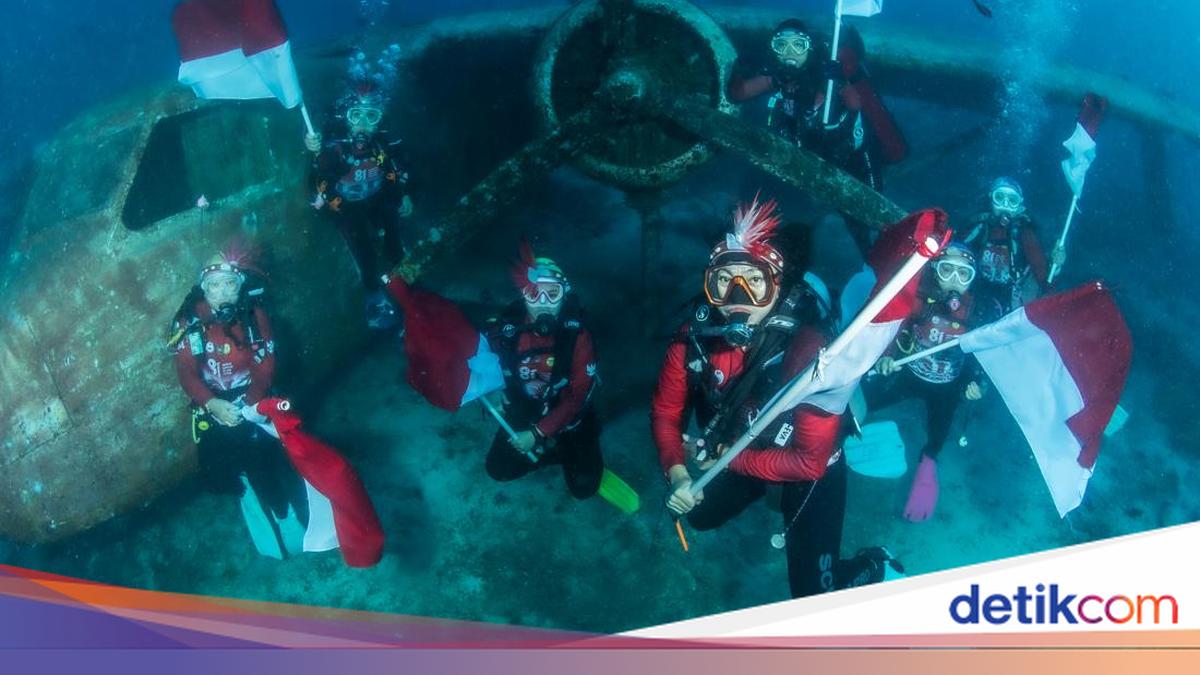
Chairwoman of the Indonesian Women’s Diving Association (WASI) Tri Tito Karnavian, together with Biak Numfor Regent Markus Mansnembra, WASI officials and local divers, carried out a ceremony and parade of the Red and White flag beneath the sea off Biak Island, Papua.
The dives were conducted at two locations, namely Catalina Point and Dede Point, which contain the wreckage of an Allied Forces Catalina amphibious bomber and a Dutch Scottish Aviation Twin Pioneer transport aircraft.
“We carried out this activity as an expression of love for the homeland, 80 percent of whose territory is ocean. So we are obliged to protect and love Indonesia’s seas,” said Tri in her statement on Monday (17/8/2026).
Tri said the choice of Biak as the ceremony location was not merely because of its clear waters and mesmerising coral reefs. Biak Island holds important World War II history as a military base for Japan and the Allied Forces. In addition, Biak Island was the main Dutch military base that became an infiltration target of the TNI’s Operation Trikora during the liberation of Papua.
Another advantage of Biak Island is its very clean land and sea areas. Unsurprisingly, Biak has been awarded the Adipura Trophy seven times consecutively as the Cleanest Small City by the Ministry of Environment.
“Given its natural beauty and historical potential, we hope Biak will become a tourism destination for both Indonesian and international visitors,” Tri said.
After the underwater ceremony, beach cleaning and mangrove planting activities were also carried out by divers, students and the Trash Hero environmental community, an international non-governmental organisation.
Source: jawawa.id (https://jawawa.id/newsitem/red-and-white-flag-flies-on-the-seabed-of-biak-papua-commemorating-important-indonesian-history-1786935177)
Originally published by detikcom (https://news.detik.com/berita/d-8621807/merah-putih-berkibar-di-dasar-laut-biak-papua-kenang-sejarah-penting-ri), translated from Indonesian