
Red-and-White Cooperatives: From Chasing Numbers to Building an Ecosystem
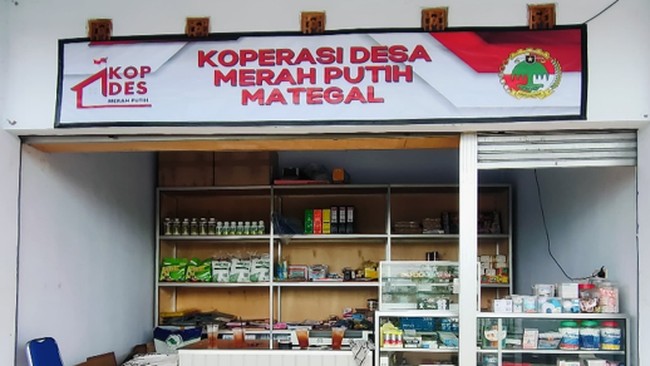
In mid-October 2026, the government announced that 10,070 Red-and-White Village/Urban-Village Cooperatives (KDKMP) were operating simultaneously, with a target of 35,000 units by the end of the year. This achievement deserves recognition.
But the figures also reveal a gap between registered cooperatives and active ones: by the end of November 2025, more than 82,000 cooperatives had legal entity status. In June 2026, the government cut its operational target from 80,000 to 40,000 units so it could focus on quality.
That was the right decision, and it raises a more fundamental question: once an outlet has opened, what enables a cooperative to survive and genuinely empower its members?
Quick to establish, fragile in operation
KDKMP emerged from a state-led approach. Targets are set centrally, funding relies on Village Funds and loans from state-owned banks, and state-owned enterprises are responsible for physical construction. This model is effective at increasing numbers. Yet under Law No. 25 of 1992, a cooperative is a voluntary association managed by its members.
That tension is evident on the ground. Technical guidelines often change. Supply chains have yet to be established, so outlets sell more subsidised fertiliser and staple goods than they purchase local residents’ harvests. Quite a few cooperatives exist on paper but have neither an operating business nor members who feel a sense of ownership.
If cooperatives like these take on debt before their businesses are up and running, they can easily become dependent. The problem is not the programme’s good intentions, but its sequencing: outlets and financing come first, while members, businesses and management capacity are left to follow.
The raw materials are already in the village
Cooperatives that endure are usually driven not by budgets or instructions, but by residents’ social capital: mutual assistance (ta’awun), voluntary bridging funds from managers and members, and trading at agreed margins and profit-sharing rates. Many managers say that these practices are “essentially already sharia-compliant”.
Examples are easy to find: cooperatives built around village commodities such as cassava or duck eggs, or those that partner with residents who own shop premises and use digital applications to serve members. The community economy often gets to work before a programme arrives. Good policy should recognise and strengthen such practices, not impose a uniform model on them.
The experience of Islamic microfinance institutions also shows that capital is not the only determining factor. Institutions using the same contracts can have very different levels of non-performing financing. The difference is usually regular meetings, mentoring and joint liability among members. Money without institutional capacity and member participation rarely creates a thriving cooperative.
Four steps towards an ecosystem
KDKMP needs to move from a programme focused on establishing outlets to an ecosystem linking cooperatives with empowerment programmes, Islamic social funds, financial institutions and mentors. Four steps could help achieve this.
First, change the measures of success. The number of units and outlets should be replaced with indicators of cooperative vitality: members actively making transactions, genuinely held member meetings, business turnover and the extent to which local products are absorbed.
The forthcoming presidential regulation on KDKMP governance is an opportunity to do this, while also affirming cooperative independence and stabilising technical guidelines. Honest reporting on cooperatives that are not yet operating is more useful for improvement than impressive-looking figures.
Second, make mentoring compulsory. Local governments could work with universities, village facilitators and zakat management organisations to provide mentors for groups of cooperatives.
Mentoring budgets should be attached to every rupiah of financing, rather than placed in a separate allocation that is the first to be cut when funds are tight. Mentors should also foster joint-liability groups and regular member meetings, where a sense of ownership and payment discipline take root.
Third, connect cooperatives with Islamic social funds gradually. Indonesia has significant potential in zakat, infaq, sadaqah and waqf, but only a small share is used productively. Financing could be structured in stages: the most vulnerable residents could begin with benevolent loans (qardhul hasan) funded by zakat and infaq, move to sale-based financing (murabahah) as their businesses grow, and then progress to profit-sharing partnerships (musyarakah mutanaqisah) once they are established.
Social funds could provide a first layer of risk protection, enabling Islamic financial institutions to finance residents who do not yet qualify for credit. To ensure legitimacy and sharia compliance, BAZNAS, the Indonesian Waqf Board, the Financial Services Authority (OJK) and the Ministry of Cooperatives should establish a joint framework: separate accounts for social and commercial funds, preservation of waqf principal, zakat reserved for eligible recipients (mustahik), and clear loss-sharing protocols. In this way, BAZNAS and waqf institutions would not merely distribute funds, but act as catalysts in helping mustahik become zakat payers (muzaki).
Fourth, measure impact comprehensively and build digitalisation on capacity. Success should be measured not only by income, but also by children’s education, health, family resilience and religious life, in line with the objectives of sharia (maqashid syariah).
Digital platforms matter because members’ transaction records can provide a basis for assessing creditworthiness and strengthening transparency. But digitalisation strengthens cooperatives whose institutions are ready; it cannot replace capacity that does not yet exist.
All these steps require joint work by government, communities, businesses, academics, the media, and Islamic financial and philanthropic institutions, supported by clear coordination and accountability protocols. Without them, collaboration can easily end with a memorandum of understanding.
Cooperatives are built, not simply established
The state has demonstrated its ability to establish tens of thousands of cooperatives in a short time. The next challenge is harder: ensuring that residents own and sustain them. The raw materials are already present in the villages: a spirit of mutual assistance, living muamalah practices and the potential of the community’s social funds.
The task of policy is to bring these elements together into an ecosystem, rather than replace them with instructions. If successful, KDKMP will become more than distribution points for staple goods: they can also serve as schools for entrepreneurship and gateways to financial inclusion for village residents. The cooperatives that endure will not be those established fastest, but those with the deepest roots.
Source: jawawa.id (https://jawawa.id/newsitem/red-and-white-cooperatives-from-chasing-numbers-to-building-an-ecosystem-1795503111)
Originally published by CNBC Indonesia (https://www.cnbcindonesia.com/opini/20261124125158-14-787949/koperasi-merah-putih-dari-mengejar-jumlah-ke-membangun-ekosistem), translated from Indonesian