
Red and White Cooperatives: Boosting the Village Economy and Shortening Supply Chains
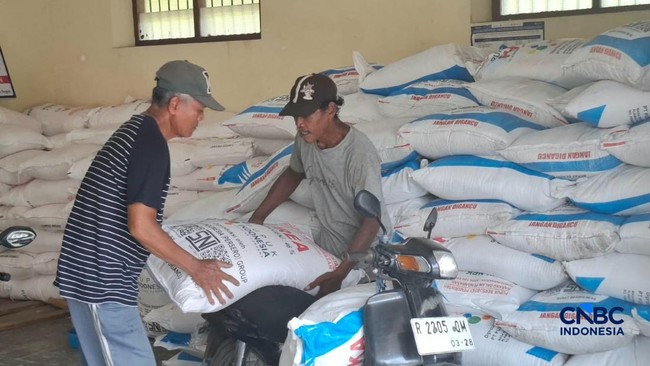
The administration of President Prabowo Subianto and Vice-President Gibran Rakabuming Raka is working to fulfil the mandate of the 1945 Constitution of the Republic of Indonesia. In the economic sector, the government is guided by Article 33 of the Constitution.
“The economy is organised as a collective endeavour based on the principle of kinship. This should not be regarded as a slogan or as fine rhetoric. The economy is organised as a collective endeavour based on the principle of kinship,” Prabowo said during a plenary Cabinet meeting at the State Palace in Jakarta on Monday, 20 July 2026.
One way the government is putting Article 33 into practice is through the Red and White Village/Sub-district Cooperative (KDKMP) programme. It aims to establish integrated economic service centres in villages and sub-districts while shortening supply chains, which have long contributed to inefficiencies in the economy.
At the main event marking the 79th National Cooperative Day at the Indonesia Arena in Jakarta on Sunday, 12 July 2026, Prabowo said he had been considering the idea of establishing the KDKMP for many years, since serving as a soldier in various regions. Having witnessed the hardships faced by rural communities, he came to believe cooperatives could strengthen the people’s economy and protect the most vulnerable.
“I am increasingly convinced that the only way to protect the people at the bottom is through the strength of cooperatives,” Prabowo said.
According to the chairman of the Great Indonesia Movement Party (Gerindra), the KDKMP is expected to reduce communities’ dependence on loan sharks and provide a channel for distributing subsidised goods so they reach their intended recipients.
“All subsidised goods must be distributed to the people through the Red and White Village Cooperatives. They must — I say they must — because subsidised goods for the people must not be traded. Those who need them should be the ones who receive them,” Prabowo said.
Prabowo also projected that the KDKMP would boost the national economy, generating annual fund flows of up to Rp223 trillion in villages and increasing the incomes of farmers, livestock breeders and fishers by as much as Rp202 trillion. At the same time, the government is aiming to improve the national logistics system, making it more efficient and reducing distribution costs.
“Every expert says that Indonesia’s logistics are among the least efficient and most expensive. This is what we will clean up and make more efficient,” the President said.
The KDKMP was established under Presidential Instruction No. 9 of 2025. Its operations are governed by Presidential Regulation No. 82 of 2026, signed on 19 September 2026. President Prabowo officially launched the programme in Klaten, Central Java, on 21 July 2025.
As of 15 October 2026, 10,070 KDKMP cooperatives were operating, against a target of 35,000 by the end of 2026. A total of 28,402 had completed construction of their buildings and retail outlets through PT Agrinas Pangan Nusantara, at an estimated cost of around Rp3 billion per unit, according to SIMKOPDES on 16 October 2026.
Administratively, 83,363 KDKMP cooperatives had legal-entity status, 79,733 were registered with SIMKOPDES and 60,854 held business identification numbers (NIB), as of 14 October 2026. They had 695,456 managers and supervisors. In terms of physical construction, 28,240 sites were 100 per cent complete, while work was still under way at a further 7,392 sites.
The President has appointed Coordinating Minister for Food Zulkifli Hasan as head of the task force for establishing the KDKMP. Hasan recently said the government had begun simultaneous monitoring of the cooperatives’ operations on 15 October 2026, following Prabowo’s instructions. The checks include the availability of goods and operational facilities.
“We want to make sure that goods and operational facilities are available. If they are not, we will find out what the problem is,” Hasan said, according to a report on Monday, 26 October 2026.
The monitoring involves local governments and regional officials, including governors, regional military commanders, regents and mayors, and sub-district heads, to help resolve supply and operational issues in their respective areas.
Positive effects of the KDKMP
Public policy analyst Trubus Rahadiansyah said the KDKMP could help stimulate regional economic growth, including by creating jobs. He cited the sale of subsidised fertiliser through the cooperatives as an example of how the programme could benefit farmers.
“Because it is subsidised, it will automatically benefit agriculture, and the target of food self-sufficiency can be pursued. The aim is to absorb a lot of labour in agriculture,” he told CNBC Indonesia on Friday, 23 October 2026.
Trubus said that when fertiliser and other products are subsidised, they could cost up to 50 per cent less than products sold in conventional shops.
“If that can be achieved, we believe it will bring benefits in terms of job creation, including for other products,” Trubus said. “The positive effect is that it can create jobs and boost economic growth in the areas where the KDKMP operates.”
Source: jawawa.id (https://jawawa.id/newsitem/red-and-white-cooperatives-boosting-the-village-economy-and-shortening-supply-chains-1793091063)
Originally published by CNBC Indonesia (https://www.cnbcindonesia.com/news/20261027142709-4-779864/koperasi-merah-putih-menggerakkan-ekonomi-desa-pangkas-rantai-pasok), translated from Indonesian