
Red-and-White Cooperatives and the Constitutional Mandate: Expanding Public Ownership of the Economy
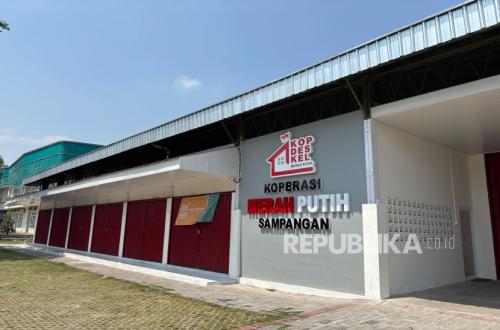
The uproar over the Government’s plan to involve Red-and-White Village/Urban-Ward Cooperatives in paying civil servants’ salaries highlights a more fundamental issue than disagreement over the mechanics of salary distribution.
Concerns about the impact on regional development banks’ liquidity, a decline in third-party funds and cooperatives’ readiness to provide financial services have quickly filled the debate. Meanwhile, the ambition to expand public ownership of the economy through cooperatives has received comparatively little attention.
For decades, Indonesia’s economic development has succeeded in increasing investment, growing companies and expanding financial-sector activity. That progress deserves recognition.
However, the growth of business activity has not always been accompanied by a more equitable distribution of capital ownership. Most people continue to participate as workers, consumers, suppliers or bank customers, while ownership and economic decision-making remain in the hands of a relatively limited group.
This is precisely the imbalance that the spirit of Pancasila-based economics seeks to address. The fourth paragraph of the Preamble to the 1945 Constitution sets public welfare and social justice as national goals. Article 33(1) then states that “the economy shall be organised as a joint endeavour based on the principle of kinship”.
The word “organised” carries a mandate: the state must not simply allow the economy to develop according to the power of capital.
The state is obliged to build an economic order that gives the public broader opportunities to own businesses, participate in decision-making and share in the benefits of development.
Mohammad Hatta viewed cooperatives as the form of enterprise closest to this ideal. Cooperatives bring economic activity together with democratic ownership.