
Recycling Innovation Strengthens Efforts to Curb Environmental Crisis and Boost Public Welfare
The Prabowo Indonesia Maju Movement (GPIM) has affirmed its commitment to strengthening the government’s environmental agenda in waste management through a circular economy approach. This programme is directed at transforming waste, which has long been an environmental burden, into a resource with economic value and renewable energy for the community.
GPIM Chairman Abi Aries Faturahman stated that the organisation is present to promote tangible solutions that focus not only on social programmes, but also on strengthening the community’s economy and environmental sustainability. According to him, one focus of this movement is developing a waste management system that can provide direct benefits at the regional level.
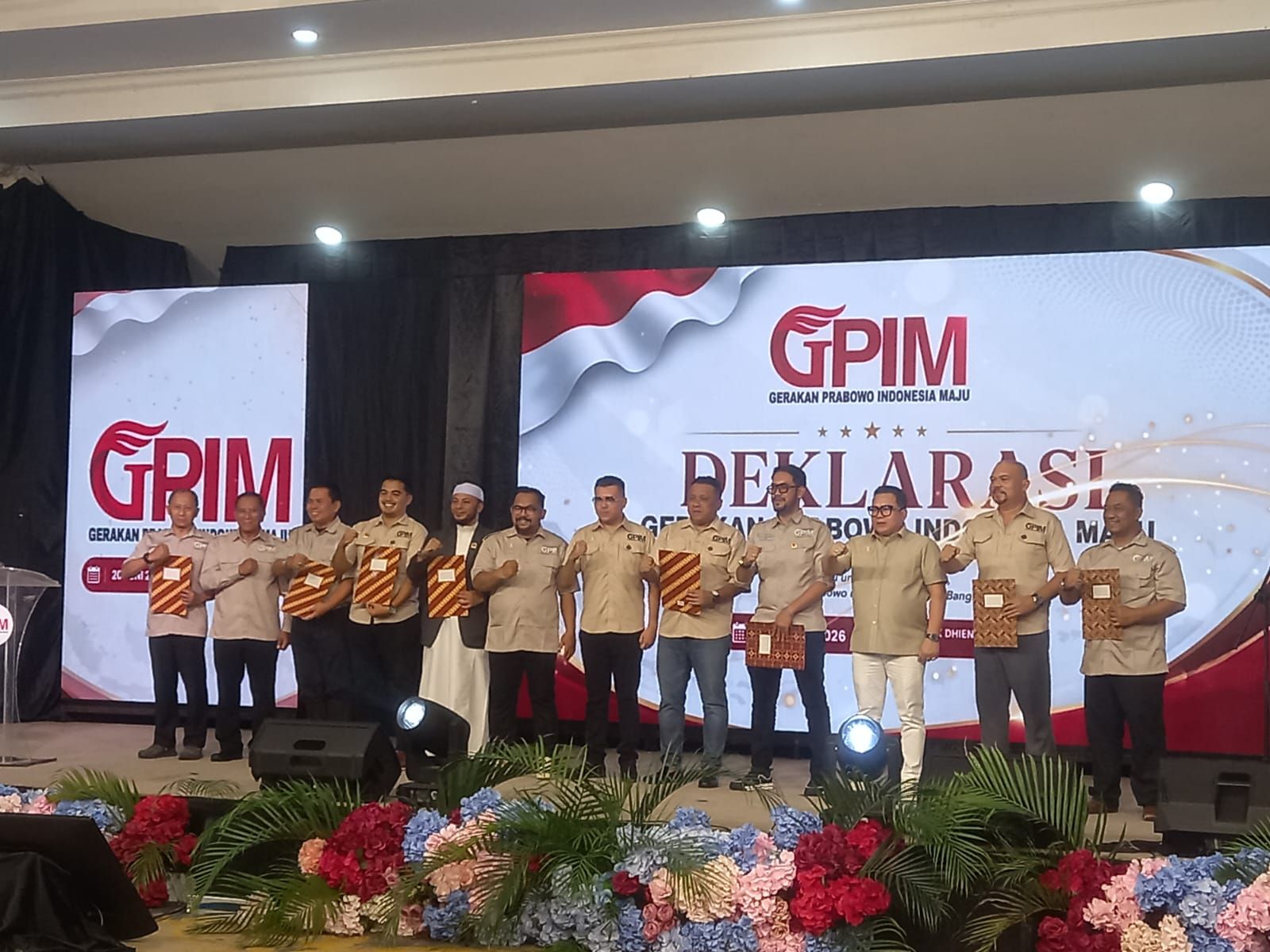
“We want to deliver programmes that are truly felt by the community, including how waste can be managed into something useful, economically valuable, and no longer an environmental burden,” Abi said during the declaration and inauguration of the board in the Cibubur area on Saturday (20/6/2026).
Abi explained that one of the major challenges needing immediate attention is methane gas emissions from waste piles, which have the potential to impact the environment and health. Therefore, GPIM is encouraging a technological approach in waste management, including the conversion of waste into energy such as biodiesel.
Abi also added that modern waste management must prioritise the utilisation of all types of materials so they do not end up as pollution. Organic waste, according to him, can be processed into compost to support the agricultural sector and food security. Meanwhile, inorganic waste such as plastic, paper, metal, and glass has high economic potential if processed through a recycling system. Plastic, for instance, can be processed into industrial raw materials or alternative fuel, while other materials can be reused for construction and manufacturing needs.
“Our principle is that no waste is truly useless. With the right technology, everything can be processed into energy or economically valuable products,” said Abi. He added that this approach is expected to create a waste management ecosystem that is not only environmentally friendly but also opens new economic opportunities for communities at the local level. “When the environment is managed well, the impact is not just cleanliness, but also an improvement in the community’s welfare,” he said.
Beyond the environmental agenda, Abi continued, GPIM was established not only to oversee the current administration but also to become the initial driving force to re-elect Prabowo Subianto in the 2029 General Election. To this end, GPIM affirmed its commitment to strengthening the implementation of the government’s existing Free Nutritious Meals (MBG) programme, through the Makan Bowo Gratis (MBG) programme, as an effort to improve food access for the community, especially for vulnerable groups and students in various regions.
“The MBG programme is not merely food aid, but also a tangible form of social mutual cooperation that can strengthen community resilience at the grassroots level,” Abi concluded.
Also present on the occasion were GPIM Secretary General Agung Subiyakto, GPIM Advisory Board member Major General (Ret.) Subandono Bambang Indrasto, GPIM Supervisory Board member Mohammad Arfan, GPIM Vice Chairman Amir, and other board members. GPIM Vice Chairman Amir added that several regions are currently running the Makan Bowo Gratis (MBG) programme and are beginning to feel direct benefits, especially in helping to meet the daily food needs of the community.
“The MBG (Makan Bowo Gratis) programme running in several areas is showing a positive impact, one of which is in Konawe Regency, Southeast Sulawesi, as one of the initial implementation areas. In that region, the free food service runs routinely every working day,” Amir explained. He added that going forward, the programme is expected to be expanded to various other provinces as a form of national food access equity. He stressed the importance of cross-party collaboration so the programme can run effectively and be well-targeted. “Our hope is that our MBG programme can be expanded to all 38 provinces so that more people can be helped,” he concluded.