
Recovery in Aceh Singkil: Bridge and Levee Construction Set as Priorities
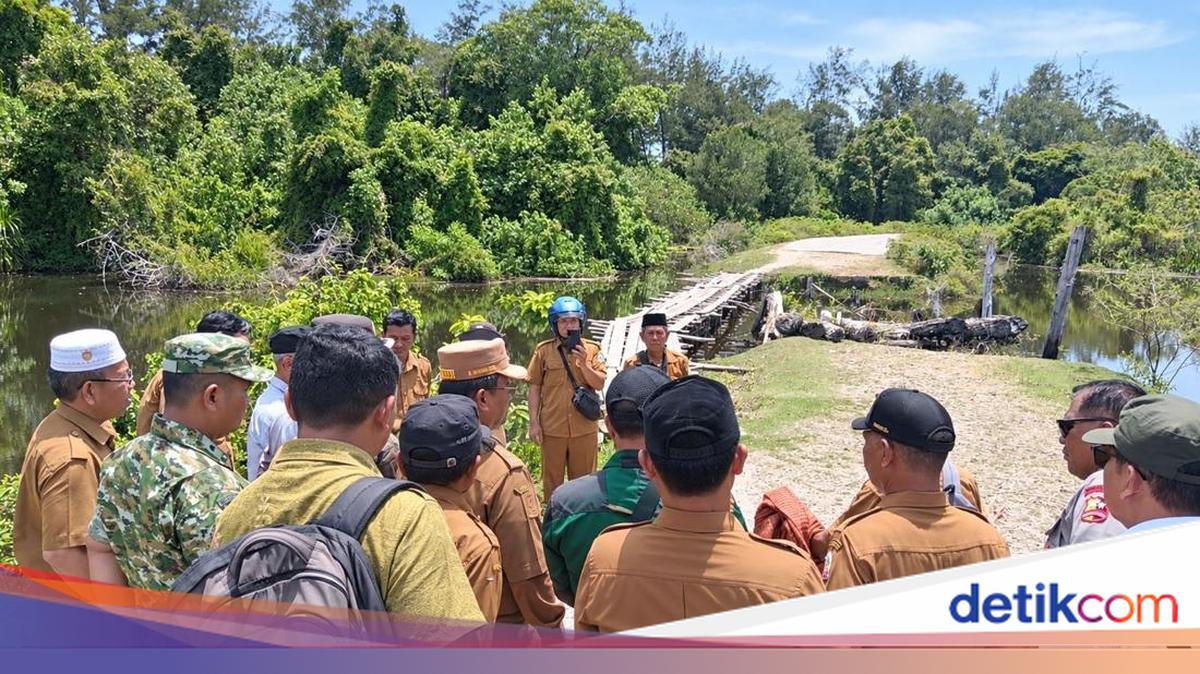
Restoring access to the Kuala Baru District and accelerating the construction of the Tanah Merah Levee have become the two primary priorities for post-disaster management in Aceh Singkil Regency, Aceh. These two infrastructure projects are essential to protect the community from flood risks while restoring regional mobility and economic activities.
Direct access to Kuala Baru remains severed. Residents currently rely on rafts and wooden bridges that can only accommodate two-wheeled vehicles while awaiting the installation of the Kuala Cangkul and Suat Merah Bailey bridges.
Materials for both bridges are already available at the Trumon Koramil; however, installation is pending the arrival of the implementation team, which is currently completing works in Aceh Tamiang. Once access is reconnected, the travel time from South Aceh to Aceh Singkil is expected to decrease from approximately nine hours via Subulussalam to just 1.5 hours.
Brigadier General TNI (Mar) Guslin Kamase, Chairman of the Aceh II Monitoring and Evaluation Team for the PRR Task Force, stated that restoring access to Kuala Baru could serve as a rapid measure providing immediate benefits to residents, including supporting the transport of plantation produce.
“The bridge materials are already available. Therefore, coordination with the Ministry of Public Works and the Indonesian Army must be accelerated so that personnel can be deployed immediately and access for the Kuala Baru community can be reconnected,” Guslin said in a written statement on Saturday (5/9/2026).
In addition to connectivity, attention is being directed towards the Tanah Merah Levee, which functions to protect flood-prone areas. Construction of the new levee has only reached 2.15 kilometres of the 22-kilometre target, or approximately 10 per cent.
Without adequate levee protection, subsequent flooding could potentially impact around 20,000 residents in the Gunung Meriah, Singerm, and North Singkil districts, as well as threaten local plantations. A handling package worth Rp 63 billion from the Ministry of Public Works must therefore enter the tender process immediately before the rainy season.
The acceleration of infrastructure work is also linked to the utilisation of additional Regional Transfers (TKD) for Aceh Singkil. From a main activity ceiling of approximately Rp 21.04 billion, realisation as of late August 2026 has only reached Rp 1.76 billion, or 8.38 per cent. The lowest absorption is found in the Public Works and Spatial Planning Department (PUPR), at Rp 145.54 million, or 1.14 per cent of its approximately Rp 12.81 billion ceiling.
The low realisation is primarily due to the fact that the additional TKD was only approved on 17 June 2026, meaning several packages are still in the procurement or pre-contract stage.
The Aceh Singkil Regency Government is being encouraged to conduct weekly evaluations led by the regional secretary to map the status of every package, accelerate procurement, and ensure that progress payments are processed on time.
Economic recovery for the community is also being strengthened through the fisheries sector. Validation by the Ministry of Marine Affairs and Fisheries, alongside extension officers, has identified 88 affected entrepreneurs, ponds covering 50,304 square metres, and 30 floating net cage plots as targets for intervention.
Assistance in the form of seeds and feed will be distributed based on this data once additional expenditure budgets become available in early August 2026.
“Acceleration must be carried out in a measurable manner. Budget absorption must be immediately translated into quality work; Kuala Baru access must be restored, the Tanah Merah Levee must be addressed before flooding recurs, and assistance for fisheries entrepreneurs must be realised promptly,” said Guslin.