
Record seizures fail to dent Southeast Asia's booming synthetic drug trade: UN report
Record seizures fail to dent Southeast Asia’s booming synthetic drug trade: UN report
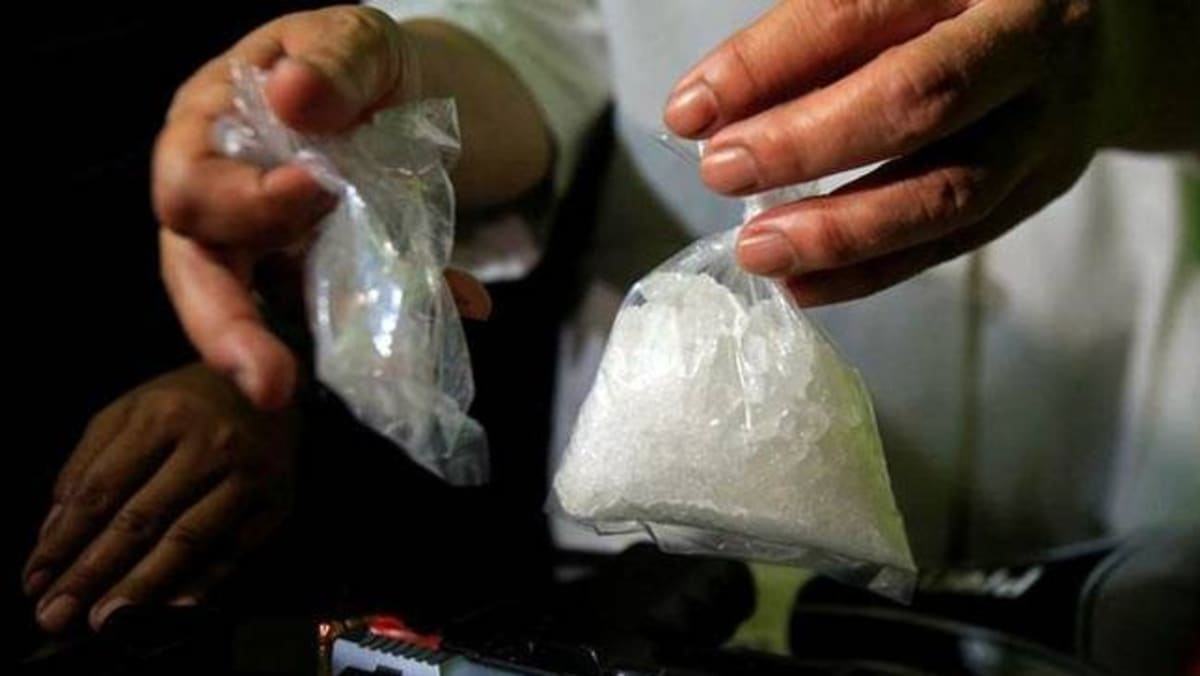
Methamphetamine and ketamine seizures in Asia reached record highs in 2025, but experts tell CNA that falling prices and expanding criminal networks suggest supply remains stronger than ever.
BANGKOK: Despite record levels of seizures across East and Southeast Asia last year, the illegal synthetic drugs industry is thriving and growing, according to new regional findings.
Methamphetamine seizures reached 349 tonnes in 2025 - a 48 per cent increase from the previous year and more than five times the amount seized a decade ago - according to a report by the United Nations Office on Drugs and Crime (UNODC) released last Friday (Jun 12).
The seizure of ketamine also soared 185 per cent from 2024 reaching 52.5 tonnes in 2025.
Experts tell CNA the significance is not the seizures themselves but that despite record enforcement activity, supply appears stronger than ever.
“Authorities may be catching more drugs, but traffickers are producing even more,” said Nualnoi Treerat, an economist and director of the Institute of Asian Studies at Chulalongkorn University.
As production capacity, trafficking networks and demand expand, the market for synthetic drugs is not contracting, but rather consolidating and expanding into new areas, the report, titled Synthetic Drugs in East and Southeast Asia: Latest Developments and Challenges 2026, found.
It is a reflection of the scope and influence of organised criminal networks with aggressive expansion strategies, mainly based in Southeast Asia, and the lack of impact of law enforcement action, Inshik Sim, a lead analyst at the UNODC Regional Office for Southeast Asia and the Pacific who helped produce the report, told CNA.
“Seizure data, of course, represents law enforcement success, but at the same time, is more driven by supply,” he said.
“And increased supply clearly tells us that law enforcement action itself is not the only measure to deal with this. The indicator for success would be increases in the price of drugs, but I don’t see that happening.”
UNODC found that crystal meth prices continued to decline across key Southeast Asian markets. Myanmar remains the cheapest market in the region, with retail prices falling from US$6 per gram to US$5.55 per gram in 2025.
Thailand experienced one of the sharpest declines, from US$20 per gram to US$13.50 per gram in a single year, while Indonesia saw prices drop more than 40 per cent, from roughly US$134 per gram to US$79 per gram.
The ketamine market largely mirrors that for methamphetamine.
“That tells you that whatever you’re seizing is a drop in the ocean, and it’s just being written off as the cost of doing business,” said Richard Horsey, senior Myanmar adviser for the International Crisis Group, a global non-profit organisation.
The vast majority of methamphetamine seizures occurred in Southeast Asia, “highlighting the immense volume of methamphetamine trafficked through land-based and maritime routes in Southeast Asia,” the report said.
Thailand alone seized more than 159 tonnes of methamphetamine in 2025, accounting for nearly half of all meth seized across East and Southeast Asia.
Much of the production originates in Myanmar’s Shan State, “an area traditionally known for the presence of organised crime and non-state armed groups involved in illicit activities”, the report said.
“Myanmar is at the heart of criminality in Southeast Asia, of transnational organised crime,” Horsey added.
The fundamental problem lies in the fact that production networks continue to operate in areas where state authority is weak and enforcement is limited, Nualnoi said.
“As long as these conditions persist, drug production can quickly recover even after major crackdowns.”
The synthetic drugs market is also consolidating and expanding into new areas, the report found, with advanced economies in East Asia a growing concern.
While drug demand was typically low in Japan and South Korea, it has been “rapidly expanding”, Sim said.
Methamphetamine continued to represent a “major drug threat in Japan” in 2025, although seizure quantities declined substantially from the exceptionally high levels recorded in 2024, the report found.
Customs there also seized approximately 1,531 kg of cannabis products in 2025, more than three times the amount the previous year.
“These two countries have higher price tags for these drug commodities, and it is likely that there will be some sustained supply to those two countries,” Sim said.
Because of those higher prices in both countries, traffickers may be targeting them as premium markets, particularly for the trafficking by air passenger couriers, according to the report.
Korea’s methamphetamine seizures involving such couriers rose to 199 kg in 2025 compared with 106 kg in 2024. Both countries also recorded elevated seizures of ketamine.
“Especially from the Korean side, they have always believed that they were relatively safe from the drug challenges,” Sim said.
“But now they see the implications of intensified supply from Southeast Asia as having a significant impact on their country.”
“A PERFECT STORM”
The biggest shift identified by UNODC is the emergence of an interconnected criminal economy stretching from meth labs to scam compounds, money laundering networks and cybercrime operations.
Drug trafficking is increasingly just one form of revenue inside a diversified criminal ecosystem, the report said.
It points to a “deepening convergence” between illicit drug production and the region’s scam industry and wider illicit economy.
Highly sophisticated criminal networks now operate across multiple countries. These groups control supply chains, logistics, money laundering operations, online financial systems and other forms of illicit business, Nualnoi said.
Production has become increasingly industrialised, transnational and diversified, allowing criminal groups to manufacture and distribute drugs on an unprecede
Source: jawawa.id (https://jawawa.id/newsitem/record-seizures-fail-to-dent-southeast-asias-booming-synthetic-drug-trade-un-report-1781995808)
Originally published by CNA (https://www.channelnewsasia.com/asia/drug-meth-ketamine-seizures-asia-myanmar-scam-6194666)