
Record Number of Central Java Regional Leaders Caught in Corruption Scandals
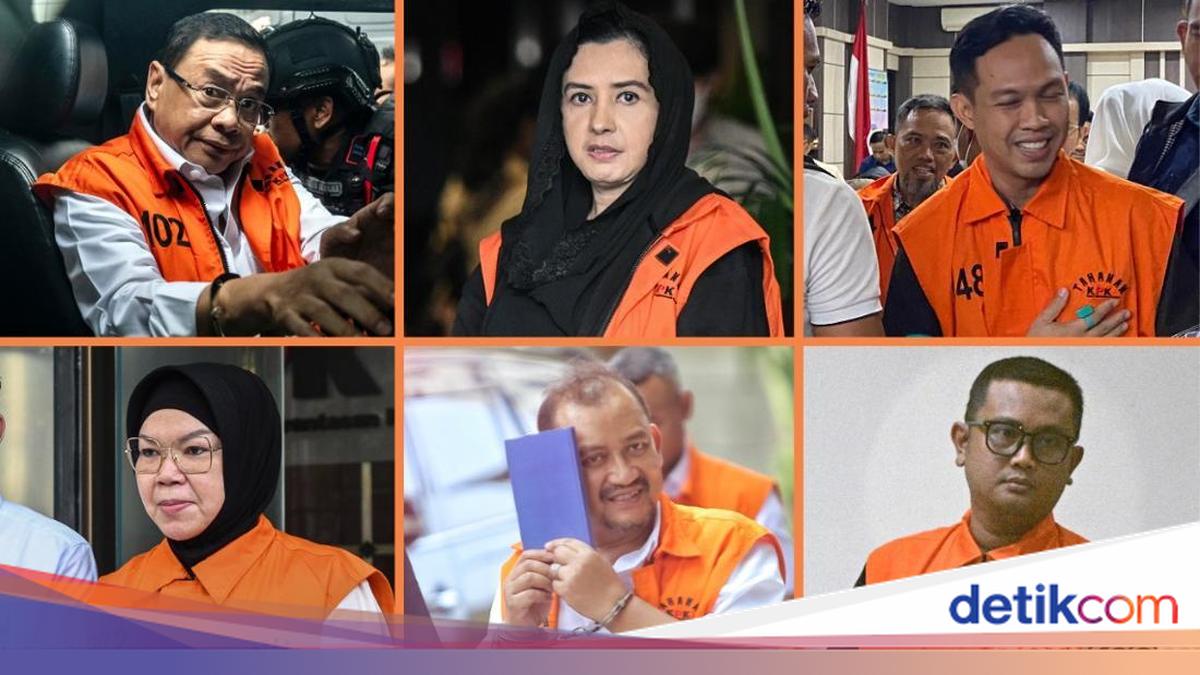
Misfortune seems unwilling to leave Hamenang Wajar Ismoyo alone. After being named a corruption suspect, he has now been expelled from the party that brought him to office as Klaten regent for 2025–2030.
Deddy Sitorus, a member of the central executive board of the Indonesian Democratic Party of Struggle (PDI Perjuangan), said the expulsion was part of the party’s internal mechanism, which automatically applies to any cadre caught in a sting operation (OTT).
“However, in cases not involving an OTT, we give them the chance to wait until there is a final and binding legal decision,” the PDI Perjuangan central board member told detikX last week.
Hamenang was expelled on Monday, 19 October 2026, four days after the Corruption Eradication Commission (KPK) formally named him a suspect on 16 October. He was named alongside two others: Ahmad Luthfi H Rahmatullah, head of the Central Java representative office of the Supreme Audit Agency (BPK), and private-sector figure Muhammad Amin Wahyu Utomo of PT Madani Winasis Creative.
Hamenang is suspected of involvement in five corruption schemes: manipulation of BPK audit findings; bribery in the procurement of goods and services; payments from non-metallic mining excavations; regular payments from regionally owned enterprises; and collection fees paid by Klaten regency officials. He has been charged under Article 12(e), Article 12(f) and/or Article 12B of Law No. 31 of 1999.
“The KPK has placed the suspects in detention for an initial 20 days, from 16 October to 4 November 2026,” acting KPK director of investigations Ahmad Taufik said at a press conference on Friday, 16 October 2026.
The KPK’s decision to name Hamenang a suspect is not its first such action against a Central Java regent in 2026. Before Hamenang, the commission carried out sting operations targeting five other regents in the province.
Pati Regent Sudewo was the first to be caught in a KPK sting operation in Central Java this year. The Gerindra Party central board’s organisational empowerment chief was named a suspect in a case involving the sale of public posts and bribery in goods and services procurement.
Last week, Edwin Pudyono, presiding judge at the Semarang Corruption Court, formally declared Sudewo a defendant. He was sentenced to eight and a half years in prison and fined Rp300 million. Sudewo was also ordered to pay Rp3.5 billion in compensation.
“If the defendant does not have sufficient assets to pay the compensation, he will be sentenced to a further two years in prison,” Edwin said, according to detikJateng on Wednesday, 21 October 2026.
Two months after Sudewo’s arrest, the KPK carried out sting operations against two more Central Java regents. Pekalongan Regent Fadia Arafiq was arrested in a covert operation on 3 March 2026. The Golkar Party’s Pekalongan regional chair was detained over alleged manipulation of the winner of a project procurement tender.
Ten days later, the KPK arrested Syamsul Auliya Rachman, chair of the executive council of the National Awakening Party’s (PKB) Cilacap branch. The now-suspended Cilacap regent faces allegations of extorting holiday bonuses (THR) from officials in the regency. The money was allegedly intended to fund THR payments to a local mass organisation and for Syamsul’s personal use.
In July 2026, the KPK carried out sting operations against two more regents in Central Java. Sukoharjo Regent Etik Suharyani was targeted over alleged extortion and deductions from the salaries of civil servants in the regency administration. The operation took place on 9 July 2026.
Pemalang Regent Anom Widyantoro was arrested by the KPK on 28 July 2026, also over alleged extortion of officials in the Pemalang administration.
Both Etik and Anom are PDI Perjuangan cadres. This means three Central Java regents from the party, including Hamenang, are now awaiting trial as corruption defendants.
The high number of Central Java regional leaders from PDI Perjuangan implicated in corruption is closely linked to the party’s electoral strength in the province, which has 39 regencies and municipalities. PDI Perjuangan has won every election there from 1999 to 2024.
In the 2024 election, PDI Perjuangan secured 5.2 million votes in Central Java, 2.2 million more than the PKB, which came second. The party also elected the largest number of regional heads, with 19.
Responding to the naming of three regional leaders from PDI Perjuangan as suspects, senior party politician Sidarto Danusubroto said the party had repeatedly warned regional leaders against corruption. He said the party would not hesitate to take action against any of its regional leaders found guilty of corruption.
“We must stay away from such disgraceful conduct. If we associate ourselves with those practices, we will be detained,” Sidarto said.
The six Central Java regents named as suspects add to the list of regional leaders implicated in corruption since the KPK was established. KPK enforcement data shows that 183 regents and deputy regents have been caught up in corruption cases from 2004 to date. The largest number of cases occurred in 2018, when 30 regents and deputy regents were implicated.
Lakso Anindito, head of the IM57+ Institute, said corruption in regional governments remains the most prevalent form of corruption each year. KPK data shows that the commission has uncovered 922 corruption cases in regional administrations to date, an average of 42 a year.
Areas rich in natural resources and with extensive procurement plans are the most vulnerable to corruption, Lakso said. In resource-rich areas, corruption commonly occurs in the licensing process. In areas with extensive procurement, it often takes the form of inflated prices or project bribes. “In Java, it is almost all procurement of goods and services,” he said.
More recently, these two methods have expanded into other forms, including extortion and the sale of public posts. But, Lakso said, they ultimately remain rooted in the two main schemes: licensing, and the procurement of goods and services.
“Sometimes a regional head extorts subordinates over rotation, transfers and so on. But what do the subordinates do in the end? It is the same: they extort through licensing or allocate contracts so they can make payments up the chain,” Lakso concluded.