
Record 695 Billion Ton Increase in Antarctic Ice: Scientists Discover the Trigger
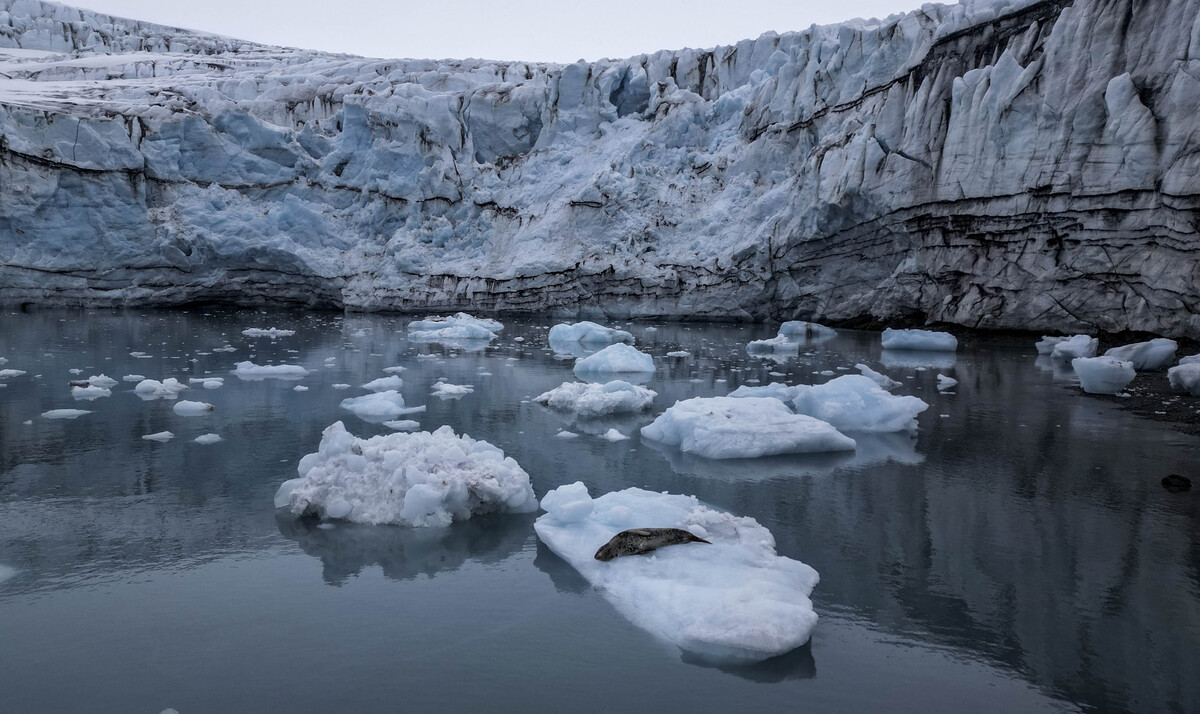
East Antarctica recorded an extraordinary increase in ice mass of 695 billion tonnes between 2021 and 2023. This phenomenon temporarily slowed the long-term decline of the Antarctic ice sheet, and researchers have now discovered the surprising reason behind the event.
Based on a recent study published in the journal Nature on 19 August, scientists found that warming in tropical oceans thousands of miles away has altered atmospheric circulation. This change channelled large amounts of moisture towards the continent, which subsequently triggered very heavy snowfall.
The Antarctic ice sheet is a primary source of uncertainty for scientists in estimating future global sea-level rise. Over the last two decades, Antarctica has lost an average of approximately 140.5 billion tonnes of ice per year.
However, this pattern shifted briefly during the 2021-2023 period. This 695 billion tonne mass addition was recorded as the largest Antarctic mass increase ever observed by the GRACE satellite mission.
The research, led by the Institute of Oceanology of the Chinese Academy of Sciences (IOCAS), analysed gravity satellite measurements, snow accumulation records from ice cores, and atmospheric circulation simulations to understand this phenomenon.
The research team identified sustained warming in the tropical warm pool during 2021-2023, a region where the western tropical Pacific meets the eastern Indian Ocean. This warming triggered what scientists call a “Rossby wave train”, a large-scale atmospheric wave pattern capable of transmitting weather changes across vast distances.
This disturbance moved towards high southern latitudes and rearranged atmospheric conditions around Antarctica. This resulted in a north-south dipole circulation pattern, with unusual low pressure south of Australia and high pressure along the East Antarctic coast.
This pressure pattern strengthened the transport of water vapour from the mid-latitude Indian Ocean to East Antarctica through “atmospheric rivers”.
Atmospheric rivers are narrow corridors in the atmosphere that carry large amounts of water vapour. When they reach cold regions such as Antarctica, this moisture falls as heavy snowfall. Simulations show that the dipole circulation directed more atmospheric rivers towards the Queen Mary Land-Wilkes Land region, adding significant mass to the ice sheet.
Interestingly, researchers found that the contribution from anthropogenic factors (human activity) accounted for only 9% of the observed snowfall anomaly. This suggests that the general increase in atmospheric moisture due to global warming is not the primary explanation for this specific event.
Researchers described the tropical warm pool as a long-distance “regulator” that can influence the East Antarctic ice mass over multi-year periods. Similar phenomena are estimated to occur approximately once per decade.
“We have found a previously under-recognised ‘tropical warm pool-East Antarctic Ice Sheet’ teleconnection pathway,” said Yunhe Wang from IOCAS, the lead author of the study.
Despite the striking increase, researchers emphasised that this event is temporary. The long-term decline of the overall Antarctic ice sheet continues. The West Antarctic ice sheet is still losing mass, and several glaciers in East Antarctica remain vulnerable to melting from below due to warming seawater.