
Reconstructing Indonesia’s Electoral System: Simplifying the Complex
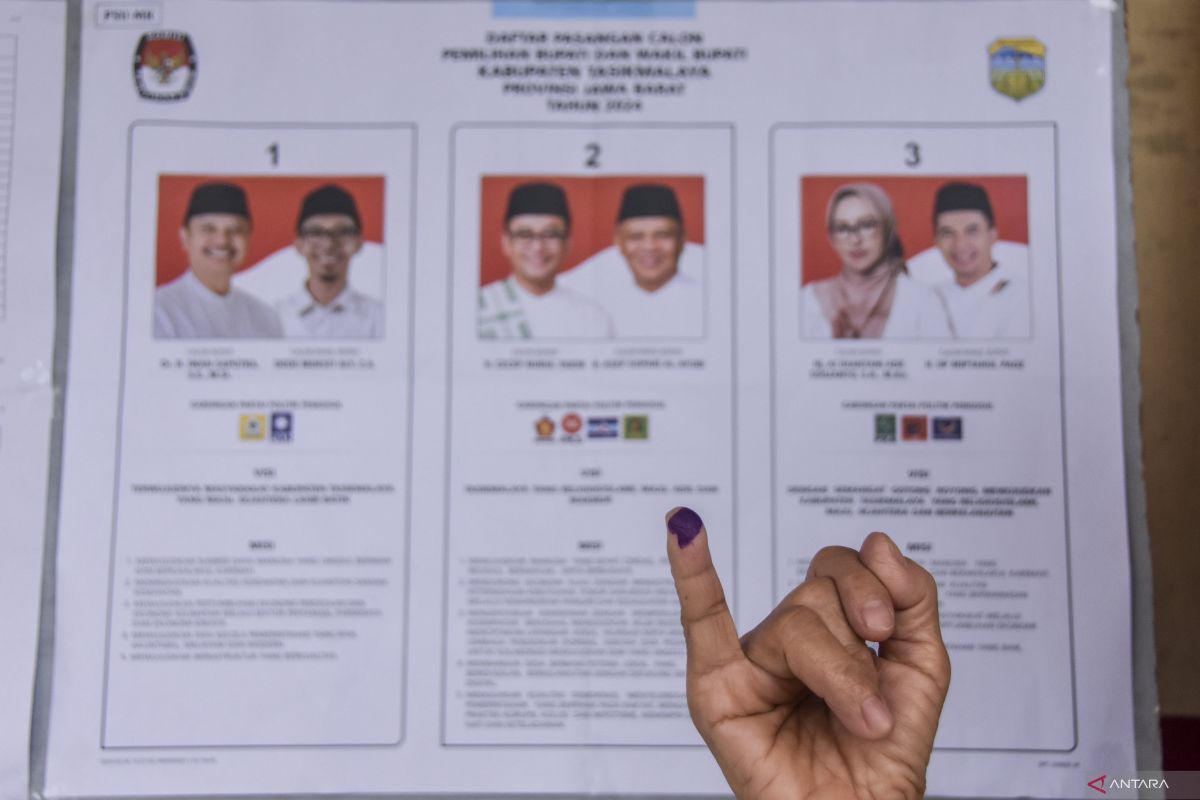
The conduct of simultaneous elections in Indonesia has cemented its place in the history of global democracy as the world’s most complicated political event.
Under Constitutional Court Decision No. 14/PUU-XI/2013, the presidential and vice-presidential election was combined with legislative elections for the House of Representatives (DPR RI), Regional Representative Council (DPD RI), provincial Regional Legislative Councils (DPRD), and regency and municipal Regional Legislative Councils (DPRD). Voters must cast five ballots at polling stations in a single day.
Given the vast archipelagic geography and a permanent voter list (DPT) of more than 204 million people across over 820,000 polling stations, election logistics face extraordinary pressure.
The description used by international observers of this as ‘the world’s most complex one-day election’ is no exaggeration. The open-list proportional system, with thousands of legislative candidates and more than a dozen political parties, demands a high level of operational capacity from the General Elections Commission (KPU), which runs the polls.
In the voting booth, people do not simply choose a president: they must also unfold four large ballot papers crowded with hundreds of candidates’ names. This excessively complicated design tests voters’ cognitive limits as well as the physical endurance of election workers on the ground.
Away from the grand spectacle of democracy, conditions at the grassroots reveal troubling humanitarian and efficiency concerns.
The most visible indicator is the high number of invalid ballots. Official KPU data for the 2024 election show that, although turnout in the presidential election reached 83.58 per cent and invalid votes accounted for only 2.49 per cent, the proportion of spoiled ballots in the legislative elections for the DPR RI and DPD RI was substantially higher than in the executive election.
Research by the Association for Elections and Democracy (Perludem) confirms that the rise in invalid legislative ballots was driven by their large physical size and voter fatigue, with people struggling to understand how to mark them. The heaviest physical and psychological burden fell on members of polling station working committees (KPPS).
A joint report by the KPU and the Ministry of Health for the 2024 election presents a troubling picture: between 181 and 182 election workers died, while more than 4,700 others fell ill due to severe exhaustion.
Non-stop shifts that often exceeded 24 hours—from setting up polling stations to voting and manual counting—show that the current workload is beyond reasonable human limits. The problem was compounded by technical failures in the digital Sirekap application, which repeatedly fuelled legal uncertainty and disputes over the tallying results.