
Reconsidering the Sustainability of the Free Nutritious Meal Programme
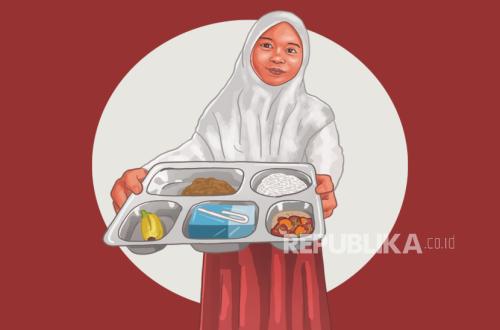
The Free Nutritious Meal (MBG) programme stems from an undeniable idea: ensuring Indonesian children receive nutritious food as part of a long-term investment in health and human resource development.
However, when a programme designed to improve health quality repeatedly faces food safety issues and suspected poisoning cases, the government needs to reconsider its implementation mechanisms objectively and proportionally. The question that must be asked is not whether the public needs nutritious food, but whether those benefits can be achieved without introducing health risks that harm the beneficiaries.
From an Islamic law perspective, this issue can be viewed through the principle of “Dar’ul-mafāsidi muqaddamun ’alā jalbil-maṣāliḥ”, which prioritises the prevention of harm over the pursuit of benefits in decision-making. On the other hand, the principle of “Yutaḥammalud-dhararul-khāṣṣu lidaf‘idh-dhararil-’āmm” asserts that certain specific harms may be endured to prevent a much broader harm to the public interest. Both principles suggest that government programmes with good intentions must still be evaluated when their implementation potentially creates risks that contradict the goal of public welfare.
Public Benefit Must Not Ignore Safety
The objective of the MBG programme has a strong social foundation, as meeting children’s nutritional needs is directly linked to health, learning ability, productivity, and the long-term quality of Indonesia’s human resources. The problem arises when the achievement of these goals is not fully supported by a system capable of guaranteeing that the food provided meets food safety standards.
Nutritious food cannot be considered a benefit if the processes of production, storage, transport, or presentation cause health issues for the recipients. Quoting Professor Ali Khomsan, a professor of Food and Nutrition at IPB University, in one media report, he stated that causes of poisoning include stale food, ingredients that are not cooked perfectly—potentially leading to microbial contamination—and water that does not meet health standards. He emphasised that these elements must be prevented throughout the cooking, preparation, and distribution processes, and the entire chain must be well-maintained.
This view demonstrates that the MBG issue cannot be understood merely as a matter of food availability, but also as a matter of national food safety governance. From an Aristotelian perspective, political life is essentially directed towards achieving the common good; thus, government policies must be judged based on their benefit to the interests of society as a whole. This framework is relevant to viewing the MBG programme, as the government must not only ensure the programme meets its targets but also ensure its implementation does not create new losses.
When food provided to children poses health risks, the issue must be treated as part of a policy evaluation, rather than being dismissed as a mere technical glitch. The principle of preventing harm (dar’ul-mafāsid) provides a firm principle: when benefits and potential damage collide, the prevention of damage must receive priority.
The State Must Be Able to Correct Its Policies
One of the challenges in implementing large-scale government programmes is the tendency to maintain them due to the massive budget, the number of beneficiaries, and the established institutional interests. However, the scale of a programme should not cause the government to lose its ability to make corrections when problems threatening public interest are discovered.
American pragmatic philosopher John Dewey viewed government as a public instrument that must be directed to manage common interests through responsible institutions and officials. Dewey’s thought teaches us that the quality of governance is seen not only in the ability to implement policy but also in the ability to improve policy when its consequences do not align with its objectives.
In the context of the MBG, success should not be measured solely by the amount of food produced, the number of schools receiving it, or the amount of budget absorbed. While these indicators are important for measuring programme outputs, the government also needs to measure the impact on the health of beneficiaries and the risks that emerge throughout the implementation process. If poisoning cases occur, the government should view them not merely as statistics, but as indicators that certain parts of the system may not be functioning optimally.
As the scale of the programme increases, so do the consequences if there is a weakness in any link of the food production and distribution chain. Therefore, the ability to temporarily suspend problematic parts of the programme can actually be a sign that the government is exercising the principle of precaution to protect the public.
Temporary Suspension is Not a Rejection of MBG
The debate regarding the MBG is often placed in an overly simplistic choice between supporting the programme’s continuity or rejecting it entirely, whereas there is a more proportional policy option. That choice is to implement a temporary suspension in problematic locations or system segments while conducting investigations, improving standards, and strengthening oversight mechanisms.
Source: jawawa.id (https://jawawa.id/newsitem/reconsidering-the-sustainability-of-the-free-nutritious-meal-programme-1789365415)
Originally published by Republika (https://analisis.republika.co.id/berita/tlc6cq291/mempertimbangkan-kembali-keberlanjutan-program-mbg), translated from Indonesian