
Recommended masks to ward off volcanic ash exposure
Jakarta (ANTARA) - Professor Dr Faisal Yunus, Ph.D., Sp.P(K), a senior professor at the Department of Pulmonology and Respiratory Medicine at the Faculty of Medicine, University of Indonesia, has stated that N95 masks can be used to help protect the respiratory tract from exposure to volcanic ash.
“An N95 is a mask that can block 95 per cent of particles in the air. So some particles still get in, but only 5 per cent, meaning far less gets through,” he said when contacted by ANTARA in Jakarta on Monday.
“If less gets in, the danger is naturally reduced — it may still exist, but it is far less than wearing nothing at all,” he added.
He said that ordinary masks, including duckbill-shaped masks, can also be used to ward off dust exposure, although their ability to filter fine particles is lower.
“It is still better than nothing, though of course the ideal mask is preferable,” he said.
Responding to the practice of wetting masks, Professor Faisal said that in theory, if a mask is dampened, dust particles will stick to its surface and thus not enter the respiratory tract.
“If it is wet, the dust sticks immediately and goes no further. So in theory that is correct,” he said.
“N95/KN95/FFP2 are the best options, as long as they fit snugly with no gaps at the sides of the nose and cheeks,” he told ANTARA in Jakarta on Monday.
He stated that a folded surgical mask is also fairly helpful if worn properly, ensuring it covers both the mouth and nose.
“Cloth masks are the weakest and should only be used in emergencies when no other options are available,” he said.
He added that wetting a mask does not improve its ability to filter volcanic ash.
“What happens is merely a cooler, more comfortable sensation that creates a false sense of security,” he said.
According to him, a dampened mask can be harder for air to pass through, making the wearer feel more breathless. A moist mask can also become a breeding ground for germs.
“Replace the mask if it becomes wet, dirty, or clogged with ash,” he said.
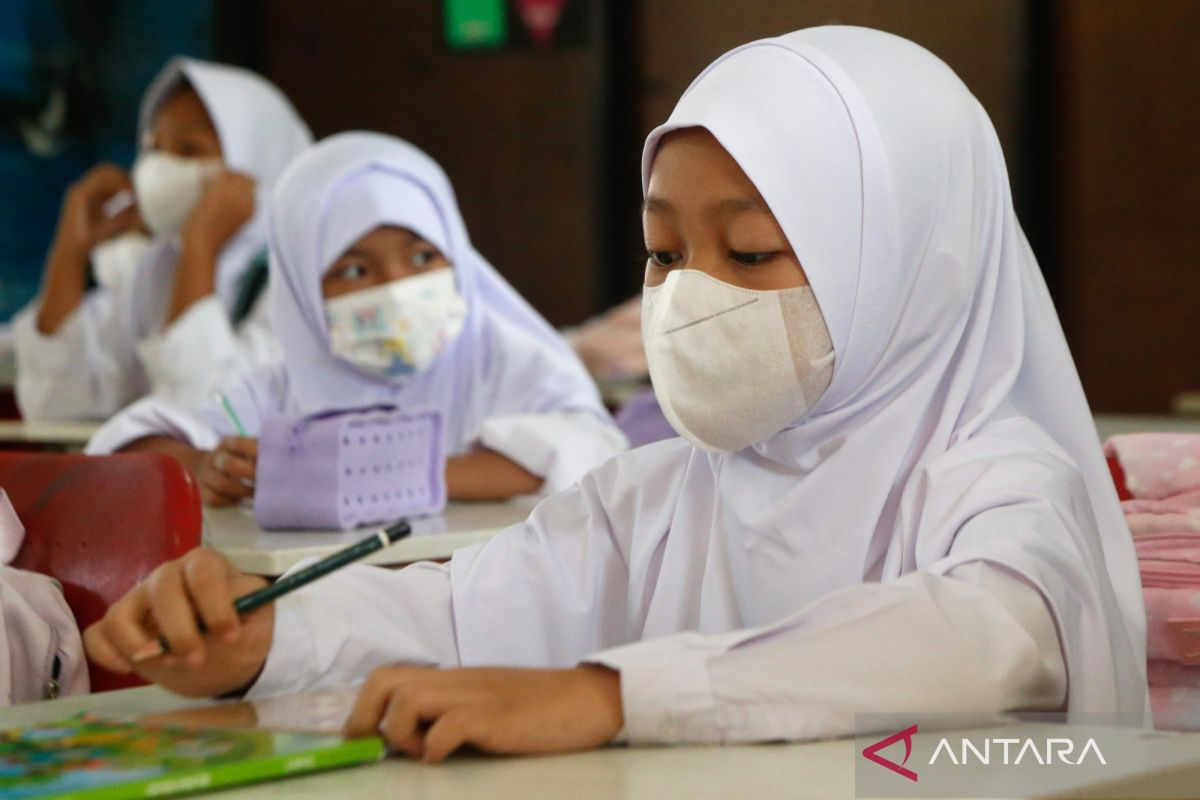
“For young children, N95 masks generally do not fit snugly on their faces, so the best protection is to stay indoors,” he added.
Several volcanoes in Indonesia have recently erupted within a short space of time, including Mount Anak Krakatau, Ibu, Semeru, Lewotobi Laki-laki, Ili Lewotolok, and Sinabung.
According to information shared via the official social media account of the Meteorology, Climatology, and Geophysics Agency (BMKG), the spread of volcanic ash from the eruption of Mount Anak Krakatau in the waters of the Sunda Strait on 7 September 2026 at 15.00 WIB was identified as heading towards parts of Banten, West Java, Lampung, and Bengkulu.
Imran Pambudi, Director of Vulnerable Group Health Services at the Ministry of Health, said that exposure to volcanic ash containing sharp, acidic particles can harm the lungs.
The government is therefore urging residents to wear protective equipment such as masks to reduce the health impacts of volcanic ash exposure resulting from volcanic eruptions.