
Recognising the OJK’s Stock Exchange Reforms
For a year, the Indonesia Stock Exchange (IDX) has been beset by problems. They began when several rating agencies identified issues with the exchange’s governance. We must acknowledge that the Jakarta Composite Index (JCI) has taken a battering this year. Year to date, the JCI briefly reached a high of Rp 9,134, but is now at around Rp 5,000, having fallen at one point to a low of Rp 4,904.
The sharp correction shocked shareholders, particularly new and retail investors. Their portfolios were eroded, with losses exceeding 50 per cent in some listed companies. If they took the shortcut of selling at a loss near the bottom, they would have suffered a major setback. The situation could cause psychological fear and put them off investing in shares.
This “crisis” began with warnings from several rating agencies about the exchange’s governance. In September 2025, MSCI called for improvements in the transparency of share ownership and the number of shares available to the public (free float). A month later, it also highlighted difficulties in verifying shareholdings below 5 per cent and the high concentration of ownership (High Shareholding Concentration), which raised suspicions of coordinated share trading.
Perhaps MSCI believed the exchange authorities had not taken sufficiently serious action. In late January 2026, it announced a temporary freeze (interim freeze) on all Indonesian equity indices. MSCI reviewed the freeze in April and August 2026, but maintained the policy.
In its April–May 2026 review, MSCI also removed BREN and DSSA from the indices it provides to investors. The two companies were dropped because of highly concentrated ownership: 97.31 per cent for BREN and 95.71 per cent for DSSA, far above the minimum free-float threshold of 15 per cent it recommends. From February to May 2026, the FTSE Russell also focused on HSC and free-float issues.
The storm returned in mid-October 2026, when MSCI “threatened” to downgrade the IDX from emerging-market to standalone-market status. It nevertheless left the door open to consultation until June 2027. MSCI’s warning caused panic in the market and prompted selling, sending the JCI down by as much as 11.57 per cent.
New hope
Despite the sell-off in October, our capital market remains a promising investment destination. The number of individual investors on the IDX is growing. In October 2026, the total number of capital-market investors reached 33.5 million SID, up 65 per cent from the end of 2025. The number of mutual-fund investors on S-Invest reached 32.19 million SID, up 68 per cent from the end of 2025. Meanwhile, the number of share and bond investors on C-Best reached 10.36 million SID, an increase of 21 per cent, while the number of government securities (SBN) investors reached 1.64 million SID, up 17 per cent.
Compared with September 2026, when the capital market had 32.1 million SID investors, this means 1.4 million new investors were willing to seize investment opportunities—and accept the risks—while the IDX was battered by the October 2026 turmoil. I do not think their decision was unconsidered. Nor are they necessarily financially illiterate, especially given that market upheaval has dominated headlines across the media.
More encouragingly, most IDX investors are young: over 70 per cent are under 40, and the gender balance is almost equal. Some 62 per cent are entrepreneurs, civil servants, teachers or private-sector employees. This group represents part of Indonesia’s middle class and is a force for the country’s economic future.
I do not deny that the arrival of new investors will not yet be enough to replace foreign investors, who have tended to sell. KSEI data for September 2026 show that foreign investors accounted for only 0.15 per cent of investors, but held 34 per cent of assets in C-Best and 2.45 per cent in S-Invest. In other words, they are few in number but command substantial investment capital. Nevertheless, the growth in participants in our capital market offers hope and provides support for the IDX, both now and in the future.
We need not mourn the departure of foreign investors from the capital market. We should address the various issues flagged by index providers, whose assessments are used by foreign investors. The IDX and OJK must focus on restoring overseas interest in our exchange. Foreign investors’ confidence in the IDX is not merely a matter of developing our capital market; it also reflects Indonesia’s broader macroeconomic fundamentals. Restoring that confidence could also improve sentiment towards investment in SBN and strengthen the rupiah against the dollar, thereby bolstering the government’s fiscal position.
The IDX and OJK have agreed to implement, and have already carried out, most of the recommendations from global index providers. Since April 2026, they have adjusted regulations to require a 15 per cent free float for new listings, with the requirement being phased in for existing listed companies. This approach must also take account of the fundamentals of companies that are already performing well. The free-float policy should therefore be accompanied by a fresh assessment of listed companies, making the policy more comprehensive while keeping the market more open and manageable.
Also since April 2026, the IDX, KSEI and OJK have expanded the granularity of investor classification from nine categories to 39 subcategories, and introduced disclosure of High Shareholding Concentration (HSC). Both measures respond to demands for greater market transparency, and their implementation should continue to be reviewed.
To stamp out share-price manipulation, excessive ownership concentration and restrictions on public shareholdings, OJK last month imposed administrative fines of Rp 500 billion on BREN, Rp 1.5 trillion on DSSA and Rp 100 billion on CUAN. Between January and October 2026, a total of 835 parties were sanctioned or subject to enforcement action. OJK and the IDX must remain impartial and enforce capital-market law without favouritism, in the hope of restoring investor confidence.
Capital-market reform does not stop at changing rules for listed companies. OJK also deserves recognition for reforming ownership of the IDX itself. Reform is thus reaching the heart of the self-regulatory organisation (SRO): the exchange, through demutualisation. As of September 2026, IDX shares are no longer owned solely by exchange members; non-members, both individuals and legal entities, have also been given the opportunity to own shares. This change gives a broader group of shareholders the chance to scrutinise the IDX’s policies.
Most recommendations from global index providers have therefore been implemented. All parties are entitled to monitor the quality of capital-market reforms, both by the SRO and by OJK. These steps should answer the questions raised by global index providers. If we implement capital-market reform fairly—as everyone hopes—we should no longer face the threat of exclusion. More than that, the IDX should receive recognition, at the very least through a return to a positive rating while remaining in the emerging-market category.
Hello, MSCI?
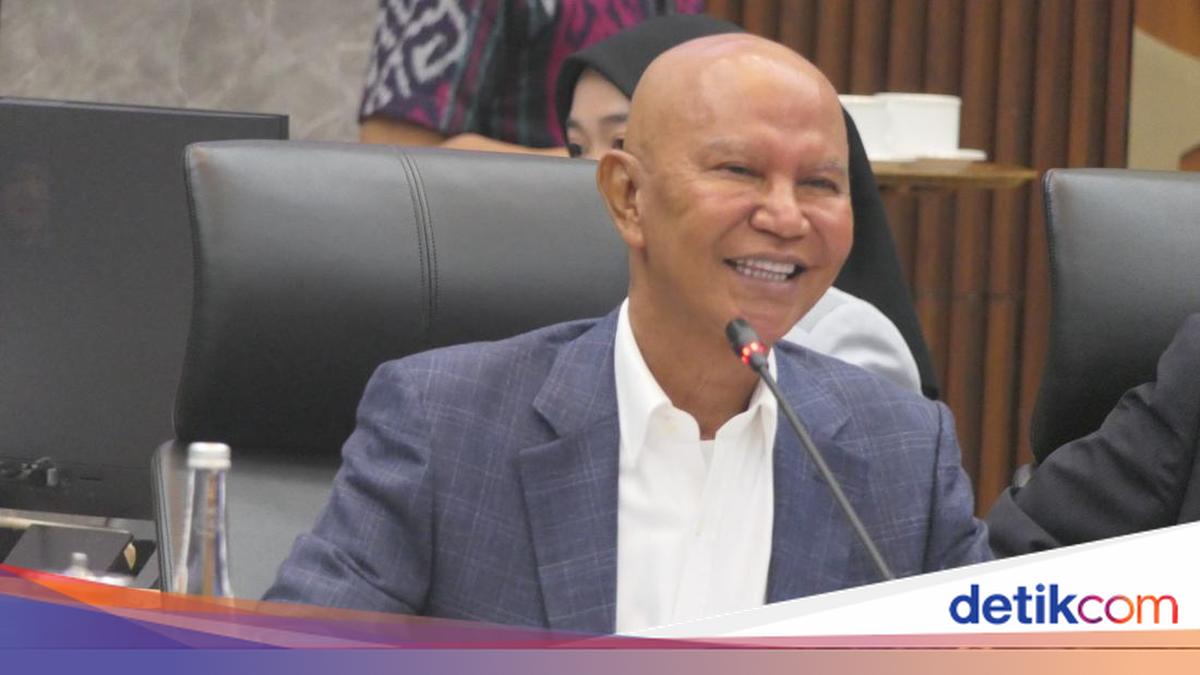
Said Abdullah, Chair of the DPR Budget Committee
Source: jawawa.id (https://jawawa.id/newsitem/recognising-the-ojks-stock-exchange-reforms-1794207068)
Originally published by detikcom (https://news.detik.com/kolom/d-8744744/apresiasi-reformasi-bursa-saham-oleh-ojk), translated from Indonesian