
Reclaiming the Glory of Tombo Coffee in Batang
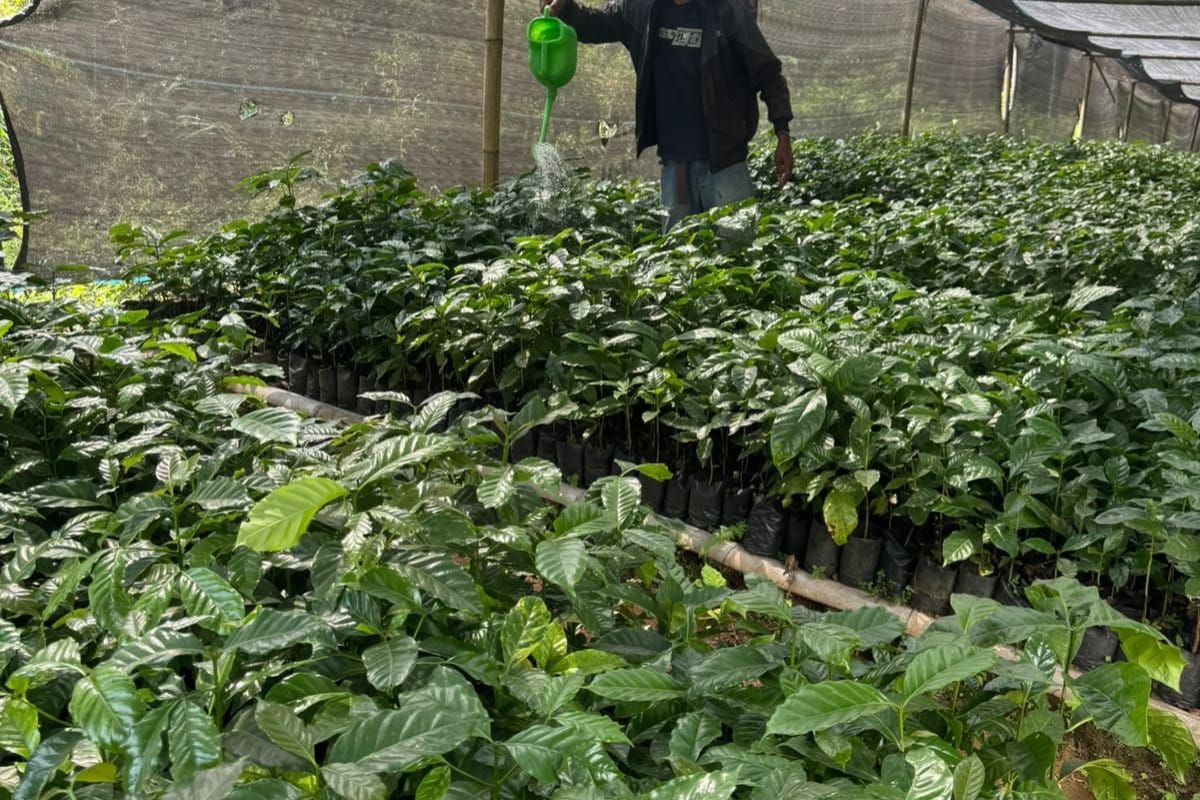
Before coffee aroma became part of the urban lifestyle trend, residents of Tombo Village in Bandar District, Batang Regency, Central Java, were already familiar with this ‘Black Gold’.
Its traces stretch back a long way, rooted in the Dutch colonial era, when Tombo coffee once penetrated international markets and became the backbone of the local economy for generations.
However, the wheel of time has turned. That glory slowly faded, battered by fierce market competition and a shift in focus to other commodities.
Now, from the slopes of the Batang mountains, a wind of change is blowing again. The spirit to revive the identity and golden era of Tombo coffee has been reignited, carrying a dual mission of economic welfare and environmental conservation.
The history of coffee in Tombo Village is believed to have begun between 1800 and the early 1900s.
The Dutch colonial government, equipped with geographical, geological and climatic knowledge at the time, considered the Tombo highlands highly ideal for plantation cultivation. Besides spices such as nutmeg, coffee became the main commodity developed there.
After Indonesia’s independence, plantation management was transferred to the state under PT Perkebunan Nusantara (PTPN) IX. Through the Jolotigo Afdeling, which covered the Wonodadi and Tombo areas of around 500 hectares, the Robusta variety, particularly the Tugusari clone, began to dominate.
The peak came in the 1990s. At that time, Tombo coffee production under PTPN was estimated to reach 100 tonnes and successfully penetrated export markets in Asia and the Middle East.
Unfortunately, entering the reform era in the early 2000s, plantation policy changed. The coffee plantation areas were replanted with tea. The golden era of Tombo coffee seemed to end, its records began to blur, and its direct export footprint faded.
Keeping the tradition in farmers’ hands
Although the large-scale plantations changed face, coffee never truly left Tombo. Former plantation workers brought home the knowledge they possessed, from maintenance techniques and harvesting to post-harvest processing, to their own yards and independent gardens.
It is on these smallholder plots that the Tombo coffee tradition has survived. The Robusta Tugusari clone continues to be maintained and preserved as a local identity. Although at that time its distribution chain was limited to local and regional markets due to the absence of village-based exporters, the community’s passion for coffee farming never died out.
Today, a new strategy is being designed to restore the glory of Tombo coffee, this time through variety diversification and an environmentally friendly approach. Situated at an altitude of around 900 metres above sea level, Tombo is considered highly potential for Arabica coffee development.
Through cross-sector collaboration involving the Tombo Village Government, the Forest Village Community Institution (LMDH), the Forestry Service Branch Region IV of the Central Java Environment and Forestry Office (CDK IV), and private sector support such as PT Bhimasena Power Indonesia (BPI) — the operator of the Batang coal-fired power plant — a farmer capacity-building programme has officially been launched.
This revival spirit is being realised, among other things, through a Technical Guidance (Bimtek) session on Arabica Coffee Cultivation held at Pondok Sidawung on Tuesday (11/8). The training is part of the Sustainable Watershed (DAS Lestari) programme, which integrates improving residents’ incomes with ecosystem protection.
‘From planting to pest and disease handling, it was quite clear. Going forward, I will apply and understand it in managing coffee plants,’ said Tarmujo, one of the farmer participants who enthusiastically absorbed the technical material.
Tombo Village Head Mustajab welcomed the enthusiasm of his farmers.
‘Alhamdulillah, the farmers are very enthusiastic. Many questions were raised and hopefully this knowledge will support the development of Arabica coffee in Tombo while also having an impact on improving the community’s economy,’ he said.
As a concrete step, 5,400 Arabica coffee seedlings, including the Lini S and Ateng Super varieties from Central Aceh, have been prepared for distribution to 13 farmers across 27 plots of land ahead of the rainy season.
Interestingly, this development does not damage forest functions. All planting locations are on farmer-owned land outside forest areas. Coffee plants were chosen because they are classified as Multi-Purpose Tree Species (MPTS), namely plants with high economic value from their fruit while also having ecological functions to bind soil, prevent erosion, and maintain watershed stability.
Weaving a collaborative future
This development effort is assured not to stop at seedling distribution and short training sessions. Regular mentoring will continue to ensure the seedlings grow optimally in the field.
General Manager of Stakeholder Relations at PT Bhimasena Power Indonesia, Aryamir H. Sulasmoro, stressed the importance of the programme’s sustainability.
‘Support for the community is not only in the form of providing seedlings, but also how farmers’ knowledge and skills can continue to develop,’ he explained.
Similar support has come from the Batang Regency Government. Head of the Batang Regency Industry, Trade, Cooperatives and SMEs Office, Wahyu Budi Santosa, stated his office’s readiness to facilitate legality and connect farmers with buyers and exporters.
‘We are working to facilitate licensing and to connect coffee farmers with several export businesses and the Central Java Provincial Government. So far, Tombo coffee has indeed been exported to countries such as Malaysia and countries in the Middle East,’ said Wahyu.
This step reinforces that Arabica development is not intended to displace Robusta Tugusari, but rather to complement it. In the coming years, diversification up to the Liberica variety is projected to make Tombo coffee options even richer.
The journey of nurturing and reviving the glory of Tombo coffee does take time. Newly planted seedlings need a process to grow, be cared for, and ultimately bear sweet fruit for the local economy.
But for the people of Tombo, coffee is no longer merely a sweet memory of the past or just a harvested fruit. ‘Black Gold’ is a blend of inherited knowledge, an economy circulating in the hands of farmers, and an effort to keep the earth green for future generations. Today’s small steps are the initial foothold for weaving a more independent and sustainable future for Tombo coffee.