
Rebuilt after the Earthquake, Pemenang Market Revives the Economies of Five Villages
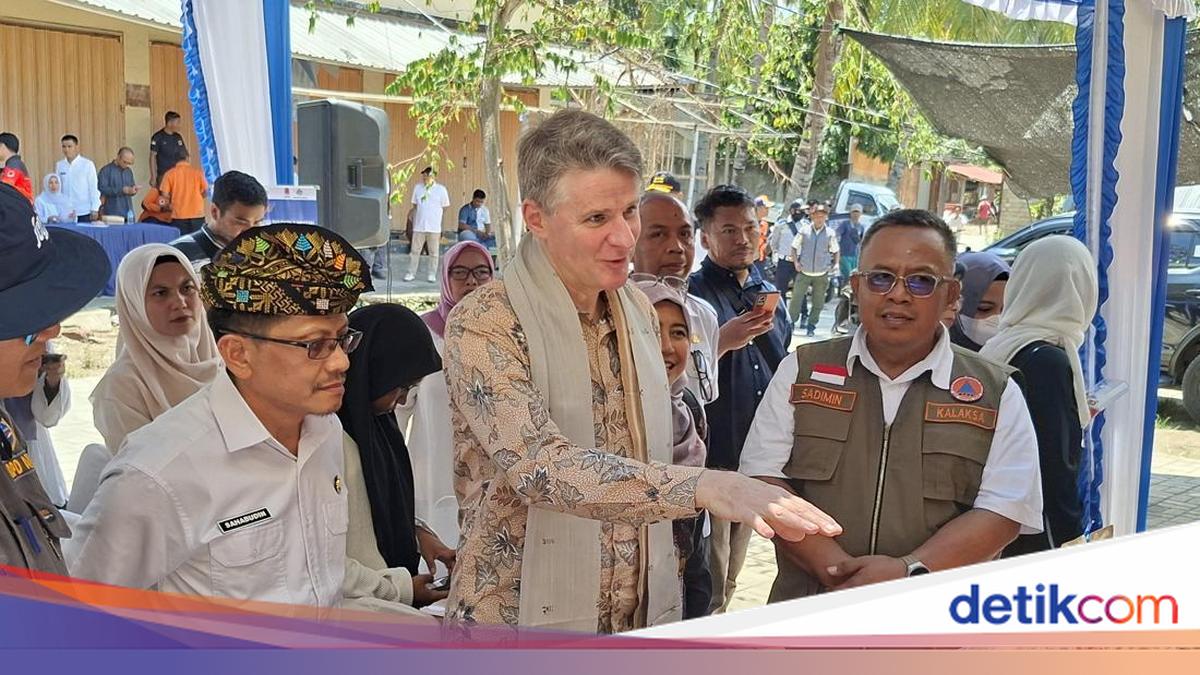
Women running small and medium-sized enterprises (SMEs) were all smiles at Pemenang Market in Pemenang District, North Lombok, West Nusa Tenggara (NTB), on Wednesday (4 November 2026). Behind those smiles is a story of resilience: residents rebuilding their livelihoods after the area was devastated by a powerful 7.0-magnitude earthquake in August 2018.
The market, which had once collapsed, has now been transformed into a shared community hub serving five villages: Pemenang Barat, Pemenang Timur, Menggala, Malaka and Gili Indah.
The residents’ successful recovery has drawn the attention of Australia’s Ambassador to Indonesia, Rod Brazier, who took the time to visit and meet women running SMEs there.
A warm moment came as Rod chatted with the women and sampled a variety of locally made products. He appeared impressed by the residents’ determination to become self-reliant after the earthquake.
“I met women who own SMEs, and I was very impressed that they had the courage to build their own businesses, make products and prepare them for sale to foreign tourists and in markets outside the region,” Rod said at Pemenang Market.
The quality of the products on offer is high. Local food, handicrafts and handmade soap have all proved popular with buyers.
“This is delicious. It’s made from local ingredients,” Rod said as he crunched on cassava crisps made by local residents.
Pemenang Market’s revival is the result of collaboration across villages. Through the Joint Village-Owned Enterprise (BUMDesma) and the Inter-Village Cooperation Agency (BKAD), the five villages agreed to pool resources and work together to shape their economic future while developing a disaster-mitigation system.
Septi, director of BUMDesma, said the Resilient Village (Destana) programme was developed through collaboration between the Consortium for the Study and Development of Participation (KONSEPSI) and the Australian Government.
“We began building institutional ties to address interconnected issues, from disaster risk to the environment and the local economy. This market provides a place to trade, connects residents’ products with buyers and strengthens livelihoods in an area that was once hit by an earthquake,” Septi said.
Ahmad Rahmatullah, secretary of Pemenang Barat Village and chair of the BKAD, also recounted the market’s recovery. Memories of the market’s destruction in the 2018 earthquake prompted village leaders to seek a joint solution.
“The market was damaged by the earthquake. What could we do? We thought about restoring its function and improving the community’s economy. The village heads agreed to rehabilitate the market stalls so they could be used again,” Ahmad recalled.
To make this happen, each village contributed funding. “We renovated it, with each village pooling money at the time,” Ahmad said, noting that the initial contribution was Rp60 million per village.
Hairul Anwar, programme manager at KONSEPSI NTB, added that strengthening the Destana programme had also boosted a range of local flagship products, including virgin coconut oil (VCO), VCO-based soap, coconut-shell handicrafts and palm sugar.
The partnership has focused not only on the economy but also on improving residents’ readiness for disasters.
“We began setting up coordination channels, joint planning documents and coordinated evacuation assembly points,” Hairul said.
The institutional-strengthening work continued with a BKAD agreement on disaster-risk management for 2025–2028, covering three pillars: disasters, the environment and the economy.
“We have documented the preparation of a contingency plan that clarifies the roles of the Village Disaster Preparedness Team, community volunteers, youth groups and community health centres. Attention is also being given to the needs of people with disabilities, pregnant women and children,” he added.
Seeing how well prepared residents are, Ambassador Rod Brazier said he was optimistic that the area would be resilient in the face of future disasters.
“So far, I think we have been very successful. This village has SMEs and fairly well-developed disaster preparedness. I am very confident that, in the future, this village will be able to withstand the threat of natural disasters,” Rod said.
Rod also reaffirmed the Australian Government’s ongoing commitment, particularly to women’s economic empowerment and the provision of accurate data for local governments.
“The aim is to ensure that policies formulated by district and provincial governments genuinely support SME growth rather than hinder it,” he said.
Pemenang Barat Village Head Asma’at said the opportunity should be seized. Given the area’s strategic location on the route to the three Gili islands, he hopes Pemenang Market can become a major centre for local souvenirs.
“We hope to develop the market as a souvenir centre for the five villages, including through partnerships with tour operators,” Asma’at said.
North Lombok Regional Secretary Sahabuddin thanked the Australian Government for its consistent support in helping the regency recover.
“On behalf of the North Lombok local government, I would like to express our gratitude. North Lombok faces 11 disaster risks, in addition to earthquakes and tsunamis. We hope all the SME operators who have benefited from this support will continue to prosper and succeed,” Sahabuddin said.
Source: jawawa.id (https://jawawa.id/newsitem/rebuilt-after-the-earthquake-pemenang-market-revives-the-economies-of-five-villages-1793793030)
Originally published by detikBali (https://www.detik.com/bali/nusra/d-8738405/bangkit-usai-gempa-pasar-pemenang-lombok-utara-hidupkan-ekonomi-5-desa), translated from Indonesian