
Rebuilding the Green Landscape in NTB
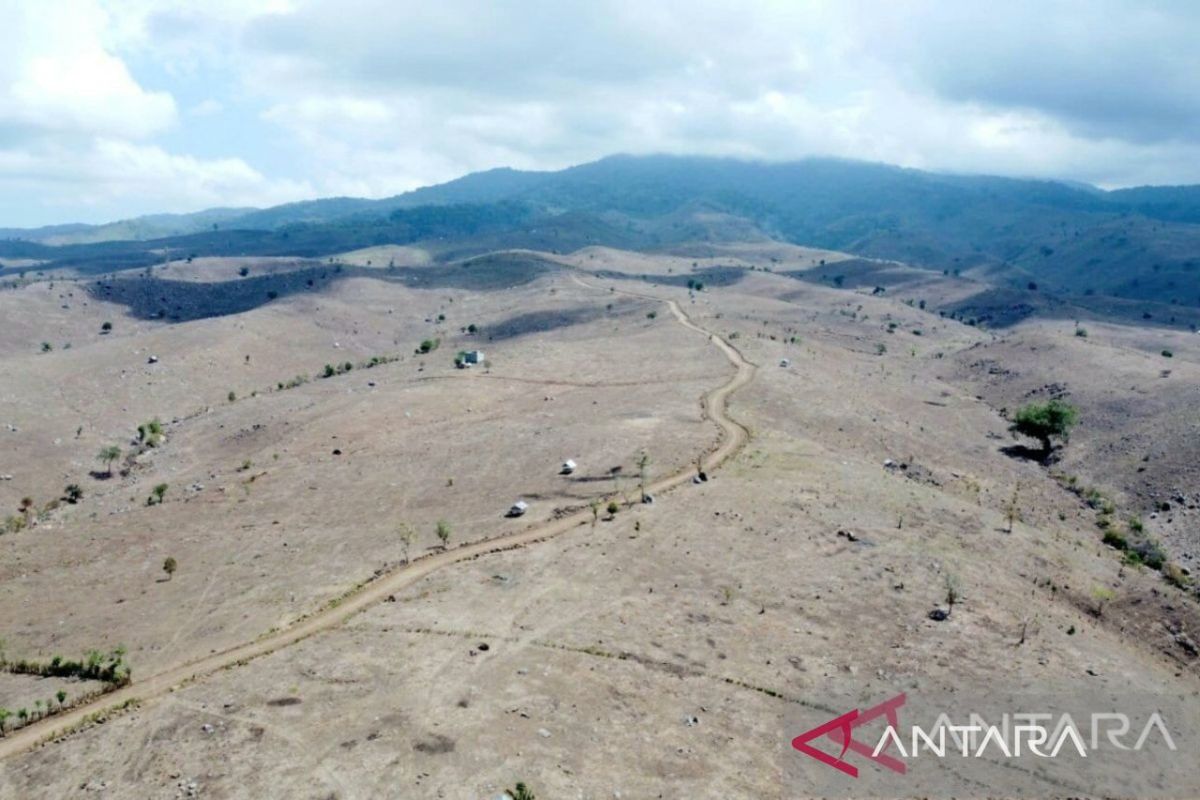
Economic growth today must no longer sacrifice environmental aspects, as doing so endangers future generations. In late May 2026, the public was shocked by video footage uploaded by Instagram user @fahrotesrizki, captured from an aircraft window flying over the Bima Regency in West Nusa Tenggara (NTB). The short 1-minute and 30-second video revealed the irony of vast, vegetation-free lands stretching as far as the eye can see in the Soromandi and Donggo districts. Agricultural plots divide hillsides that have lost their green colour, with trees remaining only in scattered spots following the curves of riverbeds. These post-harvest agricultural fields leave expanses of open soil every dry season, awaiting the next planting period when rains arrive to germinate seeds.
A significant question arises: how long can these barren hilly areas sustain life if tree cover continues to decline? Every hill that loses its forest canopy signifies a reduced natural capacity to provide clean water and a loss of strength in protecting the soil from the threats of landslides and floods. Hydrometeorological disasters, which have become frequent over the last three decades, correlate with forest destruction in many areas. Global Forest Watch states that West Nusa Tenggara has lost 110,000 hectares of tree cover between 2001 and 2025. This lost area covers 1,100 square kilometres—equivalent to 17 times the size of Mataram City—and has released 61 metric tons of carbon dioxide emissions.
Sumbawa, Dompu, and Bima regencies are the three areas with the highest rates of tree cover loss in West Nusa Tenggara over the last quarter-century. The lost tree cover amounts to 36,000 hectares in Sumbawa, 26,000 hectares in Dompu, and 25,000 hectares in Bima. Maize cultivation, launched 15 years ago through the Pijar programme (an acronym for cattle, maize, and seaweed), has contributed the most to the landscape changes in these three regencies. In 2010, tree cover loss was relatively low at approximately 1.1 thousand hectares. Since then, the rate of loss has steadily increased and remains at a high level today. The most extensive tree cover loss in West Nusa Tenggara occurs during every El Niño period: 7.1 thousand hectares in 2014, 8.7 thousand hectares in 2019, and 9.9 thousand hectares in 2023. This global climate phenomenon triggers prolonged dry seasons that turn vegetation extremely dry and susceptible to fire. Humans must begin to repair the relationship between forests and agriculture so that future generations do not bear the ecological burden of field expansion that alters the landscape. Every tree seedling planted represents the best investment for restoring environmental conditions.