
Reassessing the Role of CSR: Shifting from Charitable to Human Capital Investment
The face of Indonesia’s business world is often marked by a paradox in social responsibility. Every year, trillions of rupiah flow from corporate coffers under the banner of Corporate Social Responsibility (CSR). However, it is commonly observed that such programmes end up as ceremonial gestures. Distributing food parcels, cutting ribbons for seasonal facilities, or one-off charitable donations merely to fulfil legal obligations are common occurrences. When funds run out, communities are left dependent once more. What was once ceremonial philanthropy is evolving into sustainable empowerment, shifting from charitable giving to long-term human capital investment.
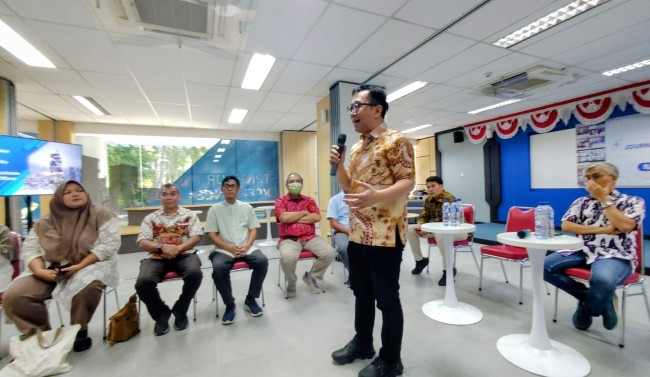
The meeting point of ‘change work’ is evident. Regulation-wise, Indonesia is among the countries mandating corporate social responsibility. This is explicitly stated in Article 74 of Law No. 40 of 2007 on Limited Liability Companies (UU PT). The regulation binds companies operating in natural resource sectors to implement Social and Environmental Responsibility (TJSL). Despite the rigid legal basis, on-the-ground execution is often flawed. Nurcholis MA Basyari, Director of GWPP, stressed that private sector initiatives with structural impact are crucial when the state faces limitations. ‘On one hand, capacity-building training is desperately needed. On the other, when the state is preoccupied elsewhere, as good citizens we take initiative to act,’ Nurcholis said.
For JFC Batch III, the training curriculum has been expanded to 14 sessions, up from 12 the previous year. Alongside substantive CSR content from practitioners and public policy analysts, journalists are equipped with multimedia skills, including smartphone-based audiovisual news production and media convergence adaptation with senior journalists, former national media editors. This journalist capacity-building is seen as a form of human capital investment to enable media to sharply monitor public and corporate accountability.
Lie Si An, TBIG’s Chief of Business Support Officer, agreed that corporations cannot solve all national problems. Therefore, the strategy is to focus on pillars aligned with internal skills and company capacity. ‘Again, each of us has our own capacity and expertise. We cannot solve 100% of the country’s problems. Thus, we aim to contribute according to our capabilities, capacities, and the skills of our employees involved in these activities,’ Si An explained.
With the tagline ‘Together for Indonesia’, the telecommunications infrastructure company adopts international standards as a framework for sustainable journalism and CSR implementation. Lie Si An stressed that since launching structured social programmes in 2012–2013, the company has committed to avoiding corporate cosmetic practices. ‘Throughout this journey, we have realised and committed that our CSR is not image-driven, but tangible programmes with visible impacts,’ he stressed.
This commitment to moving beyond charity aligns theoretically with Social Return on Investment (SROI). Unlike conventional business calculations pursuing pure financial returns, SROI is an analytical method to measure the social, economic, and environmental value generated per rupiah invested by corporations. Through SROI, programme impact is measured not by the quantity of goods distributed (output), but by how much communities’ living standards and self-sufficiency improve over the long term (outcome).
Furthermore, the shift from instant aid to empowering self-sufficient individuals is reflected in four CSR pillars implemented simultaneously. Si An detailed the first pillar: education, particularly vocational. This involves aligning the labour supply chain by guiding vocational high school students and teachers to meet market demands. ‘If students have a strong work ethic and positive attitude, they may be directly recruited as employees, making schools not merely formalities but providing real future prospects,’ he said. Additionally, the company is active in creative economy. Since establishing the Batik House in Pekalongan in 2014, the programme has gone beyond mere art preservation. TBIG has injected entrepreneurship training, cooperative formation, quality control, and marketing channels through collaboration with the Indonesian Fashion Chamber (IFC). Notably, this pillar upholds inclusivity by integrating disabled individuals into advanced curriculum classes and employing them as professional artisans. Thirdly, humanitarian aid, where the company provides Mobile Clinics (Mon
Source: jawawa.id (https://jawawa.id/newsitem/reassessing-the-role-of-csr-shifting-from-charitable-to-human-capital-investment-1780336830)
Originally published by malangtimes.com (https://malangtimes.com/amp/baca/3331344202/20260524/112600/menakar-ulang-fungsi-csr-bergerak-dari-karitatif-menuju-investasi-sumber-daya-manusia), translated from Indonesian