
Reassessing the Parliamentary Threshold in Indonesian Democracy
There is one simple question we must ask whenever the idea of raising the parliamentary threshold resurfaces: what percentage of the people’s votes are we prepared to leave unrepresented in the DPR?
The question sounds technical, perhaps even far removed from everyday life. In truth, it touches the very heart of our democracy.
Every five years, the people come to polling stations. They queue, open their ballot papers, look for the party or candidate they believe can represent their aspirations, and cast their vote. Behind each ballot lies a hope: the farmer who wants his harvest prices fought for, the fisherman hoping his livelihood is protected, teachers, labourers, small business owners, students, housewives, and millions of ordinary citizens who believe their vote means something.
Votes in an election should therefore never be treated as mere numbers in a table. Every vote is a mandate.
The Constitution begins from a very clear principle. Article 1 paragraph (2) of the 1945 Constitution of the Republic of Indonesia states that sovereignty rests in the hands of the people and is exercised according to the Constitution. Article 22E then establishes elections as the constitutional mechanism for electing people’s representatives. This is the point from which any discussion of the parliamentary threshold should begin.
The Constitution Does Not Set the Figure
The 1945 Constitution does not mention a parliamentary threshold figure: not 2 per cent, 4 per cent, 5 per cent, or 7 per cent. That figure is the product of lawmakers’ policy choices. This means the threshold is an instrument, not a constitutional objective.
This instrument has long been justified on the grounds that it simplifies the party system, reduces parliamentary fragmentation, and supports governmental effectiveness. That reasoning is understandable. Democracy does indeed require an effective government and a parliament capable of making decisions.
But how far may we pursue effectiveness at the cost of representation? That is where a balance must be found.
We must not simply conclude that the fewer parties in the DPR, the healthier the democracy. Simplifying the party system is one policy objective, whereas representation of the people flows directly from the principle of popular sovereignty.
Lessons from the 2024 Election
Let us look at concrete figures. According to the national results of the General Election Commission (KPU), valid votes in the 2024 DPR election totalled 151,793,293. With a 4 per cent threshold, a party needed roughly 6.07 million votes to be included in the allocation of DPR seats.
The application of this threshold meant that around 17.3 million valid votes, or approximately 11.4 per cent of the national total, were excluded from the seat conversion process because they were cast for parties that failed to clear the threshold.
Seventeen million is no small number. Gathered in a single territory, it would exceed the population of many countries. These voters came to the polling stations, exercised their constitutional right, and had their ballots declared valid. Yet their political choices played no part in the distribution of DPR seats because their chosen parties did not reach the national threshold.
Legally, these are not invalid votes. From the standpoint of representation, however, they never had the opportunity to be converted into seats. This is what is commonly called wasted votes.
The term ‘wasted votes’ should make us uncomfortable. Of course, it is impossible for every vote to always yield a seat. But the state is obliged to have very strong reasons when designing a system that causes millions of valid votes to lose their chance of representation.
The Constitutional Court’s Message
This debate received important direction through Constitutional Court Decision Number 116/PUU-XXI/2023. The Court ruled that the 4 per cent threshold cannot simply remain in force for the 2029 election and beyond without changes that satisfy the principles of popular sovereignty, electoral fairness, and legal certainty.
The Court did not abolish the threshold. Nor did it stipulate that the figure must be 2 or 3 per cent. Its more fundamental message is that the threshold figure must not be arrived at arbitrarily. Its norm and magnitude must be formulated with adequate methods and reasoning, upholding proportionality and preventing too many votes from going unconverted into DPR seats.
That constitutional message must be the starting point whenever the idea emerges of raising the threshold to 6 or 7 per cent. If a figure of 4 per cent was ordered to be evaluated over problems of rationality and proportionality, then proposals to raise it surely carry a far heavier burden of proof.
It is not enough to say: for the sake of party simplification. The next question cannot be avoided: why 6 per cent, why 7 per cent, and from what methodology were these figures derived?
Do Not Start from the Number
Discussion of the threshold will go astray if it begins with a figure agreed politically in advance. The thinking must be reversed: establish the principles and methodology first, then let the data reveal the number.
We hold electoral data spanning several cycles. The results of the 2009, 2014, 2019, and 2024 elections can be simulated with thresholds of 2, 2.5, 3, 4, 5, 6, and 7 per cent.
In each scenario, calculate how many parties enter the DPR, how many millions of votes go unconverted, how great the disparity is between votes won and seats gained, and whether reducing the number of parties genuinely improves governmental effectiveness. In this way, the chosen figure becomes not the product of political taste or inter-party compromise, but a conclusion drawn from data that the public can scrutinise.
Electoral law is not a rule made to protect the comfort of today’s electoral contestants. It is the rulebook of democracy for the entire Indonesian people.
What If the Threshold Were 7 Per Cent?
With 151.79 million valid votes as in the 2024 election, a 7 per cent threshold equates to roughly 10.6 million votes nationally. Hypothetically, a party could win nine or even ten million valid votes from the people across Indonesia and still fail to clear the threshold.
We need to ask not as party members or electoral contestants, but as citizens: could we explain to nine million voters why their political choices were denied the opportunity to be converted into DPR seats?
If the answer is governmental effectiveness, that effectiveness must be proven. Do eight or ten parties in the DPR genuinely render government ineffective? Does reducing the number of parties automatically produce better-quality legislation, a state budget more inclined towards the people, sharper oversight, and faster follow-up on public aspirations?
These questions demand empirical answers, not assumptions. Moreover, Indonesia adheres to a presidential system. The government does not fall simply because it loses its parliamentary majority, as in a parliamentary system. Our experience also shows that governmental stability is heavily influenced by coalition-building after the election.
The link between an ever-higher threshold and ever-more-effective government therefore cannot be accepted as truth without testing.
Democracy Is Not Merely About Efficiency
There is a tendency to view politics through the logic of efficiency: fewer parties are thought to mean greater simplicity, simplicity is thought to mean stability, and stability is thought to mean better outcomes. Democracy, however, is not built solely to produce efficient government. Democracy is also built so that differing voices have room to exist.
Indonesia is a great nation living across thousands of islands with diverse social, cultural, economic, and interest backgrounds. That diversity naturally gives rise to diverse political aspirations. Parliament can never be entirely simple. It is a mirror of society.
Certainly we do not want unlimited fragmentation. But neither should we artificially manufacture political simplicity by raising the entry barrier so high that millions of people’s votes are left stranded outside the fence.
There is a difference between simplifying the party system and simplifying the people’s representation. The former can be a policy objective. The latter is something we must guard against.
Seeking a Point of Balance
I am not saying the parliamentary threshold must be abolished. Nor do I wish to rush to lock the figure at 2, 2.5, or 3 per cent.
Indeed, following the Constitutional Court’s ruling, lawmakers have the opportunity to do something better: formulate a threshold based on a methodology that can be accounted for to the people.
On one side, the political system needs consolidation so that parliament works effectively. On the other, every increase in the threshold carries a democratic price in the form of a greater likelihood that the people’s votes will go unrepresented.
The question that should be asked is not ‘how many parties do we want to push out of the DPR?’ but ‘how many votes of the people can constitutionally be justified as going unconverted into representation?’
This shift in perspective matters. Because ultimately, what we are regulating is not merely the fate of political parties. What we are regulating is the fate of the people’s votes.
Returning to the People
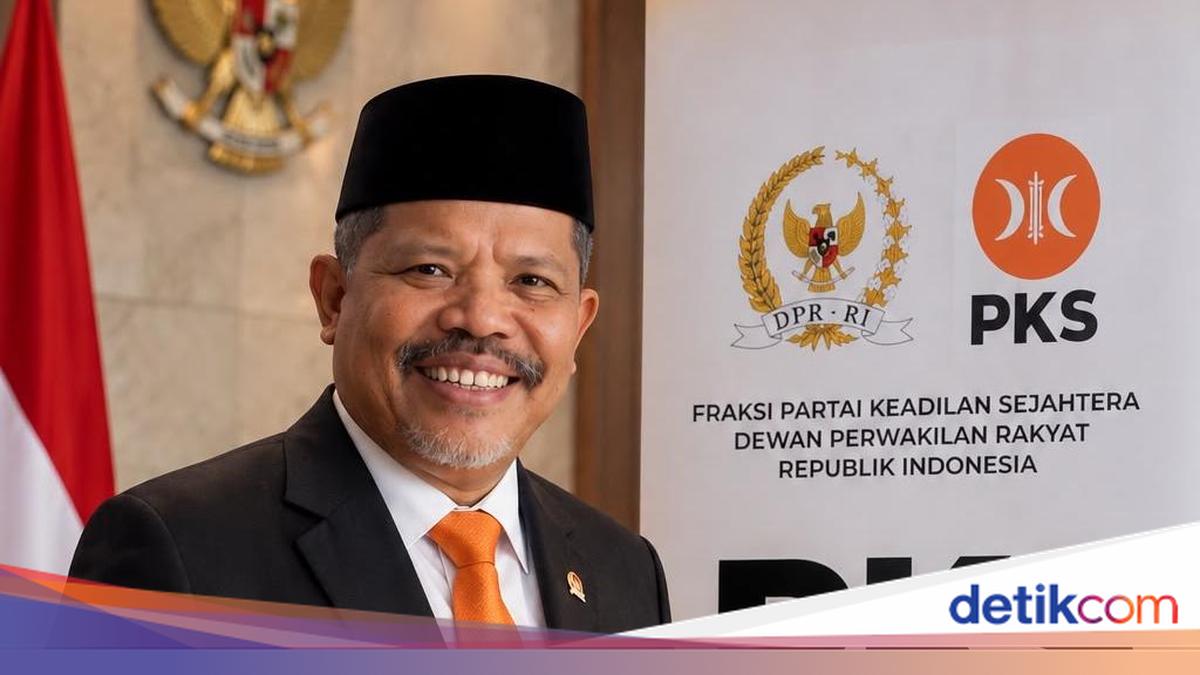
As Deputy Chair of the Budgetary Body of the People’s Consultative Assembly (MPR RI), I view this debate from a fundamental standpoint: the entire design of state institutions must always be returned to the constitution. And the constitution begins with the people.
‘Sovereignty rests in the hands of the people.’ The sentence is short, but its consequences are enormous. Political parties are instruments of democracy. The DPR is an institution of representation. Elections are a mechanism. The parliamentary threshold, too, is an instrument. The owner of sovereignty remains the people.
Therefore, we must never allow the instrument to defeat its purpose. We may simplify the party system, seek a more stable government, and design a more effective parliament. But all of this must be done with the awareness that behind every percentage figure stands a human being who came to the polling station and entrusted their hopes through a single ballot paper.
Before deciding whether the parliamentary threshold ahead should be 3, 4, 6, or 7 per cent, it would be wise to return to the simplest question: what percentage of the people’s votes may be allowed to go to waste?
The answer to that question will reveal not only how we design our elections, but also how seriously we take the meaning of popular sovereignty.