
Reassessing Indonesia's Weapon System Maintenance and Care Policies
Behind the six-week conflict in Southwest Asia involving Iran, the United States, and Israel, lies a vital aspect rarely disclosed by mainstream global media: the role of logistics units in supporting warfare. For instance, the US Navy fired at least 850 Tomahawk missiles in the first four weeks of the conflict. To date, there is no available data on the amount of marine fuel consumed by the 17 US warships involved in Operation Epic Fury, nor the amount of aviation fuel used by various aircraft operating from the deck of the USS Abraham Lincoln. It is no exaggeration to state that logistics play a central role in sustaining war, as the combat capability of one side can be exhausted without adequate logistical support.
In the Indonesian context, the importance of logistics in both war and routine military operations is well understood in theory, yet a gap remains between theory and practice. For example, the procurement of spare parts, ammunition, and missiles for currently operated defence equipment is not receiving top priority. Consequently, during peacetime, the operational readiness of warships and aircraft rarely exceeds 50 per cent. During wartime, there are concerns that Indonesia’s logistical support capability might only sustain operations for less than 12 hours.
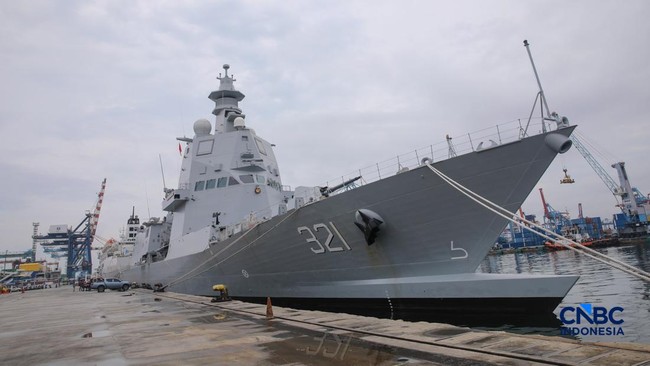
The challenge facing the Ministry of Defence and the Indonesian National Armed Forces is not only to increase the operational readiness of existing defence equipment but also to prepare for the maintenance of newly purchased combat assets. Although several weapon systems, such as the Rafale, A400M, and the Pattugliatore Polivalente d’Altura (PPA) frigates, are still under manufacturer warranty, it is only a matter of time before these warranties expire. Once the warranty period ends, how will the operational readiness of these three war machines, purchased through foreign loan schemes, be maintained? Does Indonesia possess the necessary spare parts for the various subsystems of these platforms?
The ability to perform maintenance and care is determined by budget availability and the availability of spare parts. The current budgeting system, which prioritises single-year allocations, often hinders the procurement of spare parts, especially if delivery by contractors must be completed before the 31st of December of the current fiscal year. Since the Covid-19 pandemic and exacerbated by the Russian invasion of Ukraine, there have been disruptions to the global defence and aerospace supply chains. Meanwhile, the acquisition of spare parts using a multi-year approach has yet to become mainstream in Indonesia, even though it is theoretically feasible.
Beyond the issue of spare parts availability, weapon system maintenance faces several other challenges. Notably, the current maintenance system remains reactive rather than predictive. Furthermore, maintenance contracts are based on short-term work rather than long-term contracts, known as ‘in-service support’. Given these characteristics, it is unsurprising that the operational readiness of warships and aircraft rarely exceeds 50 per cent. The question remains: can Indonesia implement in-service support contracts to improve the operational readiness of its naval and air assets?
In-service support involves intermediate and heavy-level maintenance (sustainment) involving the Original Equipment Manufacturer (OEM) or other parties with technical capabilities, acting as a continuation of the operational maintenance level performed by military technicians. Besides ensuring high operational readiness, one advantage of in-service support is that maintenance costs can be lower than relying on short-term contracts. Indeed, in-service support can be implemented in Indonesia if there is political will at the level of the Ministry of Defence and the Audit Board (BPK), which must be encouraged to reduce inefficient spending in the defence sector.
Regarding the PPA frigates, the challenge to operational readiness is even more complex, as it involves more than just spare parts and maintenance after the warranty expires. Since the Fincantieri-built PPA is a combatant ship, building the combat readiness of a vessel 143 metres long and 16.5 metres wide is a task that the Ministry of Defence must address. This agenda includes the acquisition of ammunition, such as 127mm and 76mm calibres, and the purchase of Aster 15, Aster 30, and Teseo missiles. It is important to note that the PPA frigate is designed to utilise MBDA missiles, as the Italian government, through Leonardo, is a contributor to this European multinational firm. The war in Ukraine has resulted in a windfall for MBDA, with orders for various missiles increasing hundreds of times over, driven by European nations providing military aid to Ukraine—a condition that has forced MBDA to increase production capacity since 2023 to shorten lead times.