
Reasons Why Indonesians Are Eyeing Chinese Electric Cars
Jakarta (ANTARA) - Lately, the face of Indonesia’s roads has been changing. Previously, traffic was dominated by fossil fuel vehicles, but now, in various corners of major cities such as Jakarta, Surabaya, and Bandung, electric vehicles (EVs) are increasingly common.
This change is not only in the vehicles but also in the charging facilities. In many toll road rest areas, queues are no longer just at general fuel filling stations (SPBU), but also at public electric vehicle charging stations (SPKLU) when many EV users want to charge their vehicles.
According to the latest data from the Indonesian Automotive Industry Association (Gaikindo), sales of battery electric vehicles (BEV) showed a significant surge in the first quarter (Q1) of 2026, reaching 33,150 units.
This figure is up 95.9 percent compared to the same period last year, which recorded 16,926 units.
For most Indonesians, switching to EVs is not just about an environmentally friendly lifestyle or following a trend, but a very logical financial decision amid the current global situation.
“I am interested in buying an electric car because it is more fuel-efficient in terms of costs, and we can also charge the battery at home, without needing to queue at SPBU,” said Agus Riyanto (57), a retiree from a regional-owned enterprise (BUMD), to Xinhua in Bogor on Friday (17/4).
The same sentiment was expressed by Della Hernita (40), a staff member at a renowned private university in Jakarta, who decided to buy a Jaecoo J5 because she and her husband considered the more economical costs in the long term, especially for fuel and maintenance.
“But at the same time, moving to a more sustainable option,” she said in Jakarta on Monday (20/4).
Although Chinese cars, especially Wuling, now have very good material and component quality, Satriyo hopes they can continue to develop spare parts availability because, in his view, consumers currently still have to wait quite a long time to buy spare parts.
Interestingly, it is not only issues of fuel efficiency and maintenance costs that are considerations for Indonesians eyeing electric cars.
“Another factor and the most important for me is exemption from odd-even restrictions because the office parking system and the roads I pass through implement odd-even,” said Satriyo (37), an employee of a state-owned enterprise (BUMN) who commutes daily between Jakarta and Bogor for work.
The issue of fuel prices is indeed a hot topic among Indonesian society, especially after the outbreak of war in the Middle East. Although the government has not yet raised prices of subsidised and non-subsidised fuel oil (BBM) that are widely used, concerns about rising BBM prices continue to haunt the public.
Della acknowledged that the Middle East war issue indirectly influenced her decision to buy an electric car.
“If you look at the unstable global situation, fuel prices also become uncertain. So, in my opinion, electric cars feel safer,” she said.
Meanwhile, Agus revealed that the Middle East issue was one of the considerations for him eyeing electric cars. This issue will sooner or later have a significant impact on BBM prices, and the impact will also spread to other commodity prices, whereas electricity tariffs in the long term will remain stable, he explained.
In Indonesia itself, the EV market is dominated by Chinese brands. Based on the latest data from Gaikindo and industry reports up to April this year, Chinese electric cars have massively dominated the Indonesian market.
The market share of Chinese electric cars in Indonesia is currently estimated to reach around 90 percent of total pure electric vehicle (BEV) sales nationally. This dominance is driven by aggressive penetration by brands such as BYD, Wuling, and Chery (through the Jaecoo brand).
However, the success of Chinese brands dominating the Indonesian market is not only achieved through aggressive penetration. Increasing trust among Indonesians in Chinese-made products and views on China’s rapid technological development, especially in the automotive sector, also contribute.
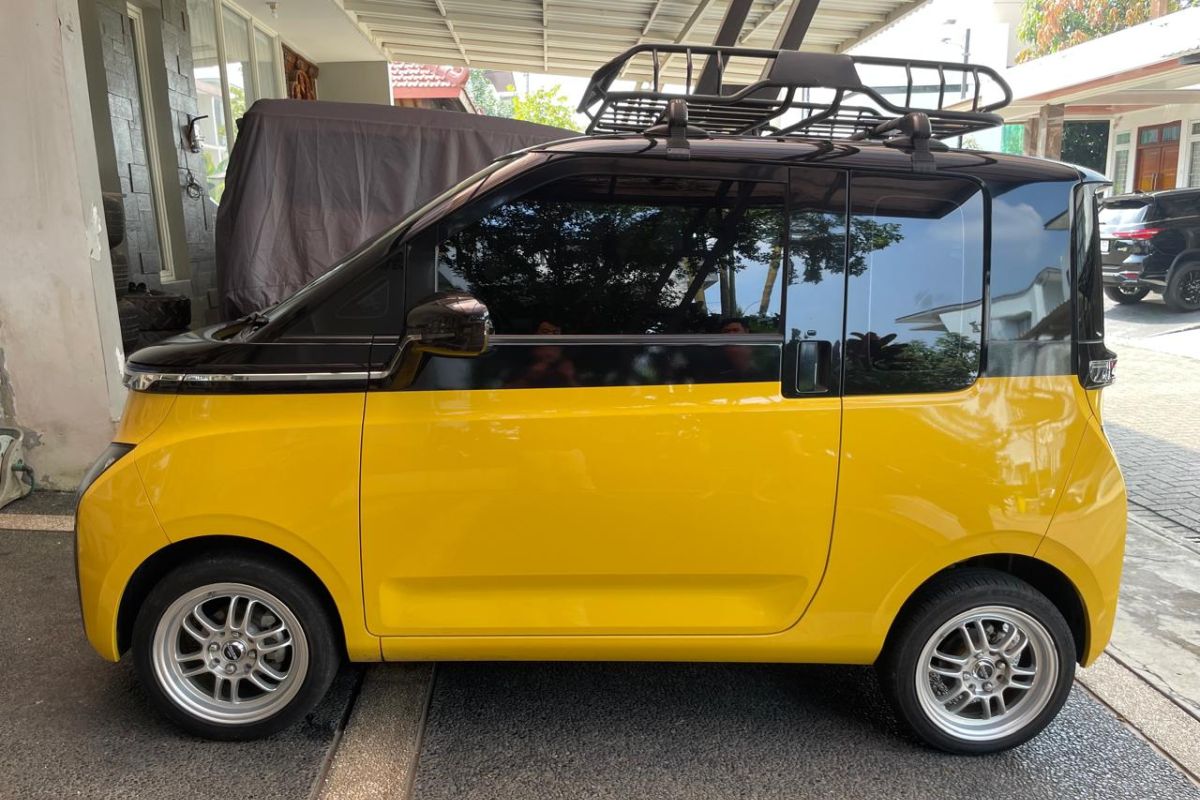
“China is very advanced in electric vehicle technology development; perhaps they are already 10 years ahead in EV technology. Battery technology with super-fast charging is already mastered by China, and it may enter Indonesia in a few years, so in the future we can charge EV cars as quickly as fuelling ICE (petrol) cars,” said Satriyo, who recently brought home a Wuling Air EV for his family’s daily mobility, on Wednesday (22/4).
As a user of Chinese-made cars since 2021, Agus assesses that Chinese cars now have very good build quality and the prices offered are more reasonable compared to similar cars from other countries.
“China’s automotive technology development is very rapid. It can be said that currently their technology is very advanced, even making brands from Japan and Europe worried,” said Agus when met by Xinhua at his home in Cibinong, Bogor Regency.
The dominance of Chinese electric cars in the country has received a positive response from Indonesian society. Many believe this will encourage innovation and healthier competition.
“With the influx of Chinese car brands entering Indonesia, I think it can provide many choices for consumers and more competitive prices. It’s just a matter of how other brands can also develop and compete,” said Della, who is waiting for the delivery of her new Jaecoo J5 car.
Satriyo agreed with this view. He sees the presence of Chinese cars with accessible technology and prices as very positive. This can provide attractive options for consumers and make car sales competition more interesting and competitive.
It cannot be denied that one of the biggest challenges for Chinese brands