
Reasons Employers Still Hold Back on Hiring, These Sectors Lead the Way
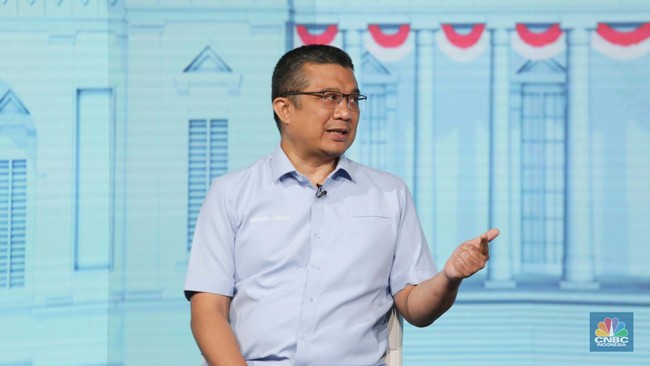
The business world continues to face a number of obstacles in recruiting workers. Deputy Chairman for Organisation, Communication, and Regional Empowerment at the Indonesian Chamber of Commerce and Industry (Kadin), Erwin Aksa, said that demand which is not yet strong enough, as well as uncertainty over costs and policy, are problems that make companies more cautious about adding workers.
According to Erwin, a company’s decision to recruit workers depends heavily on confidence that orders and demand will increase. When public consumption remains subdued and export markets are uncertain, companies tend to hold back on hiring permanent employees.
“Companies will recruit when they have confidence that orders and demand will increase. If public consumption is still subdued and export markets are uncertain, companies will certainly be more cautious about adding permanent employees,” Erwin told CNBC Indonesia on Wednesday (19/8/2026).
This situation is not only influenced by the strength of demand. Erwin said companies also consider energy and logistics costs, financing costs, labour productivity, regulatory certainty, and various compliance costs before adding workers.
For this reason, Erwin believes job creation requires business confidence that demand will continue to grow and government policy will remain stable. When employers see that demand will grow and policy remains stable, investment and recruitment will follow.
“So, to create jobs, the government must also create confidence. If employers are confident that demand will grow and policy is stable, investment and recruitment will follow,” he explained.
Erwin believes this condition is also related to the quality of economic growth. In his view, the government is not enough merely to pursue growth figures, but needs to ensure that growth is capable of creating many jobs.
“We need investment that creates a lot of jobs. Do not let investment increase very high in nominal terms but be concentrated in sectors that are very capital-intensive, so that labour absorption is limited,” he said.
Thus, Erwin believes the measure of investment success going forward should not only be seen from the size of the investment value coming in. The number of new jobs created from each investment also needs to be an indicator.
For 2027, Erwin sees the greatest opportunities for labour absorption still coming from labour-intensive manufacturing industries such as textiles and textile products, footwear, food and beverages, furniture, and other processing industries.
In addition, there is potential from construction and housing, trade and retail, tourism and hospitality, the creative economy, agriculture and agro-industry, as well as MSMEs.
In line with Erwin, Secretary General of the Indonesian Young Entrepreneurs Association (Hipmi) Anggawira considers the open unemployment rate target of 4.30%-4.87% in 2027 to be quite challenging, but still realistic if economic growth is truly labour-intensive and accompanied by an improvement in the quality of jobs.
According to Anggawira, the challenge is not only creating jobs, but also bringing more workers into the formal sector. Therefore, measures of success need to include the number of formal jobs, real wage levels, productivity, worker protection, and the match between education and industry needs.
For labour absorption, Anggawira sees a number of sectors as relatively most ready, including agro-industry and food processing, textiles, footwear, furniture, export-oriented manufacturing, housing, and construction and basic infrastructure.
In addition, there is potential from tourism and the creative economy, trade, logistics, the digital economy, mineral and energy downstreaming, renewable energy, bioenergy, gas and electricity infrastructure, and the care economy, including health and education.
Anggawira also believes downstreaming needs to be expanded so that it does not only focus on capital-intensive industries.
“Downstreaming remains important, but do not let it stop only at capital-intensive industries. Downstreaming needs to be expanded to agriculture, plantations, fisheries, and the village economy because these sectors have a much broader labour base,” Anggawira said when contacted separately.
Source: jawawa.id (https://jawawa.id/newsitem/reasons-employers-still-hold-back-on-hiring-these-sectors-lead-the-way-1787147561)
Originally published by CNBC Indonesia (https://www.cnbcindonesia.com/news/20260819192432-4-760738/alasan-pengusaha-masih-tahan-rekrut-karyawan-sektor-ini-terbanyak), translated from Indonesian