
Reasons Civil Society Network Criticises Criminalisation of LGBT Discourse Versus MUI's Arguments
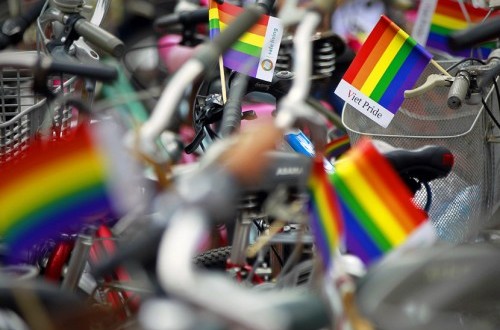
The phenomenon regarding the existence of Lesbian, Gay, Bisexual, and Transgender (LGBT) individuals has once again drawn significant attention. The perceived presence of ‘Luthy’ actions deemed inappropriate in public spaces and educational institutions has sparked discourse regarding criminal sanctions for perpetrators and LGBT campaigning. The institution most vocal in advocating for this is the Indonesian Ulema Council (MUD).
However, this discourse has met with rejection from the Civil Society Network of Human Rights Defenders and Democracy, which comprises 37 organisations, including LGBT communities and human rights organisations.
Albert, the Director of LBH Masyarakat, stated in a press release on Wednesday (17/6/2026) that this discourse is being promoted to establish regulations that criminalise both individuals with LGBTQ identities and those who support and advocate for LGBTQ rights in Indonesia.
“This situation, as specifically voiced in the media, will bring further democratic regression and close the civic space for discussing crucial anti-discrimination issues,” said Albert in a press release received by Republika on Thursday (25/6/2026).
Albert noted that on Thursday (11/6/2026), the Indonesian Ulema Council (MUI), represented by Vice Chairman KH Cholil Nafis, suggested that LGBTQ individuals should face criminal sanctions to provide a heavier deterrent effect than the criminal penalties for adultery. This statement was a response to actions by several local governments proposing the ‘rehabilitation’ of LGBT individuals.
Albert revealed that following that statement, Commission VIII of the Indonesian House of Representatives (DPR RI) responded with support. The Vice Chairman of Commission VIII, Singgih Januratmoko, even proposed specific regulations to prohibit LGBTQ campaigning on social media, an initiative he claimed could protect society from values conflicting with religious norms and Pancasila. He stated that Commission VIII is prepared to deliberate on this regulation.
“The civil society organisations signatory below reject the suggestions from the MUI as well as the response from Commission VIII regarding this criminalisation discourse. There are at least three fundamental considerations as to why this criminalisation discourse should be halted,” Albert wrote.
Firstly, there is no clear definition of what constitutes an LGBTQ campaign. Often, simply because an individual is part of the LGBTQ community or is providing education on the basic rights held by every person, regardless of their LGBTQ identity, these individuals are labelled as campaigning for LGBTQ.
He assessed that these accusations are generally rooted in bias and misconceptions that equate LGBTQ identities with pornography, sexual deviation, or dangerous ideologies.
According to him, research by Remotivi involving 517 LGBT respondents showed that 27 per cent of respondents had experienced content removal on social media. Some also experienced account suspensions. The primary and most frequent reason for such content removal was the allegation of containing pornographic material.
Source: jawawa.id (https://jawawa.id/newsitem/reasons-civil-society-network-criticises-criminalisation-of-lgbt-discourse-versus-muis-arguments-1782489129)
Originally published by Republika (https://khazanah.republika.co.id/berita/th8u21483/alasan-jaringan-masyarakat-sipil-pembela-ham-kritik-wacana-pidana-lgbt-versus-dalil-mui), translated from Indonesian