
Reasons Behind Xi Jinping's Visit to Kim Jong Un in North Korea Signal Growing Alarms
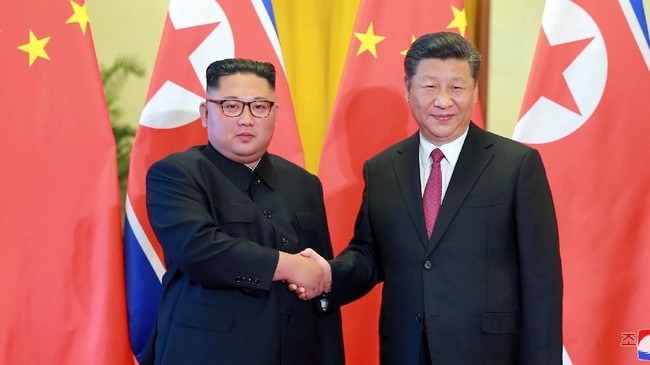
The visit of Chinese President Xi Jinping to Pyongyang to meet North Korean leader Kim Jong Un on Monday (8/6/2026) has become a major focal point in East Asia. The significance lies not just in the meeting itself, but in Xi’s decision to travel to North Korea despite his increasingly rare pattern of overseas travel in recent years.
Xi’s move has sparked speculation that Beijing is becoming concerned about changes in the power dynamics on the Korean Peninsula, particularly following the rapid development of relations between Pyongyang and Moscow since the outbreak of the Russia-Ukraine war. While meetings between Xi and Kim are not unprecedented—their last meeting took place in Beijing a year ago during a large military parade—the decision for Xi to travel directly to Pyongyang is noteworthy.
In recent years, Xi has been known to limit his foreign travels, with many world leaders, including US President Donald Trump and Russian President Vladimir Putin, travelling to Beijing to meet him. William Yang, a senior Northeast Asia analyst from the Crisis Group, noted to Al Jazeera that Xi’s decision to fly to North Korea demonstrates the high level of strategic significance China attaches to this trip.
Data from the Asia Society shows that Xi averaged approximately 14 overseas trips per year between 2013 and 2019, but this figure dropped sharply to around six trips per year between 2022 and 2025. This trend highlights that Beijing is reacting to a shifting geopolitical landscape.
According to Yang, a primary driver for this visit is Beijing’s growing apprehension regarding the North Korea-Russia relationship. For decades, China has been the senior partner in its relationship with North Korea, with Pyongyang heavily reliant on Beijing for trade; estimates suggest roughly 95% of North Korea’s trade is with China. However, this balance has shifted as North Korea has become a vital supporter of Moscow’s war effort, supplying weapons, artillery ammunition, missiles, and military personnel.
The South Korean Institute for National Security Strategy estimates that since 2023, Moscow may have paid North Korea up to US$14.4 billion in compensation for its military contributions. While some of this may be in goods, there is a significant possibility that much of the payment consists of sensitive military technology or precision components that are difficult to detect via satellite imagery.
Despite their mutual defence agreements, Beijing remains cautious about Pyongyang’s increasing military prowess. Yang stated that China has deliberately limited direct military aid to North Korea because a militarily stronger North Korea does not necessarily serve China’s interests. A more confident North Korea, emboldened by Russian support, could disrupt the existing balance of power and the status quo on the Korean Peninsula.
These fears are substantiated by recent developments, including eight missile launches by North Korea earlier this year and the introduction of new tactical cruise missiles using artificial intelligence (AI) guidance systems. Furthermore, North Korean state media recently released images of Kim Jong Un visiting a new weapons-grade nuclear material factory, intended to expand nuclear capabilities at an exponential rate. As North Korean military capabilities grow, tensions with South Korea remain a critical concern, with both nations technically still in a state of war since the 1950-1953 conflict.
Source: jawawa.id (https://jawawa.id/newsitem/reasons-behind-xi-jinpings-visit-to-kim-jong-un-in-north-korea-signal-growing-alarms-1780824112)
Originally published by CNBC Indonesia (https://www.cnbcindonesia.com/news/20260607134544-4-740770/alasan-xi-jinping-temui-kim-jong-un-di-korut-alarm-bahaya-berbunyi), translated from Indonesian