
Reasons Behind the Auction of the Former KRI Ki Hajar Dewantara
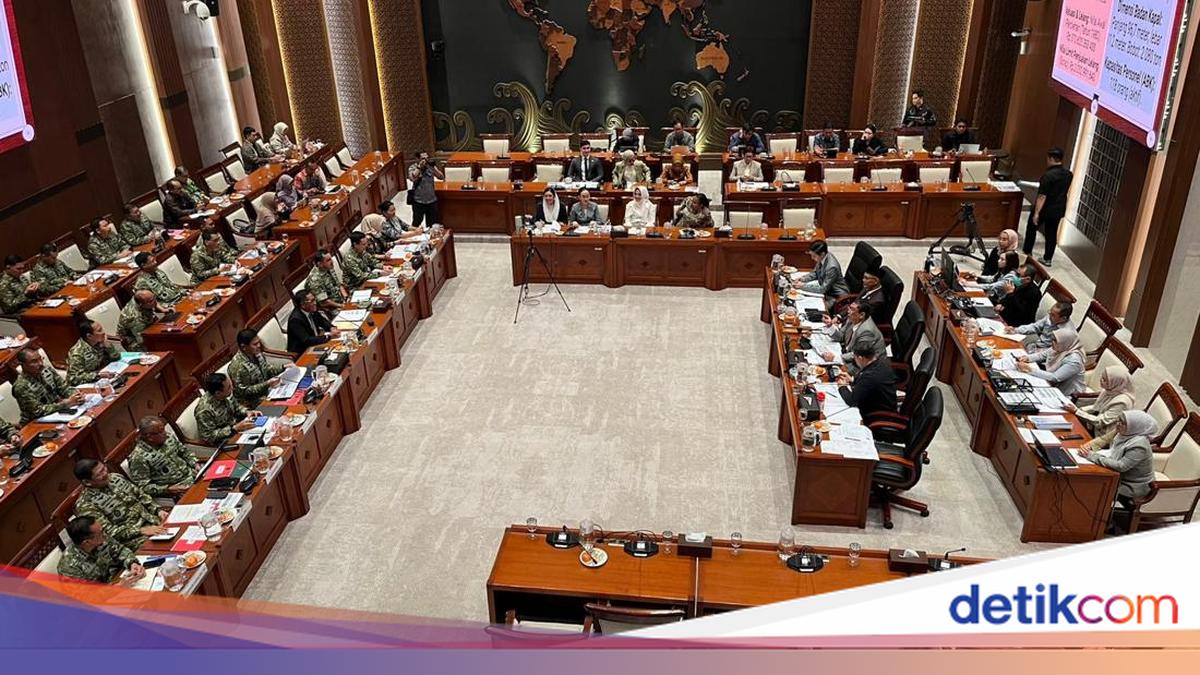
The former KRI Ki Hajar Dewantara-364 is planned to be sold through an auction mechanism. During a working meeting with Commission I of the House of Representatives (DPR) in Jakarta on Thursday (27/8/2026), Deputy Minister of Defence Donny Ermawan Taufanto stated that every state asset must provide optimal benefits for the execution of government duties. The former KRI Ki Hajar Dewantara-364 is considered to no longer meet the requirements to carry out the duties and functions of the Indonesian Navy due to its age and technical condition.
“The former KRI Ki Hajar Dewantara-364 is a training ship built in 1979 at Brodogradilište Split, Yugoslavia. In its time, the ship played a role in supporting the execution of duties and the development of Indonesian Navy personnel,” said Donny.
“However, along with its age and technical condition, the ship currently no longer meets the requirements to carry out the main duties and functions of the Indonesian Navy. Its service life has also exceeded its economic and technical useful life,” he explained.
The armament of the former KRI Ki Hajar Dewantara, Donny said, has also been dismantled. Donny stated that the dismantling of the armament was carried out in 2018, followed by the removal of the ship’s pennant in 2019.
“With this condition, the ship can no longer function as a warship and cannot move independently,” he explained.
Therefore, according to him, the ship no longer has operational value for the Indonesian Navy. In addition, its maintenance could potentially lead to wasteful expenditure.
“Considering these conditions, retaining the former KRI Ki Hajar Dewantara-364 as an asset that no longer has operational value would cause the asset to become dead stock, and potentially incur storage and maintenance costs without providing commensurate benefits,” he said.
“Therefore, the government considers that divestment through an auction sale mechanism is the appropriate, rational, and accountable choice,” he continued.
The government considers auction sale to be the right choice. This method is also seen as capable of optimising the remaining economic value of the asset while preventing value depreciation due to long-term storage.
“The proceeds from the sale will later contribute to Non-Tax State Revenue (PNBP),” he said.
Furthermore, Donny explained that from a strategic perspective, the sale of the former KRI Ki Hajar Dewantara is part of the restructuring and rationalisation of defence assets. The government wants the management of defence and security equipment to be directed towards assets that remain relevant to current and future defence needs.
“Thus, the reduction of assets that are no longer operationally viable is not merely interpreted as a reduction in the number of defence assets, but is part of efforts to build a more effective and modern defence posture in line with the development of defence doctrine,” he explained.
The former KRI Ki Hajar Dewantara has an acquisition value of Rp 370,620,353,400. However, the auction limit value is set at Rp 2,032,991,640.
“The limit value is determined based on the economic value of scrap iron material, not based on its value as a warship, considering its technical condition and demilitarised status,” he continued.
Donny said the divestment process has gone through a number of stages in accordance with applicable mechanisms and regulations, from within the Indonesian National Armed Forces, the Ministry of Defence, the Ministry of Finance, to the President. The process has been ongoing since the dismantling and demilitarisation in 2018-2019.
“Approval from the Indonesian House of Representatives is an important part of ensuring this process has legitimacy and can be accounted for in accordance with statutory regulations,” he said.
Commission I of the Indonesian House of Representatives approved the request for divestment of state property in the form of one unit of the former KRI Ki Hajar Dewantara-364. The divestment is carried out through an auction sale mechanism.
“Commission I of the Indonesian House of Representatives approves the request for approval of divestment of state property through an auction sale mechanism in the form of one unit of the former KRI Ki Hajar Dewantara 364,” said Chairman of Commission I Utut Adianto.
He said the approval refers to Presidential Letter Number R-33/Presiden/07/2026 dated 14 July 2026. Utut said the process is carried out in accordance with Article 46 paragraph (1) letter c of Law Number 1 of 2004 concerning State Treasury.
“So we quote directly Law Number 1 of 2004 concerning State Treasury. Indeed, the Finance Laws are old, Sir, the other one is Law Number 17 of 2003, perhaps it would be good to revise them, especially regarding the figures, including transfers to regions,” he said.
On the same occasion, Donny expressed appreciation to Commission I of the Indonesian House of Representatives after the request for the sale of the former KRI Ki Hajar Dewantara-364 was approved.
“On this good occasion, I represent the government to thank the Chairman and all members of Commission I who have approved the divestment through auction sale of one unit of the former KRI Ki Hajar Dewantara-364,” said Donny.
The government will take into account a number of notes from the meeting. One of them relates to the threshold value of Rp 100 billion which requires divestment of state property to obtain DPR approval.
The Ministry of Defence revealed the next mechanism after the request was approved.
“After obtaining approval from Commission I of the Indonesian House of Representatives, the next process will be followed up in accordance with the state property management mechanism. The former KRI Ki Hajar Dewantara-364 will be sold through an auction mechanism with the status of scrap iron material,” said Head of Information Bureau of the Ministry of Defence Brigadier General Rico Sirait when contacted on Friday (28/8/2026).
Brigadier General Rico explained that there will be an appraisal process before the auction is conducted. This process, he said, is to determine the value of the goods according to their current condition.
“Before the auction is carried out, an appraisal will be conducted by an appraisal team, usually carried out by the State Assets and Auction Service Office (KPKNL), to determine the value of the goods according to their actual condition. Furthermore, the auction process is also carried out through KPKNL in accordance with applicable regulations,” he said.
Rico acknowledged that to date no prospective buyer has been determined. He said the sale process will go through an auction mechanism.
“To date, no prospective buyer has been determined because the process is indeed through an open auction mechanism,” he said.
Source: jawawa.id (https://jawawa.id/newsitem/reasons-behind-the-auction-of-the-former-kri-ki-hajar-dewantara-1788011596)
Originally published by detikcom (https://news.detik.com/berita/d-8637566/alasan-di-balik-lelang-eks-kri-ki-hajar-dewantara), translated from Indonesian