
Rear Passengers Must Wear Seatbelts, Expert Explains
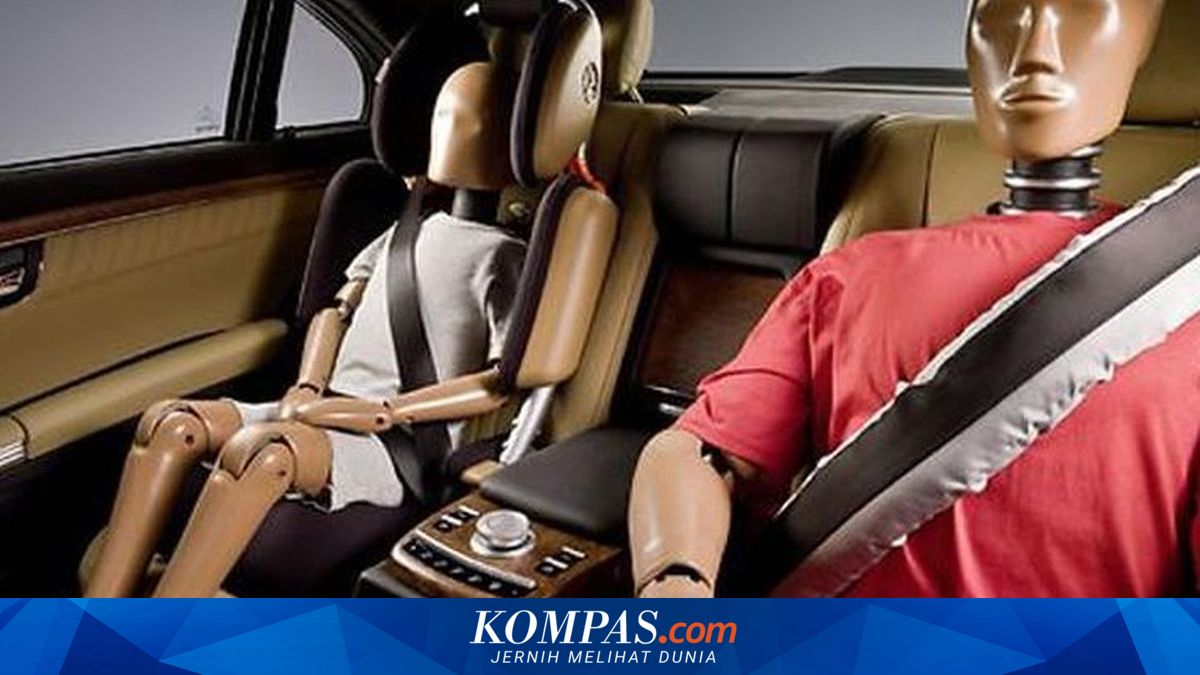
Jakarta — The use of seatbelts or safety belts is one of the most basic safety devices when driving a car.
The function of seatbelts is to restrain the body to prevent ejection in the event of a collision or sudden braking.
However, many passengers sitting in the back seat are still not accustomed to wearing seatbelts, despite the risks being the same in the event of an accident.
Jusri Pulubuhu, founder of Jakarta Defensive Driving Consulting, said that regulations regarding the use of seatbelts for rear passengers are not clearly stipulated in law.
“Explicitly, it is not actually written in Law Number 22 of 2009, specifically in Article 106 paragraph (6). This means, from a legal standpoint, there is no rule that explicitly mentions the use of passenger seatbelts,” Jusri told Kompas.com this week.
The text of Article 106 paragraph (6) of Law Number 22 of 2009 on Traffic and Road Transportation states:
“Every person driving a motor vehicle with four or more wheels on a road and the passenger sitting next to them must wear a seatbelt.”
This means the regulation clearly requires drivers and front-seat passengers to use seatbelts.
However, from a safety perspective, seatbelt use should apply to all passengers, including those in the back seat.
When an accident or severe collision occurs, rear passengers not wearing seatbelts risk being ejected and could even endanger passengers in the front seat.
Therefore, seatbelt use should become a habit for every car passenger, not only because of legal requirements, but also for safety reasons.