
Reaping Profits from Maize Grown on Rain-fed Land in Garut
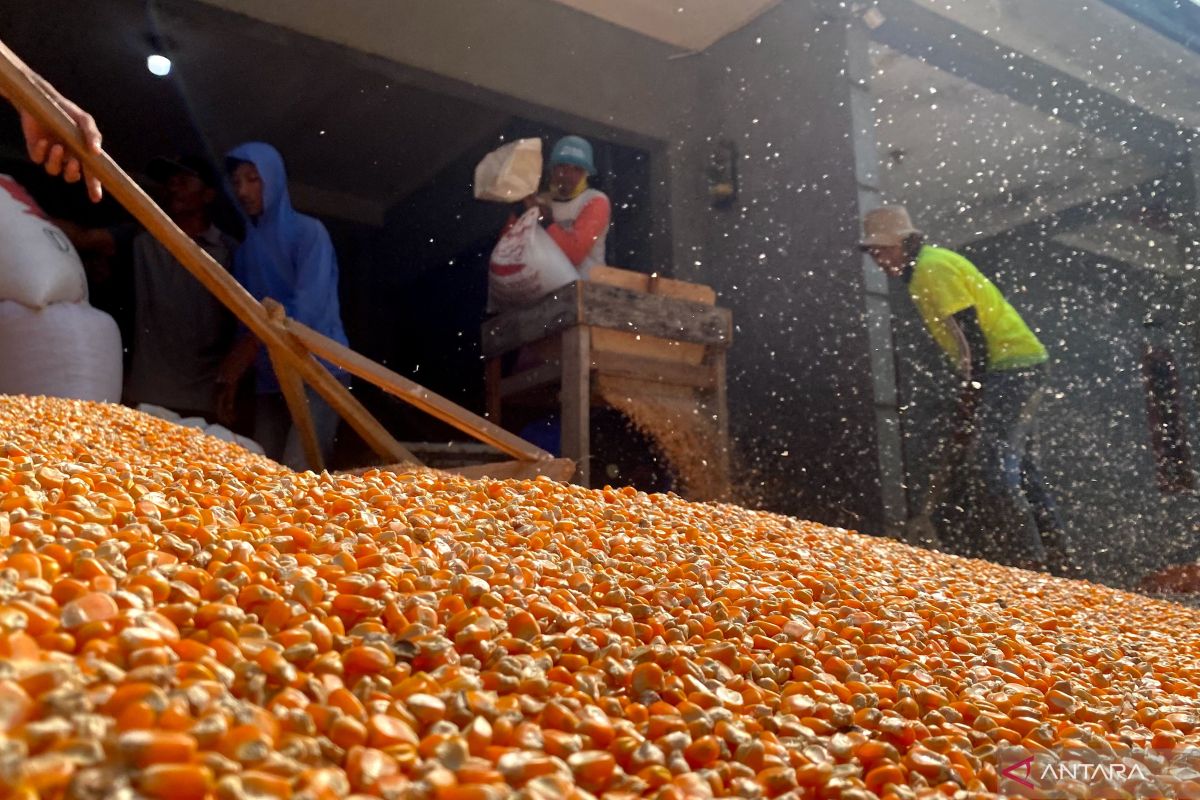
The rolling hills of Sukawening District, Garut Regency, West Java, consist of rain-fed lands far from irrigation systems and lacking reliable natural springs, making them entirely dependent on rainfall. For farmers, rain-fed land is often synonymous with uncertainty, as the fear of planting or harvest failure looms, particularly if the dry season arrives early and persists, drying out the soil.
However, as of early May 2026, frequent rainfall has provided a glimmer of hope for rain-fed farmers to continue planting and harvesting through the dry season. Jajang Sumpena, a 54-year-old farmer from Cikendal Village, Sukalarang, expressed his gratitude that rain continues to nourish his maize crops located at an altitude of 1,000 metres above sea level.
In April, Jajang harvested maize from a 3-hectare plot, yielding over 20 tonnes. This result is highly satisfying, considering that maize farmers typically only achieve between 5 to 7 tonnes per hectare. As the dry season approaches in early May, Jajang has begun planting maize again, while preparing other parts of his land for subsequent planting cycles.
According to Jajang, the current rainy weather presents an ideal opportunity to begin planting, as maize requires significant water only during the initial growth stage. For the following three to four months, water requirements decrease significantly. “So, if we plant maize now, we can still harvest in July or August, because maize only needs water at the start of the planting period,” Jajang explained while inspecting his fields.
Jajang monitors and tends to his 3-hectare plot daily to ensure maximum growth. He also employs several dogs, both roaming and tethered at various points, to protect the crops from wild monkey troops that frequently raid the maize. For Jajang, the presence of the dogs is vital; without them, the developing maize could be entirely depleted by monkeys, as he has experienced in the past.