
Realising the dream of no longer importing fuel
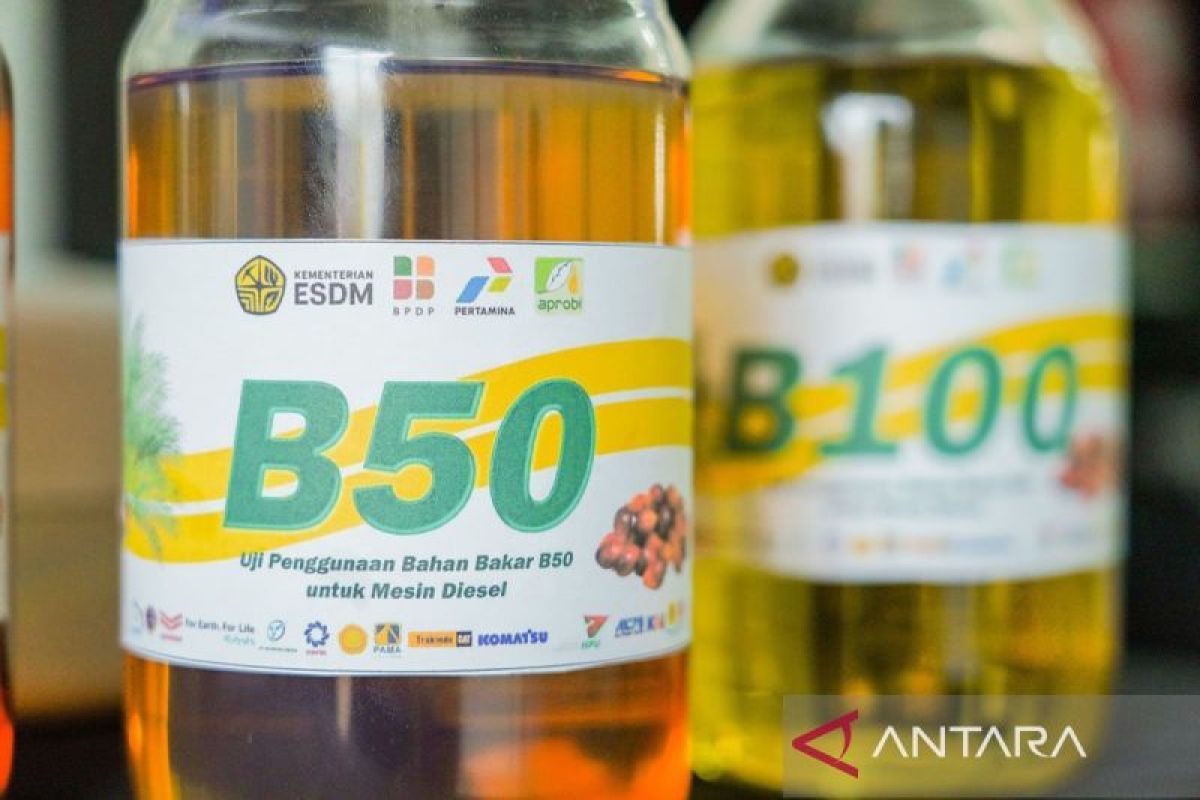
Achieving the dream of becoming an energy-sovereign nation is certainly not an impossible feat. For Indonesia to become a ‘superpower’ capable of self-reliance—standing on its own two feet, as envisioned by the nation’s founders—is a tangible goal.
Semarang (ANTARA) - The administration of President Prabowo Subianto possesses a strong determination to achieve energy security. A number of programmes are being prepared to reduce the dependency on fuels that must still partially be imported.
Consider the vast amount of funds the Indonesian Government must expend to maintain the domestic fuel supply. In a single year, the total national requirement for 2026 for petrol reaches approximately 38.1 million kilolitres, while diesel stands at 40.6 million kilolitres.
Petrol is the type of fuel most heavily imported, as domestic production only reaches 14.27 million KL, leaving 2み8.3 million KL to be imported. The two largest supplying countries for this type are Singapore and Malaysia. Meanwhile, for diesel, import figures have been suppressed to just 6.26 per cent due to the implementation of the B40 and B50 programmes domestically. In fact, diesel imports are set to be halted entirely due to B50, which could allow Indonesia to save foreign exchange reserves by up to Rp170 trillion per year.
Although import quotas have decreased, geopolitical conditions will still affect the ability to meet domestic fuel needs. The strengthening of the US dollar against the rupiah and supply disruptions caused by conflicts in the Middle East create uncertainty in supply.
Several European nations are now beginning to struggle. In France, for instance, President Emmanuel Macron has urged his government to undertake all possible efforts to overcome the country’s fuel crisis. Fuel prices, which surged following conflicts involving Iran in February 2026, are expected to remain high for a long time.
Diesel prices in France have reached 2.30 euros (approximately Rp46,809) per litre, while petrol has reached 2.10 euros (approximately Rp42,738) per litre. These figures are 30 per cent higher than before the crisis.
Macron has even requested a relaxation of fuel quality specifications so that local oil refineries can operate more flexibly and increase production volumes by up to 20 per cent.
Indonesia should take pride and gratitude in being endowed with abundant natural resources. There are many other alternatives that can be used to support national security, both in terms of food and energy. These two elements are vital in maintaining national stability.
Regarding rice, Indonesia has not imported any for the past two years. The government rice reserve (CBP) stored in Perum Bulog warehouses has reached 4.7 million tonnes as of 14 September 2026.
For energy, the B50 or biodiesel programme is now entering a stage that continues to show encouraging progress. B50 has passed mining tests of up to 1,000 hours with no issues found. Engine filters, which usually require replacement every 250 hours, were able to last up to 500 hours.