
Realising the Dream of Becoming an Industrial Nation
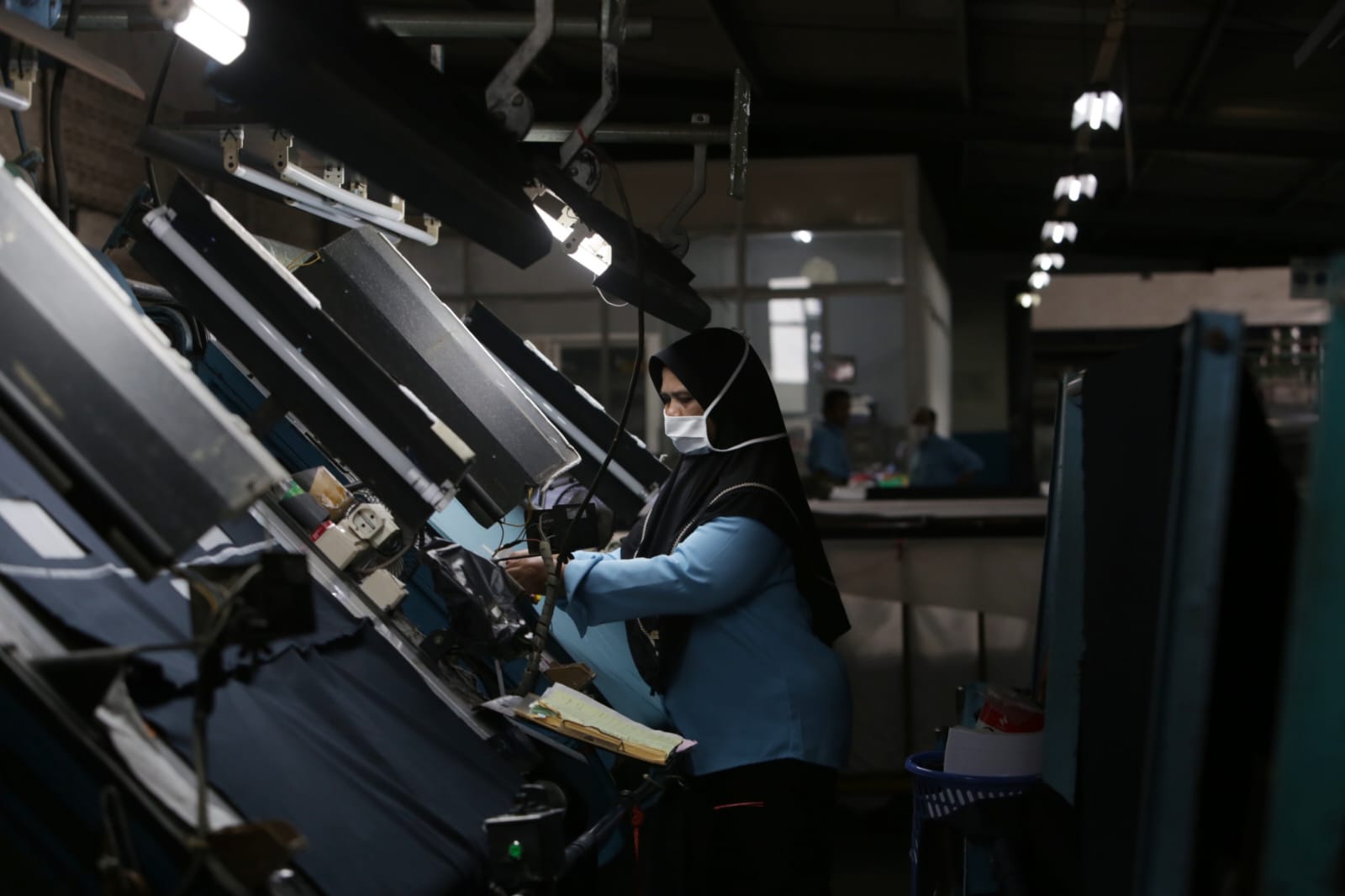
There is no doubt that the manufacturing industry is the engine of the Indonesian economy. With a contribution of 19.07% to gross domestic product (GDP), the manufacturing industry helps determine the ‘black and white’ of the national economy.
Now, that engine is being tested. Throughout 2025 until mid-2026, Indonesia’s manufacturing industry moved up and down like a roller coaster. The S&P Global Indonesia Manufacturing Purchasing Managers’ Index (PMI) had slipped into contraction zone for four consecutive months from April to July 2025, even touching its lowest level in nearly four years.
However, entering August 2025, the PMI returned to expansion zone and continued to strengthen to a level of 53.3 in November. But the PMI fell back into contraction zone at a level of 46.9 in June 2026 after being at 50.0 (expansion) in May.
The contraction occurred because demand weakened, factories reduced production, production costs soared, and global uncertainty increased. Manufacturing companies reduced purchases of raw materials and investment, and some even reduced hiring and cut operational hours.
Indeed, Indonesia’s Manufacturing PMI in July 2026 rose back into expansion zone at a level of 50.2. This achievement was the highest since February 2026. The increase in PMI was driven by the return of growth in production activity after experiencing a decline for four consecutive months.
However, this figure is not yet very encouraging. The reason is that the rate of output growth is still limited and the recovery has not been evenly distributed. Export sales are even still in a downward trend and weakened again for the fifth consecutive month.
Indonesia’s manufacturing industry is also being battered by the weakening rupiah. The currency of the Republic of Indonesia is now slumped at a level of Rp 18,000 per US dollar. In fact, in the 2026 state budget assumptions, the rupiah was set at Rp 16,500 per US dollar. The extreme fluctuation of the rupiah makes business players uncomfortable. The reason is that around 70% of the national industry’s raw materials are still imported.
The national manufacturing industry still has to face pressure due to the policies of US President Donald Trump. The US, not long ago, imposed new tariffs of 10-12.5% on 60 trading partner countries, including Indonesia. Trump’s tariff policy has the potential to disrupt national exports, especially for industries that are highly dependent on the American market.
That pressure does not include geopolitical issues in the Middle East, triggered by Iran’s war against the US and Israel. Besides triggering oil price volatility, the war in the Middle East threatens the continuity of the supply chain.
Even so, amid these tests, Indonesia’s manufacturing industry is still showing its resilience. The proof is that when the global economy is overshadowed by slowdown and uncertainty, the processing sector remains one of the main pillars of national economic growth.
This can be seen in the performance of the third quarter of 2025. The processing industry grew 5.58% year-on-year (yoy), surpassing national economic growth which reached 5.04%. This is an extremely important achievement. The reason is that for the first time in the last 14 years, the manufacturing growth rate managed to surpass GDP growth.
This trend persisted in the fourth quarter of 2025. When the national economy grew 5.39% (yoy), the processing or manufacturing industry increased by 5.40%. “This achievement confirms that manufacturing is still the main engine of the Indonesian economy,” said Minister of Industry, Agus Gumiwang Kartasasmita.
Unfortunately, entering the first quarter of 2026, the manufacturing industry again grew below GDP. When the Indonesian economy grew 5.61% (yoy), the manufacturing industry only grew 5.04%.
The pressure continued into the second quarter of 2026. The processing industry only grew 4.52% (yoy) when economic growth reached 5.29% (yoy).
Manufacturing exports so far remain the backbone of national trade with a value of US$ 115.5 billion in January–June 2026, contributing 82.02% to Indonesia’s total export value.
From an employment perspective, this sector throughout 2025 absorbed 20.26 million workers, equivalent to 13.83% of the total national workforce. The government is targeting the manufacturing employment absorption share to rise to 14.68% in 2026, in line with the commencement of operations of 1,236 new companies in the country.
The resilience of Indonesia’s manufacturing industry, despite being under constant pressure, is also demonstrated by Indonesia’s Manufacturing Value Added (MVA) which reached US$ 265.07 billion in 2024. With that figure, the World Bank places Indonesia in 13th position globally. In Asia, Indonesia is in 5th position after China, Japan, India, and South Korea.
At the ASEAN level, Indonesia is the leader with the largest manufacturing value added, far surpassing Thailand, Vietnam, and Malaysia. “The size of our economy, the size of our manufacturing, including our MVA creation is much larger,” asserted Minister of Industry, Agus Kartasasmita.
Indonesia’s manufacturing industry may still be resilient to external shocks. However, behind its resilience, national manufacturing still harbours a structural challenge in the form of premature deindustrialisation. The contribution of the manufacturing sector to GDP in recent years has fluctuated in the range of 17-19%, far below its peak which reached 31.95% in 2002.
Premature deindustrialisation is a common phenomenon. It is also experienced by developed countries. The problem is that the premature deindustrialisation afflicting Indonesia is considered an anomaly because it occurs when the manufacturing sector’s contribution to GDP has not yet reached its ideal peak (around 35-40%).
This phenomenon occurs because labour in the manufacturing sector jumps to the services sector before that sector matures. At the same time, the agricultural sector, which should be entering the mechanisation era, is relatively underdeveloped. Again, this happens because labour in the agricultural sector is shifting to other non-manufacturing sectors, especially services, which are considered to promise a better life.
Of course, this condition must not be allowed to drag on. “Indonesia needs to emulate other countries, such as Vietnam, which has been able to maintain its manufacturing contribution above 23% of GDP through consistent and long-term industrial policies,” said Economic Policy Analyst at the Indonesian Employers Association (Apindo), Ajib Hamdani.
Another problem lies in the depth of the industrial structure. The downstreaming programme, it turns out, has not yet produced maximum added value. This occurs because most industries still stop at semi-finished products.
“High value-added products such as aluminium alloy, silicon wafers, and semiconductor chips are still dominated by imports. In fact, the greatest added value lies in the advanced downstream industry. This is homework for all of us, especially the government,” explained Executive Director of the Centre for Energy and Mining Law Studies (Pushep), Bisman Bhaktiar.
Beyond that, Indonesia’s manufacturing industry still faces a classic problem: being hit by cheap imported products due to dumping practices. Not to mention illegal import practices that are difficult to eradicate.
The plastics industry, for example, has long complained about alleged dumping practices. Because imported products are sold at dumped prices, domestic business players find it difficult to compete. The impact of this unfair trade practice is already being felt.
“Many factories are forced to reduce operational hours, and even lay off some workers because they cannot compete on price,” said Secretary General of the Indonesian Olefin, Aromatic, and Plastic Industry Association (Inaplas), Fajar Budiono.
Dumping practices can clearly destroy domestic industry. The reason is that besides suppressing market prices, dumping practices also erode profit margins. “Dumping practices also reduce factory utilisation rates and hinder industrial expansion in the long term,” asserted researcher at the Center of Reform on Economics (Core) Indonesia, Yusuf Rendy Manilet.
Of course, the government is not sitting idle. The government, among other things, has cut industrial gas prices to US$ 13 per MMBTU until the end of 2026. This policy is expected to be able to withstand increases in production costs, while maintaining industrial competitiveness amid high prices of imported raw materials.
From the fiscal side, Minister of Finance, Purbaya Yudhi Sadewa, has stepped in to harmonise regulations in Special Economic Zones (KEK) so that business players with high domestic component levels (TKDN) no longer face administrative barriers and get equal access.
The government is also accelerating the resolution of various investment barriers through a debottlenecking mechanism. Until the end of July 2026, 167 investment issues had been successfully resolved.
Export strategies have also been expanded. The government is not only relying on traditional markets but is actively opening access to new regions. To that end, the government signed seven memoranda of understanding (MoU) on industrial cooperation with Russia at the INNOPROM 2026 event, followed by the completion of the Indonesia–Eurasian Economic Union Free Trade Agreement (Indonesia–EAEU FTA). The agreement provides tariff preferences for around 90.5% of tariff lines in the Eurasian Economic Union region.
“The government will also continue to expand free trade agreements (FTAs) with partner countries,” explained Minister of Trade, Budi Santoso.
It does not stop there. The government has also established a special export state-owned enterprise named PT Danantara Sumber Daya Indonesia as a single export gateway manager for a number of strategic natural resource commodities.
“This state-owned enterprise was formed to maximise export-import activities, as well as to prevent price manipulation (under-invoicing),” said Coordinating Minister for Economic Affairs, Airlangga Hartarto.
Although various policies have been prepared, industry players still remind that success is not only determined by the quality of regulations but also by the consistency of their implementation. The reason is that licensing issues remain an obstacle for business players.
“Time certainty is one of the main factors in investment decisions. The faster investment runs, the faster jobs are created,” said Chairman of the Indonesian Industrial Estates Association (HKI), Akhmad Maruf Maulana.
In addition, industry players want every project funded by the state budget, National Strategic Projects (PSN), state-owned enterprise programmes, and Danantara investments to truly prioritise domestic manufacturing products.
“Every rupiah of the state budget, every national strategic project, every state-owned enterprise programme, and every investment managed by Danantara must be able to create added value and strengthen domestic industry,” explained Chairman of the Indonesian Machinery and Metal Industry Association (Gamma), Dadang Asikin.
Indonesia’s path towards true industrial nation status is indeed not yet straight. However, seeing the government’s seriousness, the dream of becoming an industrial nation is not an empty wish.
Source: jawawa.id (https://jawawa.id/newsitem/realising-the-dream-of-becoming-an-industrial-nation-1787482214)
Originally published by investortrust.id (https://investortrust.id/business/113855/mewujudkan-mimpi-menjadi-negara-industri), translated from Indonesian