
Realising a Just Narcotics Policy
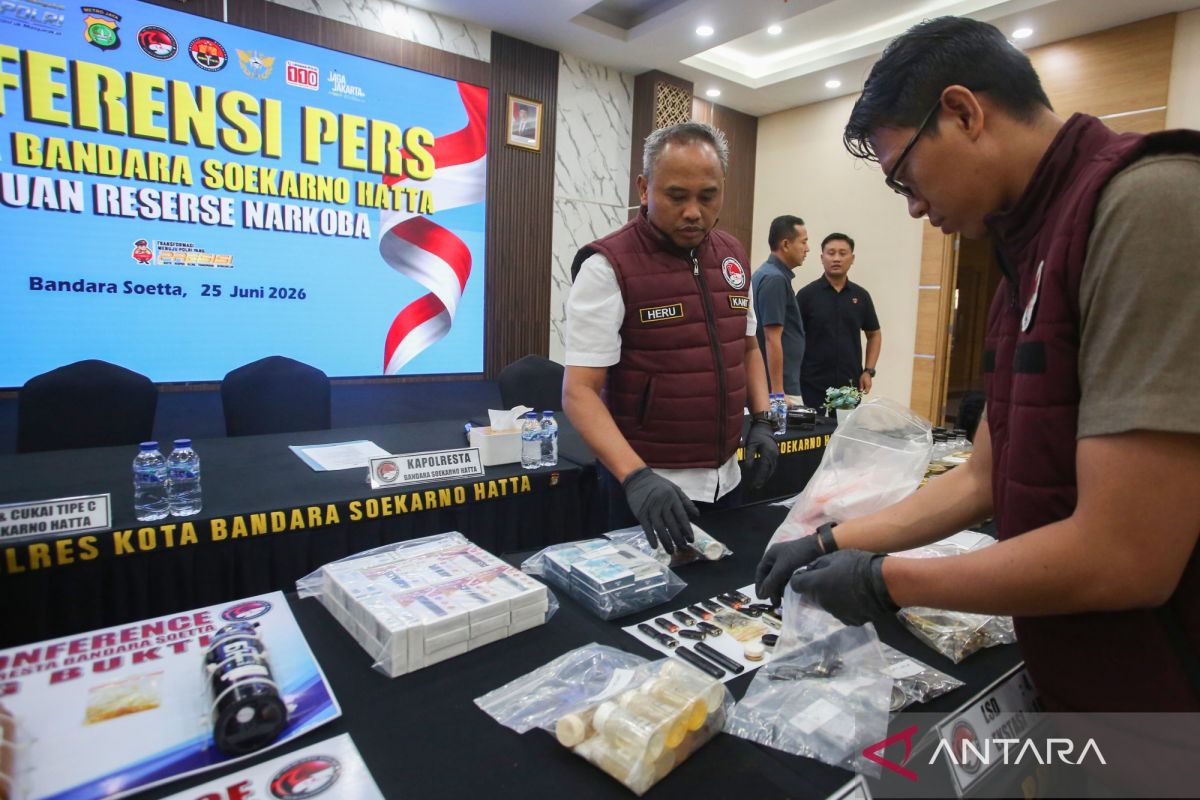
Every 26 June, the world commemorates International Anti-Narcotics Day (HANI) as a momentum to strengthen the collective commitment to confronting the threat of narcotics. This year, the National Narcotics Agency (BNN) carries the theme ‘Building a Healthy, Intelligent, and Strong Generation Through the Ananda Bersinar Movement Towards a Golden Indonesia 2045.’ The theme serves as a reminder that the war on drugs is not merely a law enforcement agenda, but an endeavour to protect the quality of Indonesia’s human resources as the foundation towards a Golden Indonesia 2045. This urgency is not without reason. The prevalence of narcotics abuse in Indonesia reaches approximately 2.11 percent of the population aged 15–64 years, equivalent to 4.15–4.9 million people. At the same time, more than 312,000 students are recorded as having been exposed to narcotics abuse. Throughout the year, law enforcement officers also uncover tens of thousands of narcotics cases, with seized evidence amounting to hundreds of tonnes. These figures indicate that narcotics remain a serious threat to public health, social resilience, and the future of the nation’s generation. The magnitude of this threat does not automatically mean that all perpetrators should be viewed with the same approach. Data from the National Police’s Criminal Information Centre (Pusiknas) even shows that cases of narcotics abuse outnumber cases of narcotics trafficking. This fact is a reminder that narcotics policy cannot merely prioritise a repressive approach, but must also be able to proportionally distinguish between users who need recovery and trafficking perpetrators who seek profit from crime. Herein lies the importance of realising a narcotics policy that is not only firm but also just. The eradication of narcotics must indeed be carried out firmly. However, firmness must not ignore the principle of proportionality in criminal law. Users and traffickers are two legal subjects with different characteristics, motives, and levels of danger. Traffickers profit from the illicit circulation of narcotics, whereas users—especially addicts and victims of abuse—are more appropriately viewed as individuals requiring health treatment, in addition to legal accountability. This paradigm has actually been accommodated in Law Number 35 of 2009 on Narcotics. Article 54 stipulates that addicts and victims of narcotics abuse must undergo medical rehabilitation and social rehabilitation, while Article 103 grants judges the authority to order rehabilitation. Nevertheless, its implementation still leaves problems. In law enforcement practice, users are often charged under Article 112 of the Narcotics Law concerning the possession or control of narcotics, which carries a relatively heavy criminal penalty. On the other hand, Article 127, which specifically regulates narcotics abusers for personal use, has not always been the primary basis for case handling. This condition potentially blurs the distinction between users and trafficking perpetrators, even though the two have different levels of culpability and objectives for their actions. This issue is also a concern for the Institute for Criminal Justice Reform (ICJR). In the discussion of the Bill on Criminal Adjustments, ICJR proposed that sentencing be structured more proportionally by clearly distinguishing between users and traffickers. Such an approach is not intended to loosen the eradication of narcotics, but rather to ensure that users who meet the criteria as addicts or victims of abuse receive rehabilitation in accordance with the law’s mandate, while producers, kingpins, and traffickers as the main actors in the crime chain are subjected to heavier criminal liability.