
RealCo: Downstreaming of Edible Bird's Nests Opens Value-Added Export Opportunities for Indonesia
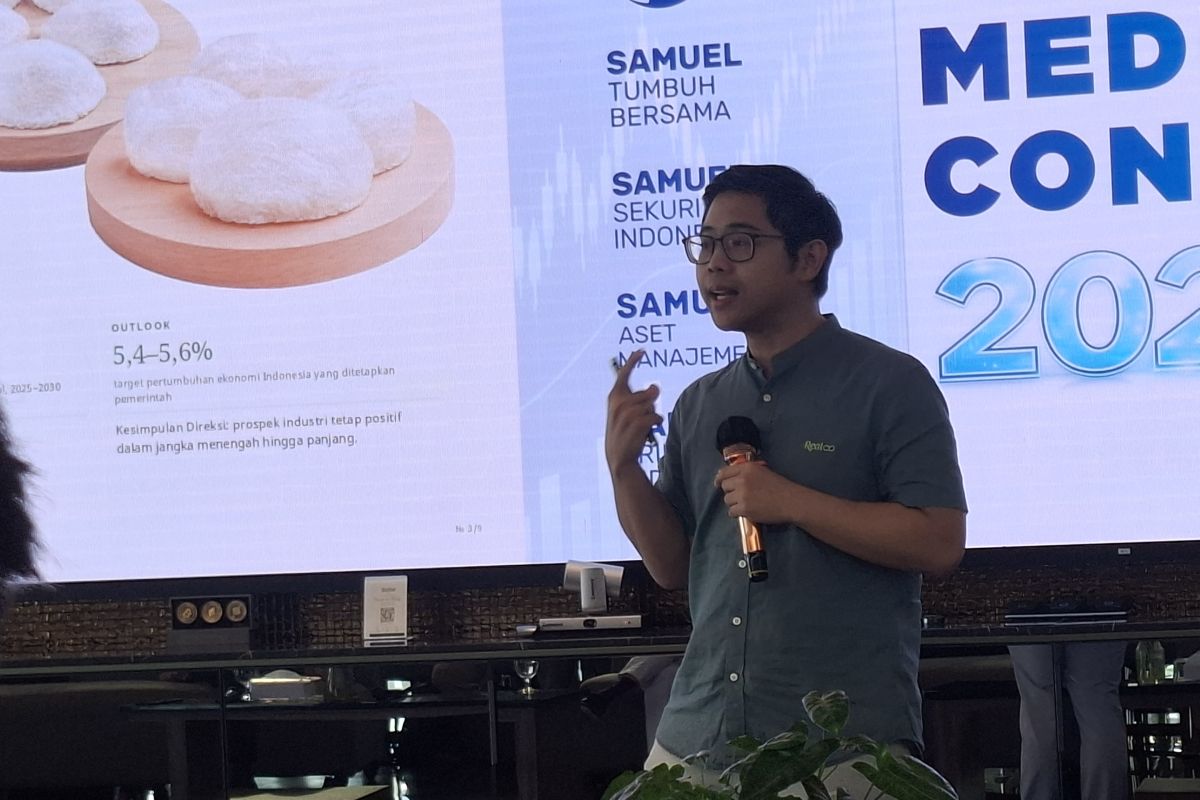
Indonesia produces 80 percent of the world’s edible bird’s nests. So it is actually wrong when people say edible bird’s nests come from China. In fact, they come from Indonesia.
Jakarta (ANTARA) - CEO of PT Abadi Lestari Indonesia Tbk (RealCo) Edwin Pranata believes that downstream processing of edible bird’s nests (SBW) can increase Indonesia’s export value added while strengthening the position of national products in the global market.
He said Indonesia has a large supply base of edible bird’s nests, but the development of value-added products needs to be strengthened so that the commodity is not only marketed in the form of raw materials or basic processed goods.
“We are very motivated to transform and bring edible bird’s nest products, among others, into a flagship product and also change this from a commodity into an Indonesian global wellness brand,” said Edwin at the Samuel Sekuritas Indonesia Media Connect in Jakarta, Friday.
In the material presented, Indonesia was said to contribute around 60-80 percent of the global edible bird’s nest supply.
The company presented that the export value of Indonesian edible bird’s nests in fresh form from January to September 2025 was recorded at around 345 million US dollars or around Rp6.17 trillion.
“Indonesia produces 80 percent of the world’s edible bird’s nests. So it is actually wrong when people say edible bird’s nests come from China. In fact, they come from Indonesia,” said Edwin.
He said the large national production is capital for Indonesia to develop the processing industry so that more economic value from the commodity can be created domestically.
According to him, Indonesian edible bird’s nests have so far been better known as an export commodity, while opportunities for developing derivative products remain open.
The company’s data for the first half of 2026 shows the difference in margin levels between the processed edible bird’s nest business and its consumer products.
He explained that the processed edible bird’s nest segment recorded sales of around Rp234.4 billion with a gross margin of 19.2 percent, while the consumer products segment posted sales of Rp37.6 billion with a gross margin of 42.7 percent.
On a consolidated basis, RealCo’s sales in the first half of 2026 reached Rp272 billion. Net profit was recorded at Rp20.38 billion, an increase of 13.4 percent compared to Rp17.97 billion in the comparison period stated by the company.
Edwin said the company is also conducting research to advance the development of edible bird’s nests from merely food products to products with science-based value.
However, he said the development is still in the research stage. Therefore, the company has not yet detailed the product categories or benefits that will be developed.
“We are indeed devoting a lot of our effort and time to upgrading this status. So that in the future this will certainly have a positive impact on the Indonesian edible bird’s nest industry,” he said.
In addition to downstream processing, he considers export market diversification important to expand the reach of Indonesian products and reduce sales concentration in one country.
He stated that the company’s export market was previously almost 90 percent dominated by China. RealCo has begun expanding its market to Vietnam and plans to add Thailand in the fourth quarter of 2026.
“We are now starting to diversify our export markets, which were initially dominated almost 90 percent by China. Now we will start diversifying to other Southeast Asian markets,” said Edwin.
According to Edwin, the development of derivative products and market expansion are part of efforts to improve the competitiveness of products based on Indonesian resources so that they do not stop at being commodities.
He hopes that strengthening domestic processing can make Indonesia increasingly known as a producer of value-added products, including outside the mining and plantation sectors.
The Ministry of Trade (Kemendag) in July 2026 also encouraged the development of edible bird’s nest exports through product diversification and market expansion.
The government is formulating an industry roadmap oriented towards increasing value added, market diversification, and strengthening Indonesia’s export competitiveness.
Kemendag data shows Indonesia was the world’s largest supplier of edible bird’s nests in 2025 with an export value of 551.56 million US dollars or a share of 58.31 percent.
Of that amount, exports to China reached 380.20 million US dollars (around Rp6.81 trillion) and the country absorbed 80.15 percent of Indonesian edible bird’s nests.
The Ministry of Agriculture (Kementan) has also positioned downstream processing of edible bird’s nests as a strategy to increase Indonesia’s value added and global competitiveness. Kementan believes exports need to be expanded not only in the form of clean edible bird’s nests, but also through processed products resulting from downstream processing.
Furthermore, the Indonesian Quarantine Agency (Barantin) recorded that Indonesian edible bird’s nest exports from January to September 2025 reached 894.86 tonnes with destinations including China, Hong Kong, Vietnam, Macau, Singapore, Malaysia, the United States, Japan and South Korea. Barantin is also encouraging downstream processing of processed products to improve export competitiveness.
In July 2026, Barantin stated it would tighten quality control of edible bird’s nest exports after 19 of 50 exporting companies were suspended by China due to aluminium content issues.
Source: jawawa.id (https://jawawa.id/newsitem/realco-downstreaming-of-edible-birds-nests-opens-value-added-export-opportunities-for-indonesia-1786121556)
Originally published by Antara (Indonesian) (https://www.antaranews.com/berita/5685104/realco-hilirisasi-sarang-walet-buka-peluang-nilai-tambah-ekspor-ri), translated from Indonesian