
Reading the Traces of the Surabaya Fault
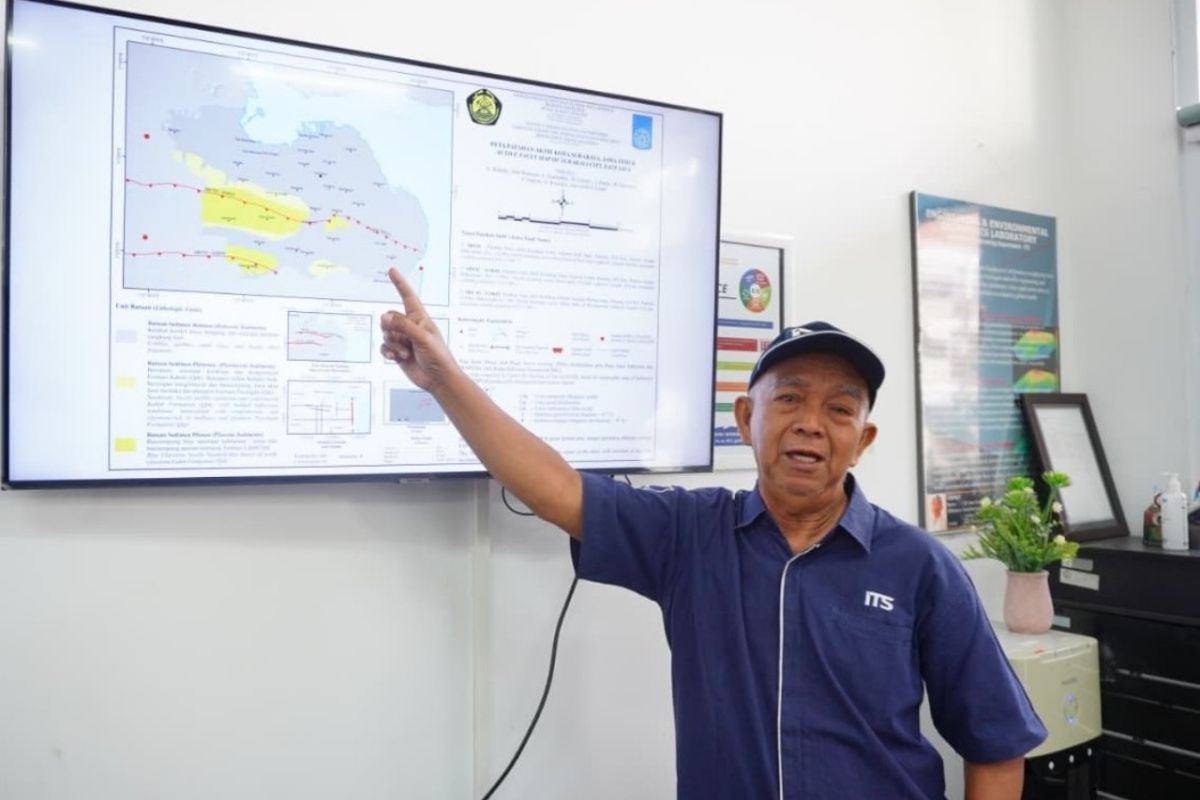
Fault lines do not need to become a new source of fear. Their existence can instead serve as a reminder that a resilient city is not one without risk, but rather one that recognises its risks and continuously reduces its vulnerability.
Surabaya (ANTARA) - Large cities are built with various efforts to control risk. Roads are widened, rivers are managed, buildings are reinforced, and technology is utilised to enhance safety. However, there are risks that humans cannot fully control, namely the movement of the earth.
Discussions regarding faults in the city of Surabaya, East Java, serve as a reminder that the city is not entirely free from geological risks. Information regarding the fault lines crossing Surabaya, Sidoarjo, and Bangkalan has spread widely, particularly through social media.
Amidst this flow of information, the public needs to balance two things. There is no need to panic, but risks must not be ignored. Preparedness must be built based on data, scientific studies, and practical drills.
The Surabaya Regional Disaster Management Agency (BPBD) stated that the Kendeng fault line consists of two segments related to Surabaya, namely the Surabaya Segment and the Waru Segment. The BPBD also routinely conducts preparedness socialisation in residential areas, schools, and offices.
BMKG Meteorological and Geophysical Observer, Rozikan, noted that the updates to geological, geophysical, and geodesy data referenced in the 2024 National Earthquake Study Centre maps recognise these structures as part of a long-existing fault system.
What needs to be understood is that the existence of a fault does not automatically mean a large earthquake will occur imminently. The Geological Survey Centre also noted the need for data integration and validation in the mapping of faults in Surabaya and its surroundings.
Therefore, risk communication is essential. Scientific information should not be oversimplified into the assumption that Surabaya is merely waiting for a major earthquake, nor should it be dismissed as having no threat at all. Risk lies between these two understandings.