
Reading the Self-Criticism and Aspirations of NU's Second Century from a Young Cleric's Notes
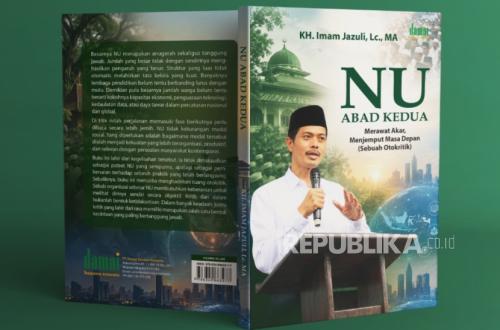
There is a sense of anxiety when a large organisation celebrates an age exceeding one century.
On ceremonial stages, speeches boom about past glories, about multiplying congregations, and about undeniable political influence. However, in a quiet corner, there is always someone who is restless.
Someone who knows that a high tower will not stand merely through the grandeur of its facade, but through the resilience of its roots in the wet and dark earth.
That restlessness is what strikes us when reading the latest book by KH Imam Jazuli, Lc MA, titled NU Abad Kedua: Merawat Akar, Menjemput Masa Depan (NU’s Second Century: Nurturing Roots, Welcoming the Future).
This 148-page book acts like a mirror forcibly placed in front of the face of a giant named Nahdlatul Ulama. It does not arrive to praise, but to invite reflection. And like an honest mirror, it frequently reveals the cracks that have long been attempted to be covered by ceremonial powder.
History often becomes a burden when it is celebrated only as a romance, rather than as a teacher that demands evaluation.
Kiai Imam Jazuli seems to fully understand the danger of such romanticism. He is a cultural mover (muharrik) who has pioneered political schooling for students (santri), implemented the dissemination of Dalailul Khairat certificates to tens of thousands of followers, and consolidated thousands of clerics, preachers, and female scholars through various workshops and seminars.
The author’s restlessness is not the cynicism of an outsider. This is the self-criticism of a biological child who once served within the structural circles as the Vice Chairman of RMI Central for the 2010–2015 period.
The criticism in this book is an expression of responsible love, not a form of disloyalty. The author is not doubting NU; he is anxious for NU.
The book, which consists of a collection of previously scattered essays in Kompas, Detik, Tribune, and Republika, presents a vast landscape of issues: from organisational governance, the existence of Islamic boarding schools (pesantren), public reasoning, data sovereignty, digital proselytising, the NU-PKB relationship, ecology, to the recent heated debates regarding lineage (nasab). All these problems converge on one keyword: transformation.
One of the charms and the courage of this book lies in its bluntness in touching upon areas that have long been considered sacred or, at the very least, taboo to challenge openly.
Source: jawawa.id (https://jawawa.id/newsitem/reading-the-self-criticism-and-aspirations-of-nus-second-century-from-a-young-clerics-notes-1789199800)
Originally published by Republika (https://analisis.republika.co.id/berita/tl8opx320/membaca-autokritik-dan-citacita-abad-kedua-nu-dari-catatan-sang-kiai-muda), translated from Indonesian