
Reading the New Direction of ESSA: Efficiency, Emissions, and the Future of Green Ammonia
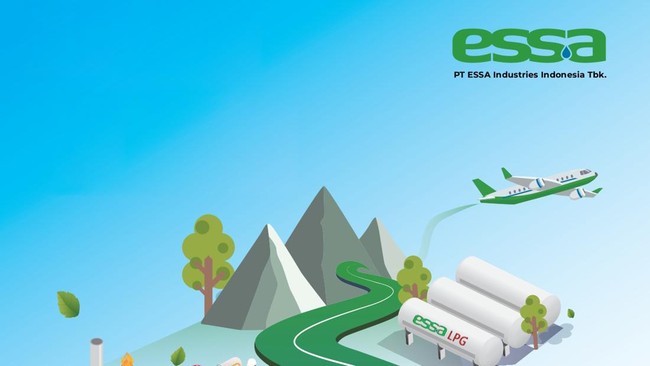
ESSA Industries Indonesia Tbk is beginning to seriously integrate ESG (Environmental, Social, Governance) principles into its business strategy. This step is crucial given the significant pressures facing the energy and chemicals sector regarding carbon emissions and the transition to clean energy.
From an environmental perspective, ESSA is promoting the development of blue ammonia and green ammonia. Blue ammonia is produced from gas with carbon capture technology (CCUS) support, while green ammonia is based on renewable energy. Ammonia itself is now viewed as a future fuel and hydrogen carrier, playing an important role in global decarbonisation.
In addition, the company is also improving the operational efficiency of its ammonia and LPG plants, reducing carbon emission intensity, and strengthening waste and water management. This strategy not only aims to meet regulations but also to enhance cost efficiency and comply with global ESG standards.
Although still gas-based, ESSA positions gas as a transition energy towards net-zero, given its lower emissions compared to coal.
From a social perspective, ESSA is implementing various community empowerment programmes in areas around its operational regions, ranging from education and job training to MSME development. In the high-risk chemicals industry, the company also emphasises a safety culture with a zero-accident target and the implementation of international safety standards.
Meanwhile, in terms of governance, ESSA is strengthening transparency through ESG reporting and sustainability reports, as well as ensuring compliance with OJK regulations and global standards.
The company is also actively managing various risks, from energy price volatility and carbon regulations to geopolitical dynamics affecting gas supply.
Amid the growing national demand for energy and industrial chemicals, ESSA is strengthening its position as one of the strategic players in Indonesia’s energy and chemicals sector.
The company relies on two main business lines: liquefied petroleum gas (LPG) refining and ammonia production, which form the foundation for growth and contribution to domestic energy resilience.
With LPG refinery facilities in Palembang and ammonia production in Banggai, Central Sulawesi, ESSA places sustainability at the core of its operations, in line with commitments to increasingly stringent environmental, economic, and governance (ESG) standards.
Sustainability Aspects
In 2024, PT ESSA Industries Indonesia Tbk recorded sustainability performance showing significant improvements in various environmental aspects.
From an energy efficiency standpoint, the company achieved a total absolute efficiency of 747,580.1 GJ, with greenhouse gas (GHG) emission intensity for ammonia production remaining stable at 0.4 tCO₂e per tonne over the last three years. Decarbonisation efforts are also reflected in a total GHG emission reduction of 89,575 tCO₂e throughout the year.
ESSA Group’s Concrete Actions: 325 Maleo Birds Released, Contributing 11% to Wild Population
The conservation initiative run by ESSA Group since 2019 has shown significant impact on preserving endemic wildlife. The company has released 325 Maleo birds into their natural habitat in Sulawesi, equivalent to about 11% of the total Maleo population in the wild.
Efforts to conserve the Maleo bird serve as a concrete example of how companies can actively contribute to maintaining ecosystems while supporting conservation science development.
ESSA demonstrates that private sector contributions can be an important factor in driving national conservation success, while creating sustainable impacts for the environment and society.
On the waste management side, ESSA successfully reduced hazardous waste stockpiles to 325.3 tonnes, a 41% decrease from the previous year, and non-hazardous waste to 264.1 tonnes, a 52% annual reduction. Additionally, the total absolute waste reduction reached 154.6 tonnes, reflecting an increase in the effectiveness of the company’s waste management system.
Meanwhile, water resource usage also shows a more efficient trend. Throughout 2024, water consumption was recorded at 181,083.5 megalitres, down 143.7 megalitres from 2023.
Overall, these achievements affirm ESSA’s commitment to running more sustainable operations through energy efficiency, emission reductions, and optimisation of natural resource use.
Sustainable Aviation Fuel (SAF)
ESSA is also beginning to expand its business portfolio into the clean energy sector through the development of Sustainable Aviation Fuel (SAF).
This step is realised through the establishment of two new entities, PT ESSA Sustainable Indonesia and PT ESSA SAF Makmur, as part of the company’s strategy to support Indonesia’s low-carbon energy transition.
Through these entities, ESSA will build an SAF production facility in Central Java with a capacity of around 150,000 metric tonnes per year. This project is targeted to commence commercial operations in the period from Q4 2027 to Q1 2028, in line with the growing global demand for environmentally friendly fuels in the aviation sector.
Additionally, ESSA aims to become one of the first SAF producers in Indonesia to obtain ISCC CORSIA certification, an international standard that ensures the sustainability and carbon footprint of aviation fuel products.
Source: jawawa.id (https://jawawa.id/newsitem/reading-the-new-direction-of-essa-efficiency-emissions-and-the-future-of-green-ammonia-1775638386)
Originally published by CNBC Indonesia (https://www.cnbcindonesia.com/research/20260408133246-128-724948/membaca-arah-baru-essa-efisiensi-emisi-dan-masa-depan-amonia-hijau), translated from Indonesian