
Reading the Early Warnings from International Institutions
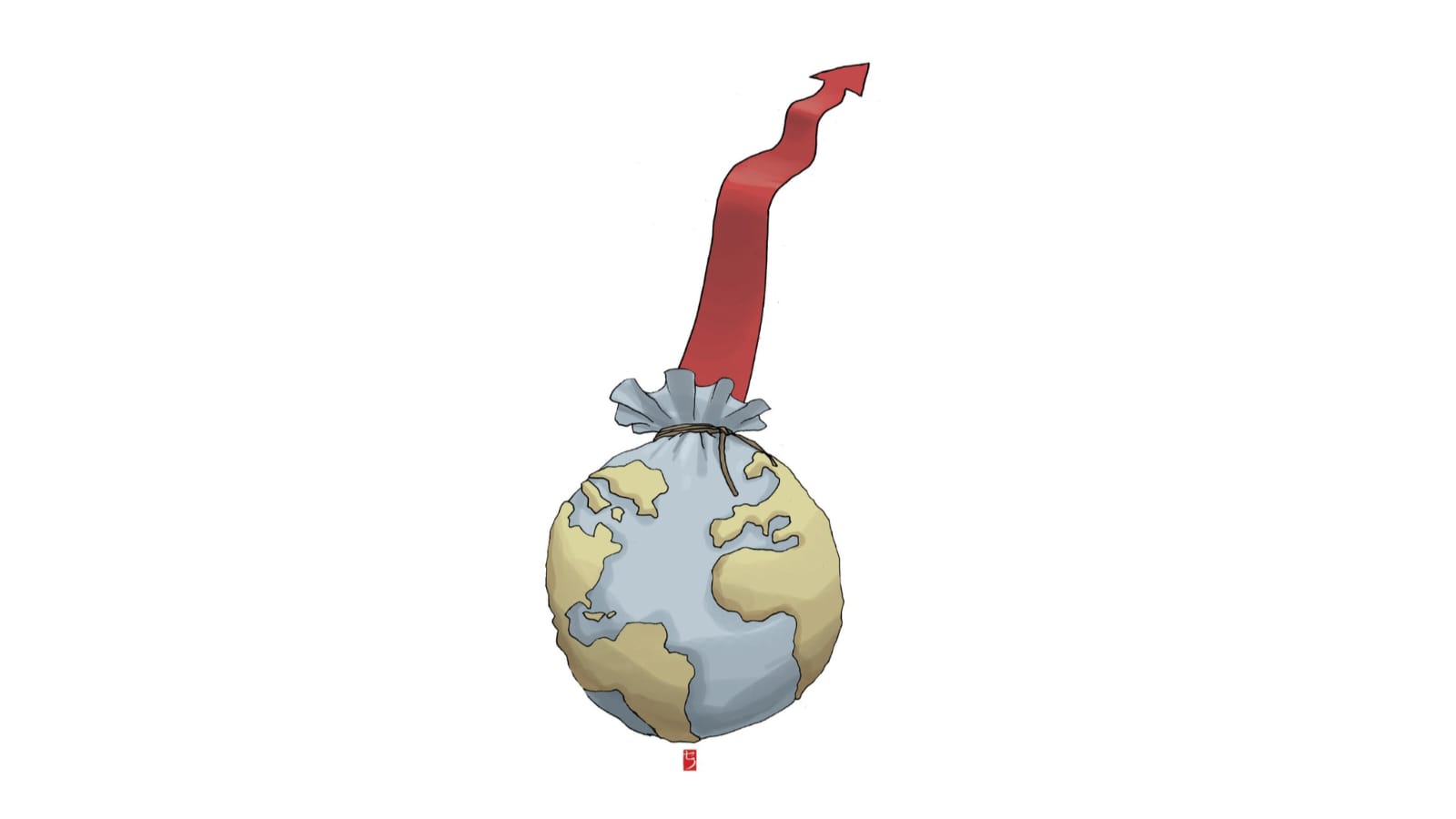
Amid the current public discourse linking national economic performance to student protests, it is prudent for everyone—including government policymakers—to calmly read and reflect upon the editorial note from the Organization for Economic Co-operation and Development (OECD) June 2026 edition.
Titled OECD Economic Outlook: Under Pressure, the institution opens its editorial with issues related to the Iran war. According to the OECD, the conflict in the Middle East has become the dominant factor shaping global economic prospects. Economic activity has shown considerable resilience, underpinned by strong investment in artificial intelligence, supportive financial conditions, and easing trade tensions. Global growth prospects appeared poised for a significant upward revision.
However, the global economy is now back under pressure. Shipping disruptions through the Strait of Hormuz, along with damage to energy infrastructure, have triggered sharp rises in energy prices and increased costs for fertilisers and other critical industrial inputs. Higher costs are fuelling inflationary pressures, weakening confidence, and burdening household demand and business activity.
The evolution of the Middle East conflict remains uncertain, but its economic consequences may be felt for some time, even after a resolution. Recognising this uncertainty, the OECD frames its global projections through a scenario-based approach. The OECD analysis considers two possibilities: a time-limited and relatively short-lived disruption scenario, and a prolonged disruption scenario with broader and longer-lasting negative consequences.
An immediate peace settlement would bring relief to people in the Gulf region and lay the groundwork for resolving the disruptions inflicted on the global economy. Assuming energy prices gradually decline from mid-2026 onwards, broadly in line with current market expectations, global economic growth is projected to slow from 3.4% in 2025 to 2.8% in 2026 before recovering to 3.1% in 2027.
The OECD also projects Indonesia’s economic growth to reach 4.7% in 2026, a downward revision from previous forecasts due to global economic pressures such as soaring energy costs and policy uncertainty linked to the Middle East conflict.
Annual consumer price inflation in G-20 countries is expected to rise to 4.0% in 2026 from 3.4% in 2025, before easing to 3.1% in 2027 as energy and food price pressures fade.
Several heads of state and government have moved swiftly to provide relief to households and businesses from high global energy prices—mostly through broad-based measures using available subsidy budgets. Understandably, fiscal space is increasingly constrained due to rising subsidy costs, social assistance programmes, and high public debt. Consequently, efficient, effective, and credible budget management becomes imperative, especially if external pressures persist.
According to the OECD, if growth weakens substantially, the burden of cushioning activity will largely fall on fiscal policy, given the limited room for monetary policy to act. At the same time, policy choices need to be carefully calibrated to avoid straining energy markets, adding to inflationary pressures, and distorting fiscal sustainability.
This OECD note aligns with a Fitch Ratings report titled Global Economic Outlook – June 2026. It states that the war between Israel, the US, and Iran, along with the oil price shock, has dragged down global growth and pushed up inflation.
The global growth outlook has been harmed by the oil crisis triggered by the Iran conflict. Global growth in 2026 has been revised down by 0.2 percentage points to 2.4%, mainly in response to higher oil prices. The forecast cuts have been widespread as higher inflation erodes real wages, dampens consumption, and raises corporate input costs.
However, the impact of the oil price shock on global activity is cushioned by stronger-than-expected momentum in AI and microchip investment, which is supporting world trade and Asian exports. Fitch has raised its growth forecasts for China and South Korea following very strong first-quarter 2026 data and improved export prospects from the tech boom.
US growth in 2026 has been revised down by 0.3 percentage points from the March Global Economic Outlook to 1.9%, and Eurozone growth has been cut by 0.4 percentage points to 0.9%. Growth in emerging markets—excluding China—has also been trimmed by 0.2 percentage points to 3.2%, but the forecast for China itself has been raised by 0.3 percentage points to 4.6%.
The inflationary impact of the oil price shock is shifting the global monetary policy stance towards tightening. Central banks are concerned that the price shock could have persistent effects on inflation. Policy rates are expected to move higher as fiscal policy becomes less expansionary. The Fed and the Bank of England are expected to keep their benchmark rates on hold this year but resume cuts in 2027.
The European Central Bank raised its benchmark rate by 25 basis points in June but is expected to reverse course next year if inflation expectations ease. The Bank of Japan this week raised its benchmark rate by 25 basis points from 0.75% to 1.0%, its highest level in three decades.
Source: jawawa.id (https://jawawa.id/newsitem/reading-the-early-warnings-from-international-institutions-1781650230)
Originally published by Media Indonesia (https://mediaindonesia.com/opini/901225/membaca-peringatan-dini-lembaga-lembaga-internasional), translated from Indonesian