
Reading the 21st-Century Neo-Battle of Stalingrad: Cognitive Warfare
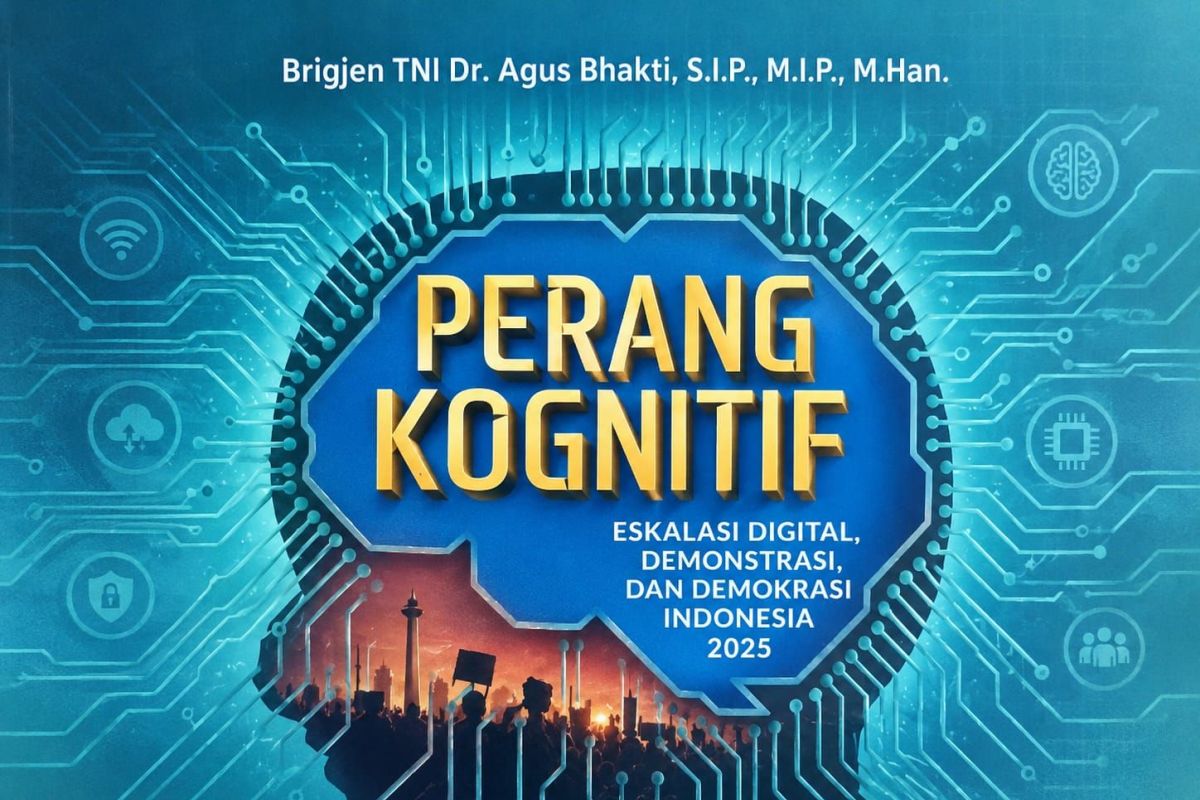
Bandung (ANTARA) - Who has not heard of the Battle of Stalingrad?
The battle is recorded in history as one of the most iconic, brutal and decisive conflicts in human civilisation. For six months, two weeks and two days—from 17 July 1942 to 2 February 1943—the Soviet Union and Nazi Germany fought each other for dominance.
The physical devastation was stark as the two sides fought for every inch of territory. An estimated 1.1 million to three million people, including troops from both sides and civilians, died in the exceptionally brutal battle.
Stalingrad marked the culmination of modern-era conventional warfare, which relied on the superiority of fighter aircraft, tanks and munitions.
What about today?
We are now facing a new kind of battle with equally destructive potential. Contemporary conflict is no longer about seizing geographical territory, but about occupying the human psychological sphere. This new form of struggle is called cognitive warfare, literally a “war to capture the human mind”.
In his book Cognitive Warfare: Digital Escalation, Demonstrations and Indonesian Democracy 2025, Brigadier General Dr Agus Bhakti describes how the impact of this “New Era Stalingrad” could be even more frightening.
In clear language, Agus Bhakti explains that cognitive warfare centres on how the brain processes data, rather than merely on the content of a message, as in conventional information warfare. Its main mechanisms include framing, agenda-setting, conditioning, micro-targeting, multimodal content, cross-channel synchronisation, amplification by algorithms across platforms, and the orchestration of narratives by state and non-state actors.
The battlefield of cognitive warfare depends on the precision, scale, speed of targeting and reach of digital information. Algorithms increase the visibility of particular narratives. Short-form video formats and editing features on Facebook and Instagram, for example, are accelerating the reproduction and circulation of content. This makes it easier for networks of accounts to establish a rhythm and synchronise the dissemination of messages.
Agus Bhakti also highlights how micro-targeting can tailor messages and social-media feeds to the psychological vulnerabilities of targets, while platforms’ interoperability can exploit emotions across digital spaces. The focus of the battle is shifting from what a message says to how the brain processes it and how networks spread it. As a result, cognitive manipulation has become the primary objective of the conflict, rather than merely a side effect.
In today’s digital era, the human cognitive landscape is flooded with stimuli that trigger strong emotions such as anger, fear and hatred. Complex reasoning consequently declines, leaving individuals more vulnerable to simplistic narratives that merely confirm their biases.
Agus Bhakti argues that the weapons of cognitive warfare are no longer explosives, but narratives, images and disinformation circulated through global information networks. Digital technology enables micro-targeting based on psychological profiles, while social-media algorithms act as accelerators for the spread of divisive narratives.
The human mind itself has now become the battlefield. Conflict has evolved from the struggle for physical territory into a contest to shape perceived reality. The side capable of shaping how the largest audience understands the world will achieve strategic dominance. “Damage in this domain includes the erosion of trust, the loss of a shared reality and the degradation of common sense—harms that are far harder to repair than damage to physical infrastructure,” he writes in the book.
One of the most striking features of the book, whose cover is dark green fading into black and depicts the silhouette of a human head, is its wealth of quotations. Across its pages, selected quotations encourage readers to think clearly amid the deluge of hoaxes circulating on social media.