
Reading Mass Violence
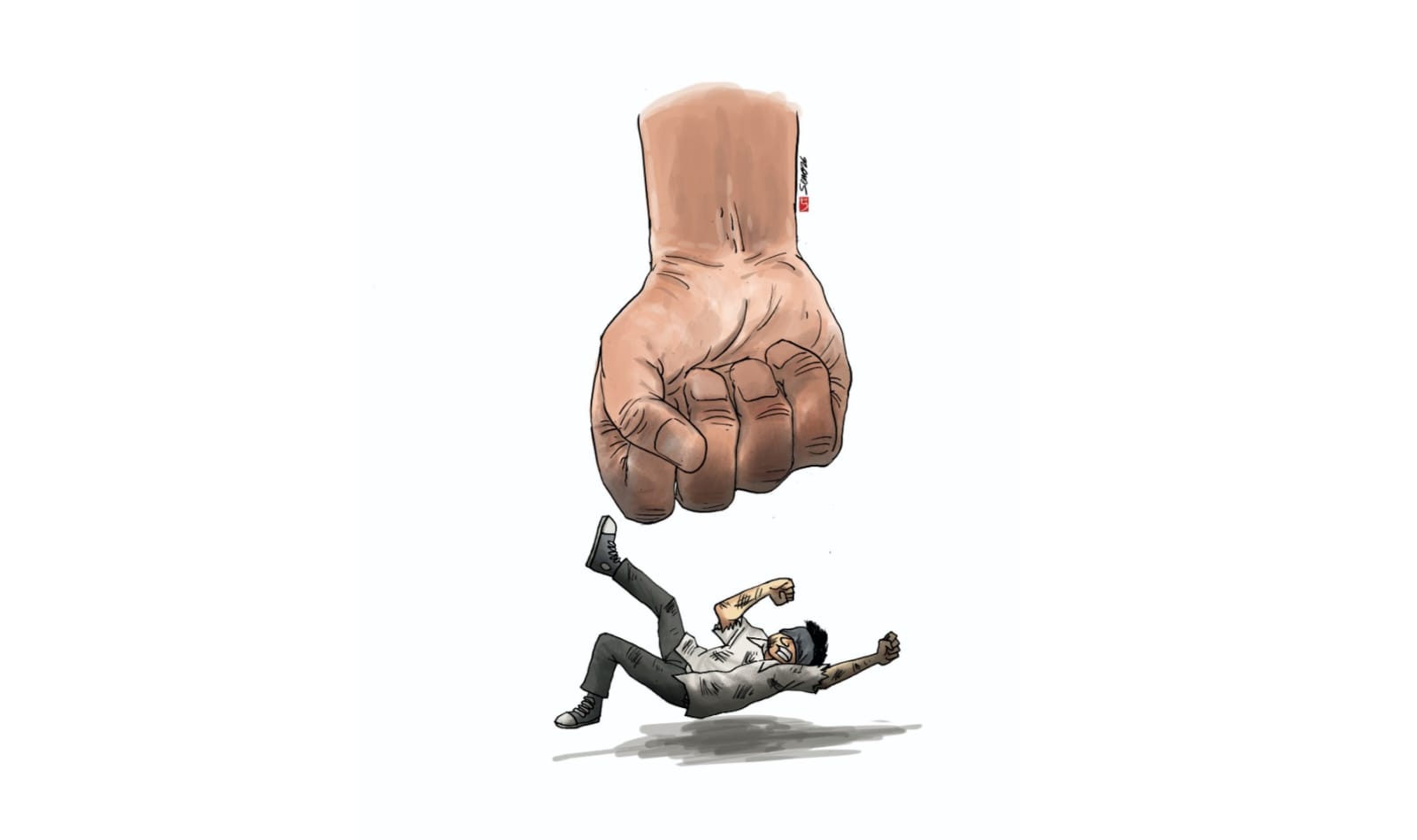
A young girl cries beside the body of her father, who was subjected to mob justice in Tabanan, Bali (24/7/2026). A day later (25/7/2026), a man was beaten to death at a minimarket in Morowali. Within days (26/7/2026), a clash between residents in Matraman Dalam, Central Jakarta, also claimed a life. Three incidents, three cities, one identical pattern: a mob that metes out punishment without limits. If there were limits, there would certainly be no fatalities.
Following video clips shared across various social media platforms, we can see that other incidents of mass violence have occurred in various parts of the country in close succession. Of course, clashes or mob justice resulting in death are not a recent phenomenon. However, with the advent of social media and the ease of visual recording using increasingly affordable devices, incidents of mass violence feel more present or frequent.
In a situation where mass violence seems acceptable—because it is easy and happens often—we might ask: how long will this be accepted or tolerated? Unfortunately, this question is rhetorical and need not be asked. The more important question is what we can read from these incidents of mass violence.
In the three incidents that open this article, the mass involved is a crowd. The main characteristic of a crowd is gathering in the same place and time, without a formal structure or predetermined division of roles. According to sociologist Herbert Blumer, one of the early figures in crowd studies, what unites a crowd is a shared focus of attention, when an event or object becomes the centre of attention for everyone in it. A crowd consists of individuals who gather solely because of this shared focus at a particular moment.
To explain the phenomenon of a crowd committing mass violence, as happened in Tabanan, Morowali, Matraman Dalam, and other locations, we can use various lenses. One commonly used lens is mass psychology, based on social psychology, which essentially views mass violence as collective behaviour. In the tradition of social psychology studies, a crowd that transforms into mass violence is approached using two main explanatory frameworks.
First, violence as a release or collapse of individual self-control. Individuals in a crowd lose their ability to control themselves and dissolve into a fluid collectivity. As a result, individuals are easily carried away, even tossed about, by the collective nature that emerges when they are in it—whether calm, angry, or aggressive. In this explanatory framework, violence actually occurs at the individual level and becomes collective violent behaviour through a mechanism of emotional ‘contagion’ from one individual to another in the crowd (Contagion Theory by Gustav Le Bon) or ‘deindividuation’, where individuals lose self-awareness and personal identity when in a crowd, thus weakening control over impulsive behaviour (Deindividuation Theory by Philip Zimbardo).
Second, violence as a regulated, meaningful action governed by norms that are constructed or activated at that very moment (emergent norm). In other words, mass violence is not irregular and meaningless behaviour, but rather an action based on acceptance or a standard for acceptance (normative/social-level account). This means that collective violent behaviour is not merely a spontaneous act done together or en masse, but a regulated action that follows a kind of script based on what is considered acceptable or even standard by the people in that crowd.
When clashes and mob justice that claim lives continue to occur, we must be wary that mass violence is a symptom indicating a shared acceptance of violence and of punishing without limits. Based on this normative-level approach, we need to examine the phenomenon of mass violence that has been happening recently more seriously. Why? Because by using the Social Representation theory approach proposed by Serge Moscovici, a French social psychologist, it appears that the brutal mass violence of late is not merely a social symptom. More than that, mass violence seems to be becoming a common-sense understanding used daily by society in their actions.
Mass violence, which so easily takes lives, has become a representation or manifestation that is everywhere and at any time. Amplified especially through social media, mob justice appears to have undergone anchoring. It is anchored from something once rare and foreign into something familiar. It has also undergone objectification. From something that seemed complex and hard to encounter, it has become something that feels real because it is easy and frequent to find. Through the mechanisms of anchoring and objectification, a representation is embedded containing a collective script about who is acceptable to be subjected to mob justice (thieves, burglars, motorcycle thieves, people of certain ethnicities, and so on).