
Reading Guruh from his stage, not from Soekarno's podium
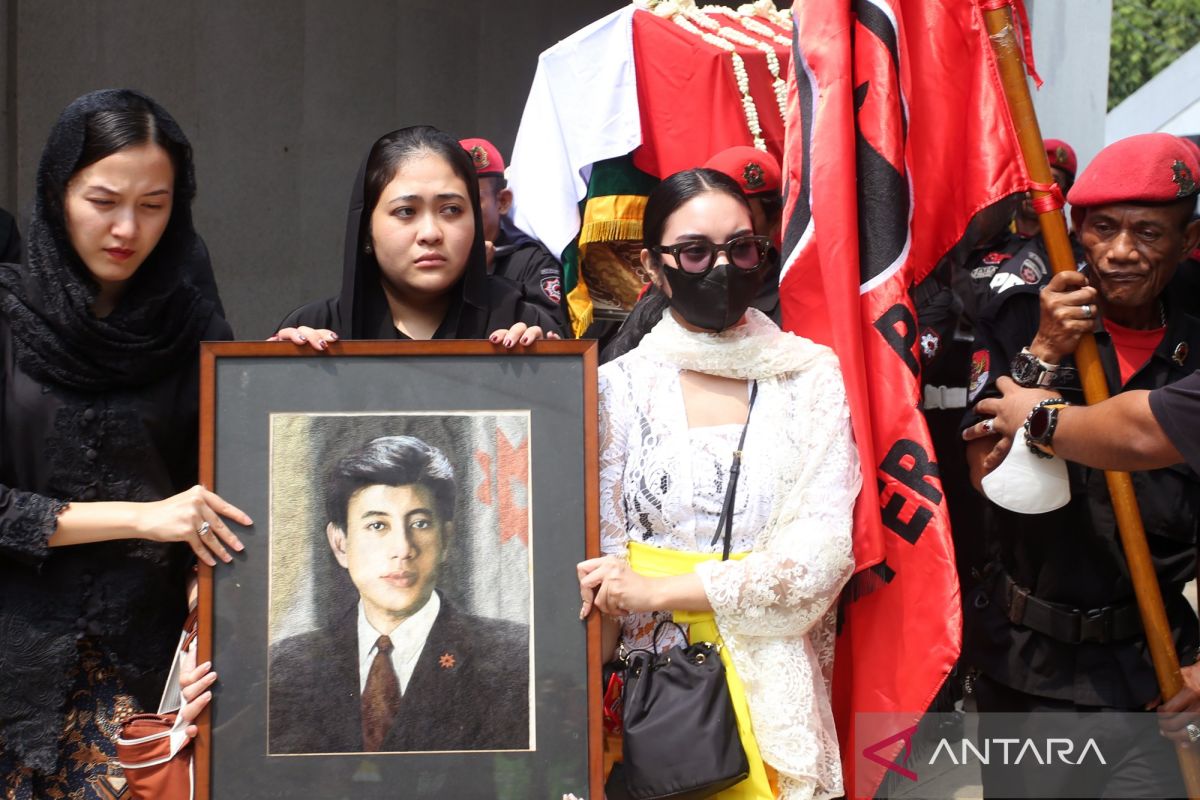
Sleman, DIY (ANTARA) - As reported by ANTARA, at 04:16 WIB on Saturday, 26 September 2026, Guruh Soekarnoputra breathed his last in Jakarta at the age of 73.
The news spread rapidly from one screen to another, as is common with news of mourning. However, there was something striking in the way we reported it; almost instantaneously, the name Guruh was accompanied by a familiar descriptor: “the youngest son of Soekarno.”
That description is certainly true and journalistically relevant. Guruh was indeed the youngest son of Soekarno and Fatmawati. However, there is a distinction between biographical fact and an identity that is perpetually attached. Biographical facts explain a person’s origins, whereas an overly attached identity can actually prevent us from seeing the direction of their own path.
Perhaps this is the final irony in Guruh’s life. Even after his passing, we still find it difficult to mention his name without first including the shadow of his father.
Therefore, Guruh’s passing should not only be an opportunity to remember, but also an opportunity to improve the way we remember.
We need, at least for a moment, to free Guruh from the confinement of the title “youngest son.” Not because that blood connection is unimportant. Rather, it is because it is so important that it often swallows the entire narrative of his own works and life.
There is a tendency in how we view the children of great figures; we always measure them through the shadows of their parents. It is as if a child of a great figure must constantly answer the same question: how close are they to the greatness of their father or mother?
Guruh bore that burden in a specific way. He was born to one of the most influential figures in Indonesian history. The name Soekarno is not merely the identity of a father. It is a marker of an era, a symbol of the birth of the republic, a political mythology, and an imagination of Indonesia itself.
Thus, how is it possible for a child to grow beyond the shadow of such a monumental figure?