
Reading Fiscal Sustainability from Sri Mulyani to Purbaya to Suahasil
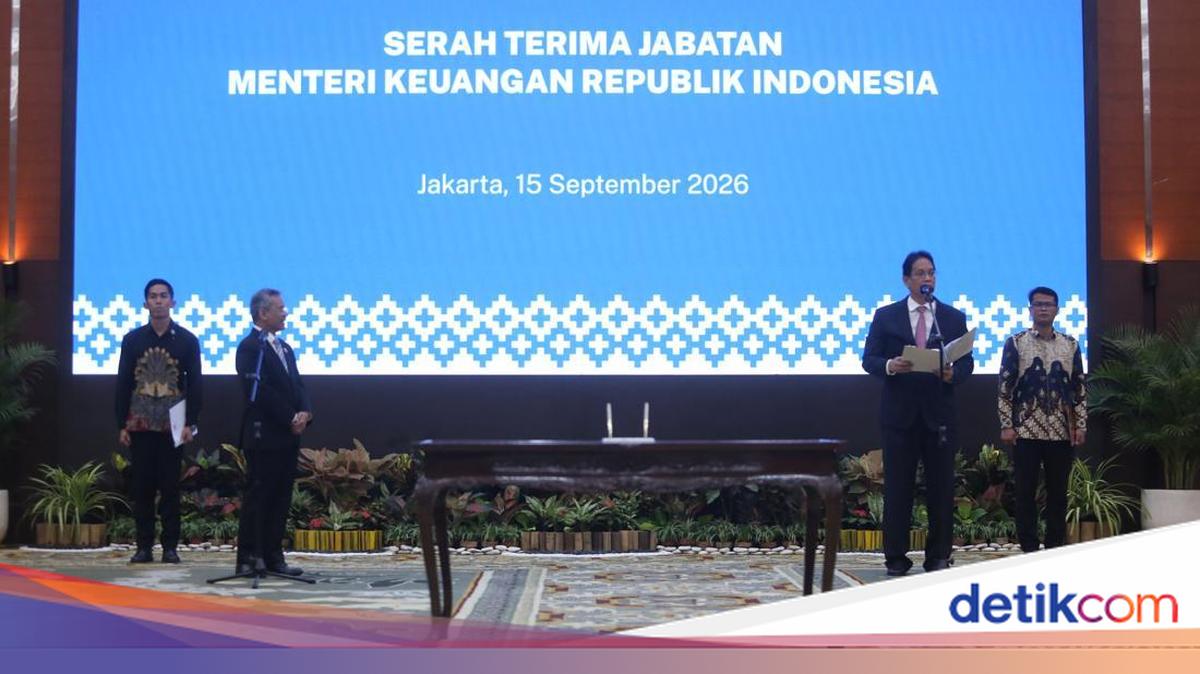
President Prabowo Subianto has twice refreshed the position of Finance Minister. First, on 8 September 2025, when Sri Mulyani Indrawati was replaced by Purbaya Yudhi Sadewa. Second, on 14 September 2026, when Purbaya Yudhi Sadewa was replaced by Suahasil Nazara.
Each Minister of Finance has their own policies, strengths and contributions in supporting the achievement of national economic targets. All three play an important role in maintaining economic stability, driving stronger and more inclusive growth, and enhancing Indonesia’s resilience in facing global challenges.
Ideally, a refresh of the Finance Minister’s post should be seen as momentum to ensure continuity in managing the State Budget (APBN). In that context, the experience and approaches of these three figures offer important perspectives on the direction of Indonesia’s fiscal management.
The fiscal policy journey of Sri Mulyani Indrawati, Purbaya Yudhi Sadewa and Suahasil Nazara displays three complementary characteristics: prudence in safeguarding the fiscal foundation, boldness in driving growth, and efforts to maintain balance and policy credibility.
Track Record of the Three Finance Ministers
The first figure is Sri Mulyani Indrawati, who served as Finance Minister under President Prabowo Subianto’s leadership from 21 October 2024 to 8 September 2025, or for 10 months and 18 days.
Sri Mulyani laid important foundations for the new government’s economic policy, including maintaining the continuity and credibility of the APBN, controlling the budget deficit, preparing the 2025 APBN framework, overseeing the budgeting of the government’s priority programmes, continuing tax reform, and strengthening coordination between fiscal and monetary policy.
As a result, economic growth remained at around 5 per cent. During that period, Sri Mulyani oversaw the implementation of several priority programmes, such as Free Nutritious Meals (MBG), People’s Schools, excellent schools, the revitalisation of schools and madrasahs, and free health check-ups.
In addition, Sri Mulyani strengthened various economic stimulus programmes to protect people’s purchasing power and support national economic growth.
At the end of her term, based on APBN realisation as of 31 August 2025, national fiscal performance remained relatively solid. State revenue was realised at Rp1,638.7 trillion, down 7.8 per cent year on year. Meanwhile, state expenditure was realised at Rp1,960.3 trillion, up 1.5 per cent year on year. Consequently, the APBN recorded a deficit of Rp321.6 trillion, equivalent to 1.35 per cent of GDP (Gross Domestic Product).
The second figure is Purbaya Yudhi Sadewa, who served as Finance Minister from 8 September 2025 to 14 September 2026, or for 12 months and 6 days.
Purbaya took a more aggressive stance on the economic growth agenda. He brought the view that fiscal policy must ensure the wheels of the economy keep turning, that credit flows to productive sectors, that investment grows, and that people’s purchasing power is maintained.
One prominent breakthrough was the policy of moving Excess Budget Balance (SAL) funds previously placed at Bank Indonesia to a number of state-owned commercial banks, known as Himbara. The policy was aimed at increasing banking liquidity, encouraging credit disbursement, lowering funding costs, stimulating consumption and investment, and accelerating activity in the real sector.
During Purbaya’s leadership, economic growth was relatively strong. In the fourth quarter of 2025, the Indonesian economy grew by 5.39 per cent year on year. Then in the first quarter of 2026, economic growth reached 5.61 per cent, the highest in 13 years. And in the second quarter of 2026, growth stood at 5.29 per cent.
Besides driving growth, Purbaya also sought to use the APBN as a shock absorber when world oil prices rose due to geopolitical escalation in the Middle East in early 2026.
When a number of countries raised fuel (BBM) prices, the Indonesian government declared its commitment not to raise subsidised fuel prices until the end of 2026. The policy proved successful in protecting people’s purchasing power, shielding low-income groups, and maintaining economic growth momentum.
At the end of his term, based on APBN realisation as of July 2026, national fiscal performance was solid. State revenue was realised at Rp1,734.0 trillion, up 21.3 per cent year on year. Meanwhile, state expenditure was realised at Rp1,969.6 trillion, up 18.2 per cent year on year. Consequently, the APBN recorded a deficit of Rp235.6 trillion, equivalent to 0.91 per cent of GDP (Gross Domestic Product).
The third figure is Suahasil Nazara, who was inaugurated as Finance Minister on 14 September 2026.
Suahasil is not a newcomer to the Ministry of Finance. In 2009, he began his career at the ministry as a member of the Fiscal Decentralisation Expert Team. Then, in 2016, he was entrusted with the post of Head of the Fiscal Policy Agency. And since 2019, Suahasil served as Deputy Finance Minister.
Suahasil enters the post of Finance Minister armed with long experience as a technocrat, fiscal policy formulator and Deputy Finance Minister. His relatively calm, research-based and institutional leadership style can be an important asset for maintaining fiscal policy continuity.
In a situation involving a change of finance minister, markets and economic actors need certainty, not merely statements of optimism. Suahasil faces the challenge of bridging two needs that are often pitted against each other: maintaining the credibility of the APBN and ensuring the budget remains an engine of development.
Complementary and Strengthening
The differences between Sri Mulyani, Purbaya and Suahasil should not be read as absolute opposition. The three represent different emphases within a single fiscal policy ecosystem. Sri Mulyani reminds us of the importance of building and safeguarding the foundation. Purbaya stressed the urgency of getting the economy moving. Meanwhile, Suahasil has the opportunity to unite the two approaches in a more measured and sustainable policy balance.
Furthermore, in supporting President Prabowo Subianto’s agenda targeting economic growth of 8 per cent by 2029, Finance Minister Suahasil Nazara’s policies need to be designed carefully to drive growth while maintaining the credibility of the APBN. To achieve this, Suahasil must be able to balance boldness in accelerating economic growth with prudence in managing fiscal risks.
Strong and inclusive economic growth cannot be sustained by stimulus and spending expansion alone. Growth must be built through higher productivity, quality investment, job creation, strengthening state revenues, spending effectiveness, and responsible debt management.
Ultimately, fiscal sustainability is not merely a matter of keeping the deficit figure in check, but of ensuring that every rupiah of the APBN delivers real economic and social benefits for the people, without reducing the fiscal space of future generations.
Kamrussamad, Spokesperson for the Gerindra Party.
Source: jawawa.id (https://jawawa.id/newsitem/reading-fiscal-sustainability-from-sri-mulyani-to-purbaya-to-suahasil-1789469694)
Originally published by detikcom (https://news.detik.com/kolom/d-8664016/membaca-keberlanjutan-fiskal-dari-sri-mulyani-purbaya-hingga-suahasil), translated from Indonesian