
Reading El-Sayed's Victory in Michigan
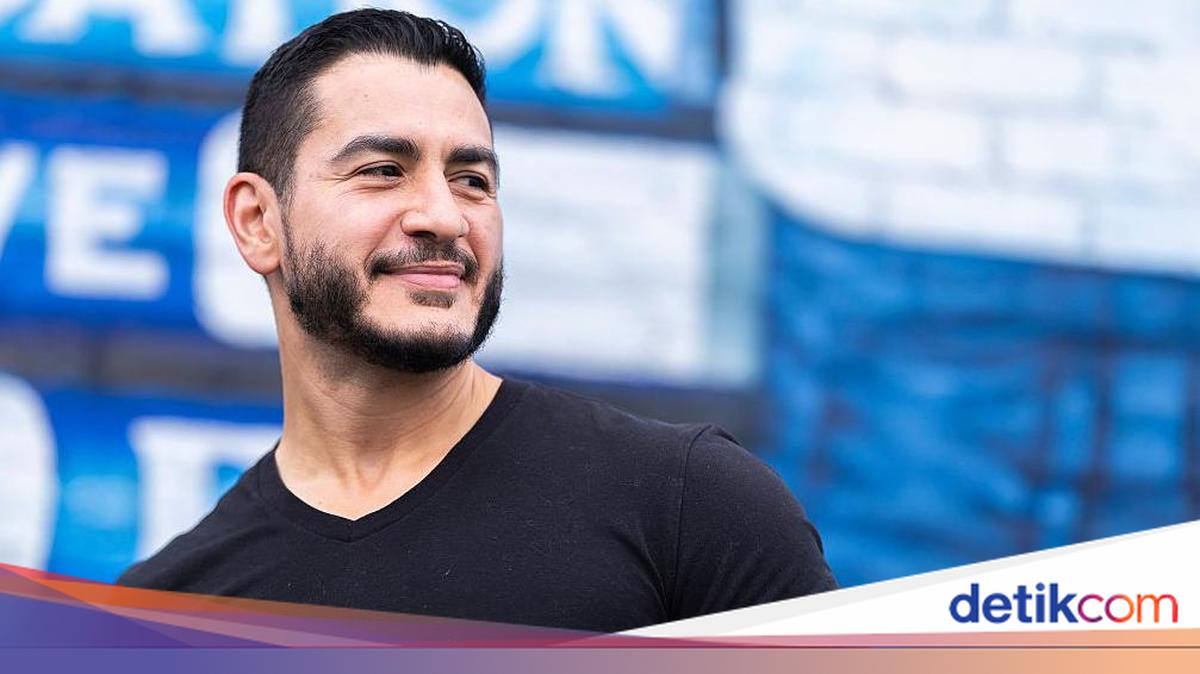
In the last few presidential elections, Michigan has been the deciding factor in America. The state delivered victory for Barack Obama twice, switched to Donald Trump in 2016 by a margin of fewer than 11,000 votes, returned to Joe Biden in 2020, and went back to Trump in 2024. No other state in America has experienced such sharp and frequent transitions over the last three cycles. The reason lies in its demographic mix: the union strongholds of Detroit and Flint, rural conservatives in the north, a rapidly growing Arab and Muslim population around Dearborn, and suburban voters who have punished both parties for neglecting their welfare. The party that manages to win Michigan typically wins the overall election in America, which is why both parties spent the summer treating the senate primary like a national campaign.
El-Sayed’s victory follows a pattern almost identical to Zohran Mamdani’s win in New York. The politician, who is also an Egyptian-American doctor and former Wayne County health director, defeated Haley Stevens, the favoured candidate of the establishment faction. If he wins the general election in November, El-Sayed will become the first Muslim senator in American history. This is not simply Mamdani’s story repeating itself elsewhere. It is a story that is growing older, and increasingly dangerous for anyone who thought it would remain confined to the five boroughs of New York City.
Winning with a Relentless Campaign
El-Sayed’s campaign can be summarised in one sentence: get money out of politics, put money back in your pocket, health for all. These three slogans combined a critique of corruption, a promise of healthcare, and an economic argument in a single breath. The campaign began a year earlier with small living room meetings and walkabouts built around one question: ‘what is actually happening in your life?’ It then grew to include more than 12,000 volunteers. El-Sayed called his approach old-fashioned, but it was what the people of Michigan needed. El-Sayed asked, listened, and turned the answers into a platform.
The Republican party establishment never liked El-Sayed’s campaign. He faced opposition from his own party colleagues. But El-Sayed did not soften. Instead of giving in, he returned pressure with pressure. When his party rival, Mike Rogers, tried to use his full name, Abdulrahman Mohamed El-Sayed, as a weapon to defeat him with identity politics, El-Sayed answered with Mamdani’s famous line to Cuomo: ‘If you can’t pronounce the name, I’ll be happy to teach you how to say it.’ That was not a minor detail. It was proof that two candidates from the same generation had arrived at the same instinct, treating their names as a weapon rather than a burden.
Mamdani won because he refused to sell his policies as ideology. Free buses and rent freezes were not socialism; they were neighbours treating neighbours well. El-Sayed spoke the same language, but as a doctor, he delivered it through tangible actions rather than street oratory: universal health coverage, oversight of donors who finance political campaigns, and an argument that public institutions exist to serve ordinary people. If the two are placed side by side, a larger pattern emerges. Mamdani proved that a Muslim candidate can lead a city without having to apologise for their presence there. El-Sayed has just proven that this evidence can be applied anywhere. The evidence holds from the mayor’s office to the Senate chamber, from city budgets to the federal budget. What looked like an anomaly in New York a year ago now looks like a pathway within the Democratic Party.
Like It or Not
Unlike Mamdani, El-Sayed cannot be separated from the issue of Gaza. He built his national profile by criticising the Biden administration, and then his own party, over policy towards Israel, with a volume most Democrats usually reserve for private conversations. This turned the primary into a proxy war for the party. Stevens received support from pro-Israel PACs and donors aligned with the government. El-Sayed received backing from Bernie Sanders, Elizabeth Warren, and a base of supporters who, over the last two years, have been telling the party they are running out of patience. More than $65 million in outside money flowed into a single state’s primary, demonstrating how terrified the establishment is of losing this particular argument in public. For years, criticising Israeli policy within the Democratic Party was a career risk usually taken quietly, through statements written and vetted repeatedly by staff. El-Sayed, however, brought it directly to the debate stage, and Democratic voters in Michigan rewarded him for that courage. Whatever happens in November, that result already stands. It shows that the coalition Mamdani built in Queens has siblings in Dearborn and Hamtramck, and those siblings are finished waiting to be managed.
Michigan is one of the states with the largest Arab and Muslim populations in the United States, mostly concentrated around Detroit. It was also the state where Democratic voters’ anger over the war in Gaza was most vocally visible in 2024, when tens of thousands of voters chose the ‘uncommitted’ option on the primary ballot rather than endorsing their own president.