
Reading BPS Data: Who Will Speak Regional Languages in 30 Years?
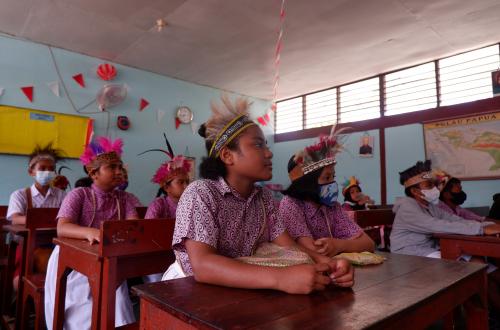
There is one habit I have noticed increasingly often lately, and it also happens to me. When people my age speak with friends from the same region, the regional language usually flows naturally and fluently. But when speaking with their children, the language suddenly switches to Indonesian.
The parents speak Javanese, Sundanese, Minang, Bugis, Madurese, or other regional languages. They joke and perhaps even argue in the regional language. But with their children, they are more comfortable using Indonesian.
I suspect many of us have encountered this situation. It may even be happening in our own families.
Initially I considered it normal. Indonesia is becoming increasingly urban. Inter-regional marriages are more common. Population mobility is higher. Children are also growing up in educational and digital environments that mostly use Indonesian.
Until I saw the 2025 data on regional language use released last month by Statistics Indonesia (BPS).
Nationally, the figures are actually still quite encouraging. A total of 73.82 percent of Indonesians aged five and above still use regional languages to communicate with family and/or the community. This means three out of four Indonesians still use a regional language.
Language Is Ageing Too
There is a very clear pattern that the younger a person is, the lower their use of regional languages. Let us look at the figures.
Among residents aged 75 and above, regional language use reaches 86.56 percent. In the 65–69 age group it is still 83.10 percent. The 55–59 group stands at 79.44 percent, while the 45–49 group is at 76.45 percent.
Moving towards the younger generation, the figures continue to decline. The 25–29 age group is at 73.58 percent. The 20–24 age group drops to 72.19 percent, and teenagers aged 15–19 are down to 69.50 percent.
The most striking decline occurs among children. In the 10–14 age group, regional language use is only 66.22 percent, while children aged 5–9 are down to just 60.93 percent.
This means there is a gap of around 25.6 percentage points between residents aged 75 and above and children aged 5–9.
The pattern also almost forms a consistent staircase: the younger the age group, the lower the use of regional languages. We are witnessing indications of an intergenerational language shift. Regional languages remain very strong among the older generation, but society’s ability to transmit them to the next generation appears to be weakening.
Imagining the Speaker Pyramid
Source: jawawa.id (https://jawawa.id/newsitem/reading-bps-data-who-will-speak-regional-languages-in-30-years-1787212383)
Originally published by Republika (https://analisis.republika.co.id/berita/tk24lh487/membaca-data-bps-siapa-penutur-bahasa-daerah-30-tahun-lagi), translated from Indonesian