
Reaching Remote Areas: 132 Preachers Continue Mission in the Hinterlands Supported by ZIS
Preaching in the remote areas of Indonesia is about more than just delivering religious messages from pulpit to pulpit. Amidst limited access to education, healthcare, clean water, and various basic necessities, preachers are required to go further: living alongside communities, accompanying them, and acting as catalysts for change.
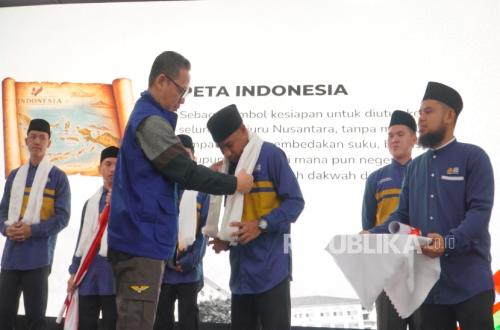
This spirit has been revitalting through the deployment of 132 preachers for remote missions, who will be sent to various regions across Indonesia. They carry not only a religious mission but also a spirit of service to assist communities that have long been beyond the reach of basic services.
The deployment of these preachers was part of the ‘Deployment of 132 Preachers and Thanksgiving for 55 Years of Remote Preaching’ ceremony by the Dewan Dakwah Islamiyah Indonesia (DDII) in Jakarta on Saturday, 15 August 2026.
The General Chairman of Dewan Dakwah, KH Dr Adian Husaini, emphasised that remote preaching is a long-term struggle pioneered in 1967 by Mohammad Natsir. Therefore, the presence of preachers in remote areas is not merely a temporary programme, but part of an effort to continue the mandate of preaching from generation to generation.
“Preaching does not only convey religious values, but also brings real benefits through care, service, and community assistance,” he stated in Jakarta on Thursday, 3 September 2026.
This statement reflects the nature of remote preaching, which does not stop at lecturing activities. Preachers are required to integrate into community life, understand the problems they face, and seek solutions together.
The preachers being sent are graduates with at least a Bachelor’s degree (S1) from STID Mohammad Natsir. Before being deployed to remote areas, they underwent a lengthy process of education and training.
They completed two years of residential education, followed by two years of active service in mosques or religious study groups (majelis taklim). After these stages, they are sent to live directly alongside remote communities for the following two years.
Under this pattern, preaching is not treated as an activity that arrives briefly and then departs. Instead, preachers are required to be present in the daily lives of the community—listening to their problems, building trust, and gradually developing existing potential.
In several regions, the issues faced by remote communities are closely linked to limited access to education and healthcare. Consequently, the presence of preachers can serve as an entry point for various forms of social assistance.
Such contributions are evident in the field of education, where the Dewan Dakwh’s educational ecosystem has helped 117,979 citizens become free from Quranic illiteracy. Meanwhile, in the healthcare sector, preachers act as field facilitators in the Nurhealth Connection programme, a telemedicine service that connects remote communities with doctors stationed in Jakarta.