
Re-evaluating Indonesia's Multi-Alignment Partner Priorities: From Moscow to Tokyo
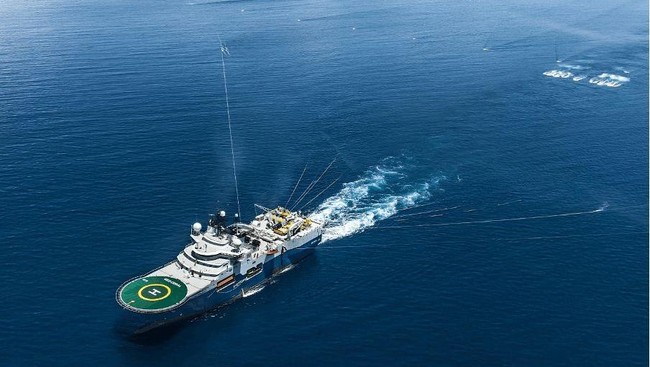
Recent reports of suspected foreign vessels operating almost daily in the North Natuna Sea reflect an increasingly urgent real challenge for Indonesia’s security. Although there has been no official confirmation of the vessels’ nationality, China’s provocations in Indonesia’s sovereign waters, particularly in North Natuna, continue to show growing boldness.
Indonesia’s ‘multi-alignment’ foreign policy under President Prabowo Subianto is a fitting response to an increasingly volatile geopolitical environment, where China’s mounting pressure is just one of many factors to consider. However, for this strategy to be more effective, Indonesia needs to strengthen bilateral relations with partners that share a similar vision.
The United States, which has long been the primary security guarantor in the region, is currently preoccupied with the situations in Iran and Venezuela. The crisis in the Strait of Hormuz, which is devastating the economies of the Gulf states, has not spared ASEAN and Indonesia. The impact is being felt through fuel scarcity and significant pressure on the Rupiah exchange rate. Amidst such international instability, Prabowo’s ambition to diversify Indonesia’s security partnerships is commendable.
Nevertheless, Indonesia’s free and active foreign policy, which does not bind Jakarta to any bloc or major power, still carries its own risks, especially as Prabowo continues to deepen ties with Moscow. The joint military exercise in Jakarta waters in March, involving a Russian submarine, was the latest signal that relations between the two countries have been warming since Indonesia joined BRICS in January 2025.
The risk is that Jakarta’s closeness to Moscow could erode the trust of Western partners and countries not aligned with Russia, which are precisely the partners Indonesia has relied upon for cooperation. Multi-alignment can only be effective if it is not alienating. For this strategy to succeed, Indonesia needs to deepen cooperation with partners that share a common vision for the region, particularly one rooted in the ASEAN Outlook on the Indo-Pacific (AOIP).
In this context, Japan stands out as a natural partner for Indonesia for several strong reasons. Tokyo’s Free and Open Indo-Pacific (FOIP) vision, which is a counterpart to the AOIP, views the Indian and Pacific Oceans as one interconnected region. This vision aims to maintain an international order based on freedom of navigation, free trade, and the rule of law. FOIP is also not directed against any specific country. To realise this vision, Tokyo is committed to three main pillars: trust, transparency, and dialogue, as emphasised by Japanese Defence Minister Shinjirou Koizumi in his speech at this year’s Shangri-La Dialogue.
Indonesia-Japan relations are showing encouraging progress. Tokyo and Jakarta signed a defence cooperation agreement in early May, providing a framework for strengthening further collaboration. Indonesia also has an Equipment and Technology Transfer Agreement (ETTA) with Japan, placing Jakarta in a strategic position to benefit from Tokyo’s recent reforms to its defence export regulations.
Following a meeting in early June between Indonesian Defence Minister Sjafrie Sjamsoeddin and his Japanese counterpart Shinjirou Koizumi, Jakarta and Tokyo agreed to begin discussions on the transfer of Japan’s Asagiri-class destroyers to Indonesia, a move that could potentially accelerate the modernisation of Jakarta’s navy. The two countries are now in deep talks, as Koizumi conveyed to the BBC. Tokyo has also offered Oyashio-class submarines to Indonesia. The combination of these capabilities would significantly strengthen Indonesia’s maritime deterrence posture.
Indonesia is not the only Indo-Pacific nation deepening cooperation with Japan. Koizumi recently told the BBC that ‘Australia has selected Japanese warships. Discussions are underway with the Philippines for used destroyers from the Japan Maritime Self-Defense Force, and New Zealand has also expressed interest in acquiring Japanese destroyers.’
Alongside historic changes in its defence industry, including the adoption of advanced unmanned systems, Japan will update its three strategic documents this year. These documents will include a greater focus on defending sea lanes, a point that is highly relevant for Indonesia given its strategic position on the Strait of Malacca. Tokyo has also expanded practical joint exercises through Reciprocal Access Agreements with the Philippines, Australia, and the United Kingdom.
Indonesia is wise to pursue diverse relationships within the framework of its free and active foreign policy. However, for multi-alignment to truly serve Indonesia’s interests, Jakarta must be discerning in determining which partnerships to strengthen. The argument for tightening ties with Tokyo is clear, and both countries share a compatible vision for how the Indo-Pacific region should evolve. Japan’s foreign policy is driven by the FOIP vision. In facing China’s unilateral aggressive actions, which Indonesia and other Indo-Pacific nations also confront, Tokyo keeps the door open for dialogue with Beijing.
Russia does not offer the same foundation. Its invasion of Ukraine, coupled with President Putin’s rejection of…