
RDF and the Long Road Towards Sustainable Business
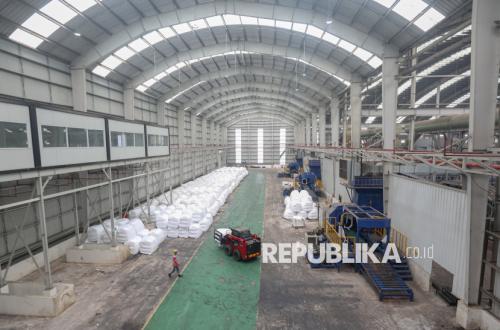
Refuse-Derived Fuel (RDF) offers a dual solution: reducing residual waste while simultaneously replacing a portion of fossil fuels. However, constructing RDF facilities does not automatically create a sustainable business. The key lies in market certainty, consistent quality, sensible logistics, and clear risk distribution.
Pressure on Indonesia’s urban waste management systems continues to rise. Landfill capacities are increasingly limited, the transition from open dumping must be accelerated, and the costs of waste management infrastructure continue to grow. In this context, RDF is attractive because the combustible fraction of waste can be processed into alternative fuel for cement kilns and other thermal applications.
The potential is significant. Modelling for the cement industry in Java suggests that a 30 per cent thermal substitution could divert approximately 8.7 million tonnes of urban waste and reduce coal consumption by about 2.51 million tonnes per year. However, this technical potential does not always equate to commercial sustainability. Policy studies in Indonesia show that recurring issues involve feedstock continuity, cost recovery, institutional frameworks, location, operational capacity, and the alignment of product specifications with market needs.
Therefore, RDF should be understood not merely as a machinery project, but as a business system that integrates public services, fuel production, logistics, and industrial demand.
Two Economic Functions of RDF
RDF facilities perform two economic functions simultaneously. First, a public service function, which is reducing the volume of waste entering landfills. Second, a commercial function, which is producing fuel that can be sold. The challenge is that service costs persist even if RDF is not yet sold or fails to find a buyer, ranging from collection, sorting, and residue management to odour and leachate control, as well as asset maintenance.
On the other hand, commodity revenue is highly dependent on the volume received by industry, calorific value, quality, price, and logistics costs. One study estimates production costs at around 20 USD per tonne with a selling price of approximately 25 USD per tonne. Much of the economic benefit actually stems from coal savings at the system level, rather than from the operator’s margin. Other models show that a 20 per cent drop in RDF prices could render financing scenarios unviable.
The implication is clear: a healthy business model should not rely solely on RDF sales. Revenue from waste management services, tipping fees, material recovery, and cost-sharing can serve as a buffer when commodity revenues fluctuate. In other words, public benefits and commercial benefits must be translated into tangible revenue streams for operators.
A common error is assuming that the presence of cement plants near a location guarantees a market. In reality, offtake certainty is only established when instruments are in place to regulate who buys, the volume absorbed, the required quality, the pricing structure, and who bears the risk when disruptions occur.
An ideal offtake contract should include duration, minimum volume or reserved capacity, price formulas and indexation, product specifications, sampling and testing methods, rejection procedures, delivery points, risk transfer, payment mechanisms, and arrangements for periods when kilns are temporarily shut down.
The involvement of offtakers from the planning stage is crucial, as the technical specifications of cement plants will dictate the RDF processing design from the outset. Market certainty is also heavily influenced by location. RDF has lower economic value and bulk density compared to coal, meaning transport costs can quickly erode margins. Proximity between RDF facilities and industrial users can strengthen competitiveness and facilitate quality coordination.
Conversely, dependence on a single buyer can create monopsony risks. Therefore, contracts must anticipate volume decreases, kiln shutdowns, buffer storage needs, and the possibility of alternative market channels.
Quality and Logistics Determine Competitiveness
RDF is not a uniform product. Calorific value, moisture content, ash, chlorine, sulphur, particle size, density, and contaminants determine whether the fuel is acceptable and its commercial value. For local governments, success may be measured by the tonnage of waste diverted from landfills. However, for the cement industry, the priorities are clean energy, stable feeding, emissions, clinker quality, and equipment safety.
Improving quality always carries cost consequences. Screening, crushing, metal separation, drying, blending, or densification can enhance quality but also increase CAPEX and OPEX while reducing yield. Comparisons of processing configurations show that larger equipment investments tend to increase the Lower Heating Value (LHV), but not without additional costs and a reduction in mass yield.
Moisture and chlorine levels are two critical parameters. High moisture content reduces the effective energy received by the kiln, while chlorine can increase the risk of corrosion and process disruptions. Consequently, RDF pricing should not be based solely on tonnage. A pricing mechanism that links calorific value and provides deductions for moisture, ash, chlorine, or contaminants would provide a more accurate commercial signal.
Logistics then becomes part of the product’s economic quality. Distance, payload, road conditions, loading/unloading time, fuel prices, vehicle requirements, and delivery points must be calculated as part of the delivered cost. Life-cycle studies in Indonesia also identify transport and fossil-fuel-based mechanical processing as significant environmental hotspots.
This means that facilities technically capable of producing RDF may not be competitive if the costs for [transportation and processing exceed the value generated].
Source: jawawa.id (https://jawawa.id/newsitem/rdf-and-the-long-road-towards-sustainable-business-1790128546)
Originally published by Republika (https://esgnow.republika.co.id/berita/tlrwd8416/rdf-dan-jalan-panjang-menuju-bisnis-berkelanjutan), translated from Indonesian