
RCEP encourages ASEAN nations to explore new cooperation opportunities
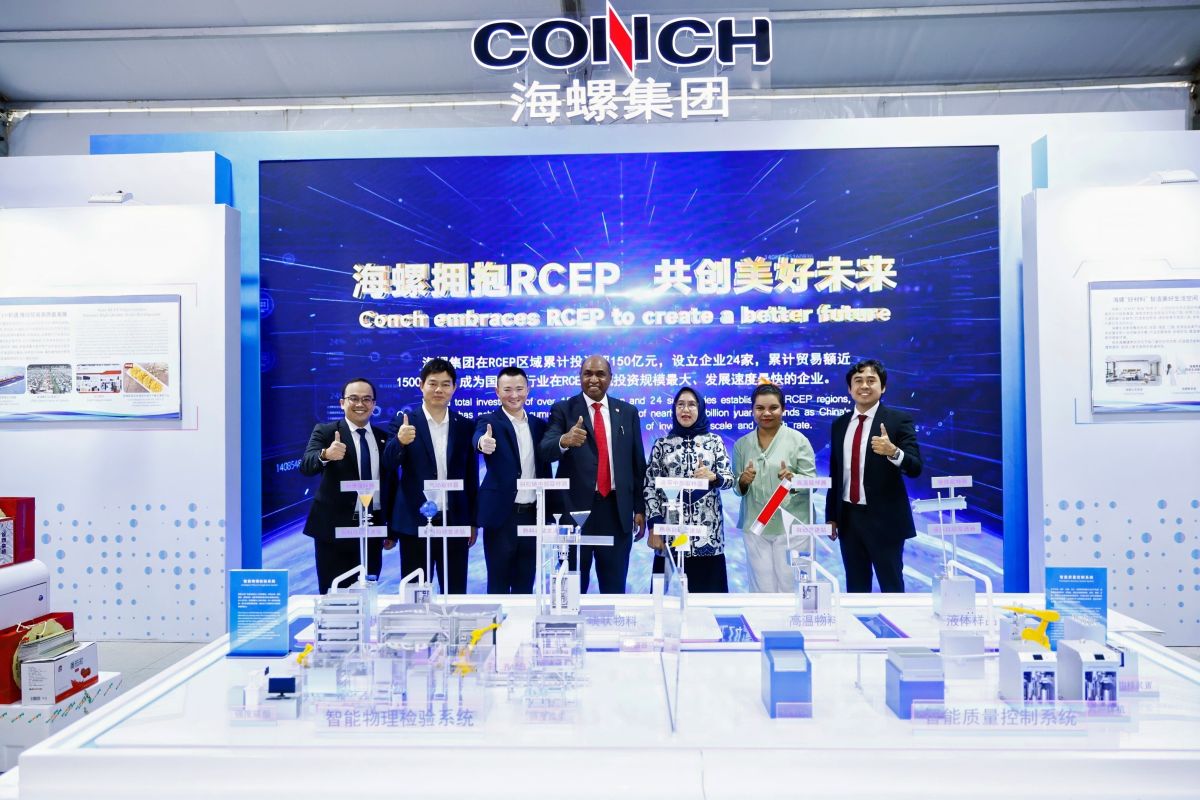
Hefei (ANTARA) - The Regional Comprehensive Economic Partnership (RCEP) is far more than just a trade agreement; it serves as an anchor for stability. This view was widely shared by participants attending the RCEP Local Government and Sister Cities Cooperation Forum (Huangshan) 2026, held in Anhui Province, Eastern China, in late May.
Amidst rising protectionism, intensifying geopolitical tensions, and the uncertainty caused by the restructuring of global supply chains, representatives from local governments, business sectors, and academia from ASEAN nations—including Indonesia, Malaysia, Vietnam, and Laos—highlighted a primary theme: elevating cooperation to a higher level.
The Deputy Governor of West Papua, Mohamad Lakotical, stated that RCEP is not merely about trade statistics and economic agreements, but also presents shared opportunities to realise more integrated, sustainable, inclusive, and innovative regional development.
Participants noted that regional cooperation under RCEP is evolving from expansion driven by trade facilitation towards higher-quality development, characterised by stronger regulatory alignment, deeper industrial integration, and closer innovation cooperation.
ASEAN Secretary-General Kao Kim Hourn remarked that mechanisms such as RCEP and the China-ASEAN Free Trade Area (CAFTA) are not just trade agreements, but vital platforms for maintaining regional stability, ensuring supply chain fluidity, and enhancing investor confidence.
According to data released during the forum by the President of the China Institute for Reform and Development, Chi Fulin, the trade value within the RCEP region rose from US$4.43 trillion in 2020 to US$6.09 trillion in 2025, representing a 24 per cent increase. RCEP’s share of global trade also grew from 27.2 per cent to 29.1 per cent during the same period. Furthermore, the region accounts for approximately 30 to 32 per cent of global foreign direct investment (FDI) inflows, making it a primary destination for international investment.
Datuk Nur Jazlan bin Tan Sri Mohamed, Vice President of the Malaysian Senate, noted that direct cooperation between provinces and states is becoming a significant force driving RCEP’s development. An initiative proposed at last year’s forum to launch a direct flight route between Kuala Lumpur and Hefei, Anhui Province, was realised in February, facilitating greater trade and bilateral exchange.
In recent years, China and ASEAN have consistently been each other’s largest trading partners, with bilateral trade value exceeding US$1 trillion for the first time in 2025, acting as a primary driver for regional economic growth.
Forum participants agreed that RCEP has entered a crucial stage of upgrading. Lee Hee-sup, Secretary-General of the Trilateral Cooperation Secretariat (TCS), stated that protectionism and supply chain fragmentation are testing the resilience of regional cooperation, making it essential for RCEP members to deepen collaboration in areas such as regulatory coordination, the digital economy, green development, and supply chain integration.
Throughout the forum, ‘local cooperation’ emerged as a recurring theme. The Vietnamese Ambassador to China, Pham Thanh Binh, emphasised that stronger cooperation between local governments is vital for RCEP to deliver tangible benefits to businesses and the general public.
Many ASEAN nations also utilised the forum as a platform to explore new opportunities. Preah Sihanouk Province in Cambodia hopes to strengthen cooperation in trade, logistics, and green energy. Phu Tho Province in Vietnam is seeking to attract more investment from China, while Khammouane Province in Laos aims to deepen cooperation in mineral resource development and cross-border logistics. Meanwhile, West Papua Province in Indonesia hopes to leverage RCEP to drive industrial advancement and technological innovation.
Zhang Shaogang, Executive Vice Chairman of the China APEC Business Council, stated that future RCEP updates, supported by new rules facilitating industrial chain cooperation and economic and technological collaboration, will further strengthen industrial coordination and technological connectivity.
‘Under the framework of an integrated market, RCEP members can forge closer market linkages and more dynamic innovation partnerships, identifying their most competitive positions within regional industrial chains, strengthening their core competitiveness, and achieving complementary and mutually beneficial development,’ said Zhang.
‘We can together explore cutting-edge technologies in the future, including aerospace, quantum computing, and other emerging industries,’ added Nur Jazlan.