
Ray Rangkuti Warns of TNI's Civilian Intrusion as Reform Spirit Fades
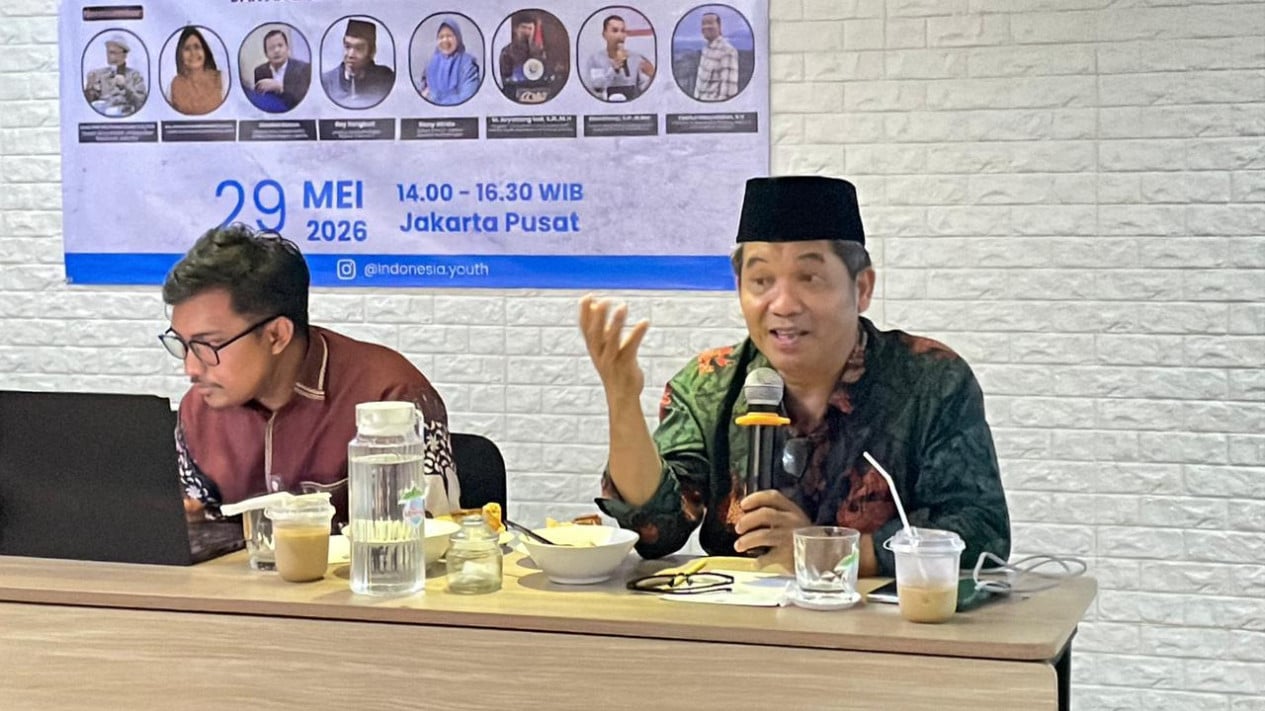
Ray Rangkuti, director of Lingkar Madani Indonesia (LIMA), has noted that a key 1998 Reform agenda—returning the Indonesian National Armed Forces (TNI) to its professional defence role—is now regressing.
His remarks were made during a public discussion titled ‘Remilitarisation and Indonesia’s Democratic Future: Unpacking Defence Sector Reform, Civilian Supremacy, and Threats to Human Rights’ held in Jakarta on Friday, 29 May 2026.
Ray explained that the ‘TNI back to the barracks’ demand, which gained traction during the Reform era, was not merely a political slogan but a crucial symbol for the military to focus solely on professional defence and stay out of civilian affairs.
‘Back to the barracks’ is a term highlighting the importance of TNI operating as a professional military force. The barracks symbolise the TNI’s primary function,” he said.
He noted that this reform spirit began under President Megawati Soekarnoputri, when TNI and the police were separated from the military structure that existed during the New Order era.
Ray said this separation was a pivotal moment in security sector reform, as it was the first time defence and civilian security functions were clearly divided.
“Through a MPR decree, TNI was assigned to defence, while security was entrusted to the police as a civilian institution,” he said.
Ray recalled that during the New Order, the police were part of the military and considered the fourth branch after the Army, Navy, and Air Force.
“Since the separation, the police have become a separate institution, no longer part of the military,” he added.
Ray assessed that security sector reforms over the past 25 years since the Reform era had proceeded fairly well.
He cited the previous TNI law, revised in 2025, which allowed only limited involvement of TNI in civilian institutions through the Military Operations Other Than War (MOOTW) framework.
Such involvement, he said, was restricted to specific situations requiring military capability, such as counter-terrorism, narcotics enforcement, or major disasters.
“For instance, at the National Counter-Terrorism Agency (BNPT) or during major disasters that are hard to manage. That’s what MOOTW refers to,” he said.
He stressed that these provisions have generally been strictly adhered to, ensuring TNI remains focused on national defence.