
Raw Materials and Auxiliary Goods Drive Indonesia's Imports to US$24.81 Billion in May 2026
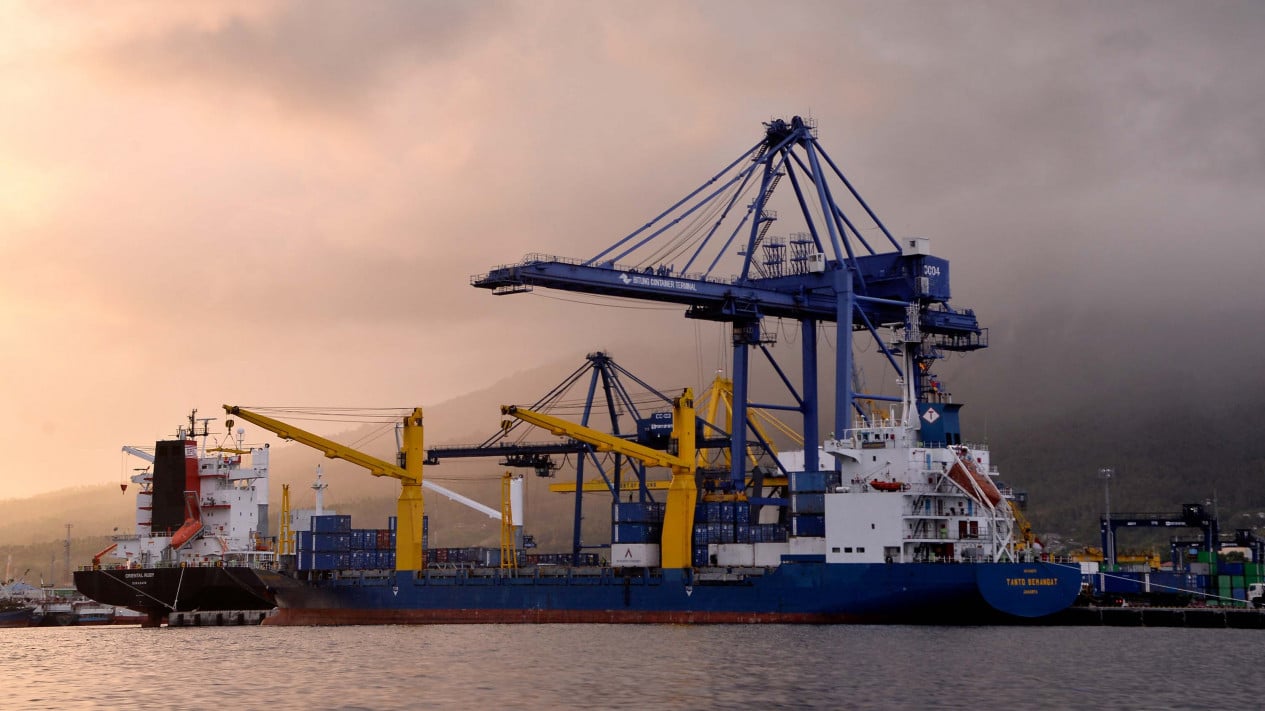
Statistics Indonesia (BPS), through its Deputy for Distribution and Services Statistics, Ateng Hartono, reported that Indonesia’s imports in May 2026 reached US$24.81 billion, a 22.16% increase year-on-year (yoy) compared to the same period in 2025. Ateng acknowledged that the import increase occurred in both the oil and gas and non-oil and gas sectors, with oil and gas imports at US$4.51 billion, up 70.78% (yoy), and non-oil and gas imports at US$20.30 billion, up 14.89% (yoy). “This annual increase in imports was mainly driven by non-oil and gas imports, which contributed up to 12.95% (yoy) to the total import increase in May 2026,” Ateng said during a press teleconference on Wednesday, 1 July 2026. He detailed that, when viewed by usage category, all import components recorded an increase compared to May 2025. Imports of consumer goods rose 21.99% to US$2.23 billion. Imports of raw materials and auxiliary raw materials dominated the increase, reaching a value of US$17.58 billion, or a 25.17% (yoy) rise compared to May 2025. This was followed by capital goods imports of US$5 billion, up 12.70% (yoy). Ateng added that cumulatively, Indonesia’s imports for the January-May 2026 period amounted to US$111.33 billion, a 15.24% increase compared to January-May 2025. Oil and gas imports were recorded at US$17.45 billion, up 27.89% (yoy), while non-oil and gas imports reached US$93.88 billion, up 13.16%. Ateng specified that the import increase throughout January-May 2026 occurred across all usage categories. Imports of raw materials and auxiliary raw materials dominated with a value of US$79.40 billion, up 14.41% and contributing 10.35% to the total import increase. “The increase in raw material imports was mainly driven by commodities such as mineral fuels, salt, sulphur, stone and cement, and cereals,” Ateng stated. “Meanwhile, when viewed by country of origin, the import increase mainly came from China, Australia, the ASEAN region, and the European Union. However, imports from Japan actually recorded a decline during that period,” he said.