
Ratification of IEU-CEPA Seen as Key to Strengthening ISPO
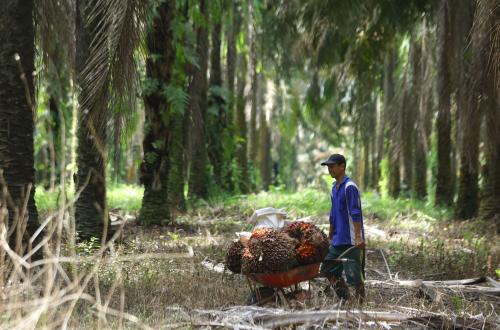
JAKARTA – Ratification of the Indonesia-European Union trade agreement (IEU-CEPA) is seen as important for strengthening the Indonesian Sustainable Palm Oil (ISPO) standard while improving the competitiveness of Indonesia’s palm oil products in the European market. However, stronger standards need to be accompanied by a clear implementation roadmap so that smallholders also benefit from the trade agreement.
The Sustainable Palm Oil Protocol under the IEU-CEPA was agreed in September 2025. Its implementation still requires concrete steps, particularly on the division of responsibilities between institutions, funding, stronger sustainability standards, and the involvement of farmers and civil society in oversight.
Strengthening ISPO is one of the key priorities in implementing the protocol. The national sustainability standard needs stronger governance, including supply-chain traceability, certainty over land legality, and a transparent complaints mechanism that is accessible to the public.
Mansuetus Darto, a member of the National Executive Board of the Indonesian Oil Palm Farmers Union (SPKS), said the trade agreement with the European Union must deliver balanced benefits for all palm oil industry participants, including smallholders. Sustainability requirements, he said, must not add to farmers’ burdens without adequate support.
“IEU-CEPA must not simply open up trade opportunities for large companies while placing ever greater burdens on smallholder oil palm farmers through various sustainability requirements. Farmers must be recognised as part of the supply chain and receive economic benefits from that trade,” Mansuetus said on Wednesday (11 November 2026).
Smallholders therefore need access to financing and guidance, certainty over land legality, and stronger farmer organisations and cooperatives. This support is needed to help them meet sustainability requirements and join supply chains with access to export markets.
Satya Bumi director Andi Muttaqien said the success of the sustainable palm oil protocol should not be measured solely by the number of certificates issued. Its implementation must also bring tangible changes on the ground, particularly in forest protection, fire prevention and reducing environmental impacts.
Meanwhile, Sawit Watch executive director Achmad Surambo highlighted the need to improve complaints and oversight mechanisms. Transparent audits, protection for whistleblowers and civil society participation are needed to ensure that ISPO implementation focuses not merely on administrative compliance, but also on better governance.
The protocol’s implementation roadmap should include measurable targets, a division of responsibilities between institutions and a funding scheme. The traceability system should also cover the supply chain from farmers to exporters so that the origin of products can be identified and verified.
Support for farmers should also include land mapping, resolving land-legality issues, ISPO certification and productivity improvements without encouraging plantation expansion. This approach is important to ensure that international market requirements do not prevent smallholders from accessing supply chains.
Independent oversight and protection for Indigenous peoples and local communities should also be included in the implementation agenda. An open complaints mechanism must be accompanied by clear follow-up so that issues on the ground can be addressed transparently.
Civil society participation through the Domestic Advisory Group (DAG) should also be reactivated. The forum is expected to give farmers’ organisations, civil society groups and academics a role in monitoring the implementation of sustainability commitments under the IEU-CEPA.
Source: jawawa.id (https://jawawa.id/newsitem/ratification-of-ieu-cepa-seen-as-key-to-strengthening-ispo-1794372747)
Originally published by Republika (https://ekonomi.republika.co.id/berita/tobl1r416/ratifikasi-ieucepa-dinilai-penting-untuk-perkuat-ispo), translated from Indonesian