
Rat trails on the Kalimantan border remain a loophole for smuggling
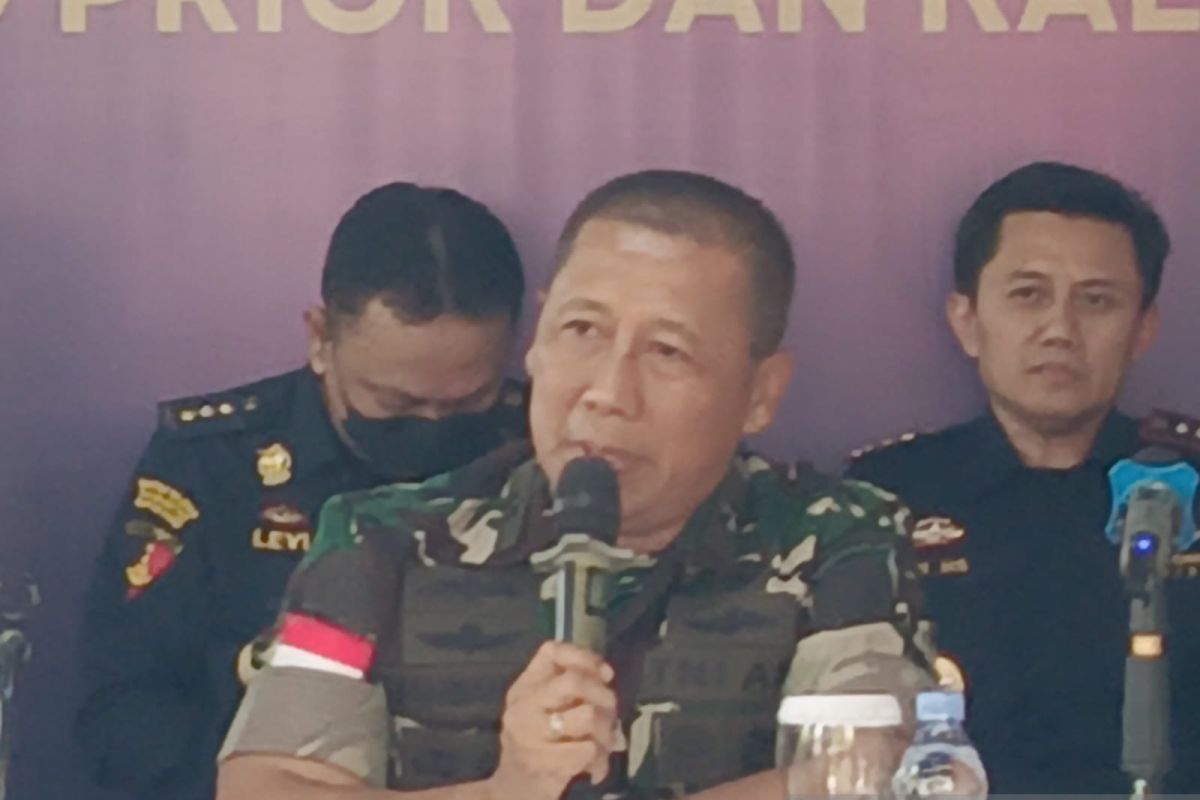
Pontianak (ANTARA) - Chief of Staff of the XII/Tanjungpura Military Command, Brigadier General TNI Bambang Sujarwo, stated that unofficial routes, known as ‘jalan tikus’ (rat trails), along the West Kalimantan-Malaysia border remain a loophole for smuggling various illegal goods into Indonesia, despite increasingly tightened security.
‘Even though security has been tightened, a number of border areas that are difficult to reach are still being used to smuggle illegal goods into Indonesia,’ Bambang said during a press conference on the uncovering of a used clothing smuggling network on Tuesday.
He noted that West Kalimantan shares a land border with Malaysia stretching approximately 970 kilometres, spanning from the eastern to the western parts of the province. Of this total length, around 399.8 kilometres are classified as areas without adequate communication signal coverage, posing a distinct challenge for surveillance and patrol operations.
‘The West Kalimantan-Malaysia border has very challenging characteristics. Apart from being extremely vast, there are hundreds of kilometres of blank spot areas with no communication signal, requiring extra supervision,’ he said.
Hundreds of personnel are stationed at 52 security posts spread along the Indonesia-Malaysia border. Despite this, Bambang acknowledged that many unofficial routes, or ‘jalan tikus’, are still frequently used by transnational criminals to smuggle illegal goods into Indonesia.
According to him, these routes are located in forested areas or difficult-to-access terrain, necessitating layered surveillance and support from various parties to restrict the perpetrators’ movements. ‘There are still a number of rat trails that are often used by irresponsible parties to bring illegal goods into Indonesian territory. Therefore, supervision cannot be carried out by just one institution,’ he said.
Throughout 2026, the Border Security Task Force operating in the West Kalimantan region successfully uncovered several drug smuggling cases, seizing evidence including approximately 75.6 kilograms of methamphetamine, 11 kilograms of marijuana, and 1,664 ecstasy pills. Bambang stated that these disclosures demonstrate that the border region remains a primary target for transnational crime networks that exploit the geographical conditions and unofficial routes to evade law enforcement surveillance.
In addition to narcotics, TNI personnel were also involved in uncovering the recent illegal importation of used clothing (balepress), which was dismantled through a joint operation with Customs and Excise, the Indonesian National Police, and other relevant agencies. He revealed that in February 2026, his party also discovered an attempt to smuggle balepress via the border routes. Although the quantity was not large, the perpetrators used a pattern of sending goods in small groups to avoid detection by authorities.
Bambang emphasised that the success in uncovering various smuggling cases in West Kalimantan is inseparable from the synergy between the TNI, Polri, Customs, the Prosecutor’s Office, and other related institutions in conducting surveillance and law enforcement in the border region. According to him, cross-sector collaboration is key to safeguarding national sovereignty while preventing the entry of illegal goods that can harm the national economy and threaten public security.
‘Border surveillance cannot be done alone. We continue to synergise with all stakeholders to secure the border and eradicate all forms of smuggling entering Indonesia,’ he said. The uncovering of the balepress smuggling network, which is suspected to have entered through West Kalimantan and been distributed as far as Jakarta, serves as evidence that strengthening border surveillance remains a government priority to protect domestic industry.